
This app from Harvard could reshape how identity works beyond Google Wallet
Source: Android Authority
Shimul Sood / Android Authority
TL;DR
- Keyring, a Harvard‑backed project, keeps your identity on your device instead of scattered across company servers, reducing the personal data you need to hand over online.
- It shares only the minimum required information for verification (e.g., confirming you’re over 18 without revealing your full birthdate) and uses local biometric authentication.
- Unlike Google Wallet, Keyring removes big‑tech intermediaries, offering a more decentralized, user‑controlled approach to digital identity.
The Problem with Current Sign‑In Practices
Signing in online has become a trade‑off. Every app and website pushes “Continue with Google” or similar one‑tap solutions, which duplicate personal information across many services. A recent Harvard Gazette report highlights how this massive data collection exposes users to privacy risks and identity theft. Researchers at Harvard University, in partnership with the Linux Foundation’s Decentralized Trust Graph Working Group, are rethinking online identity to address these concerns.
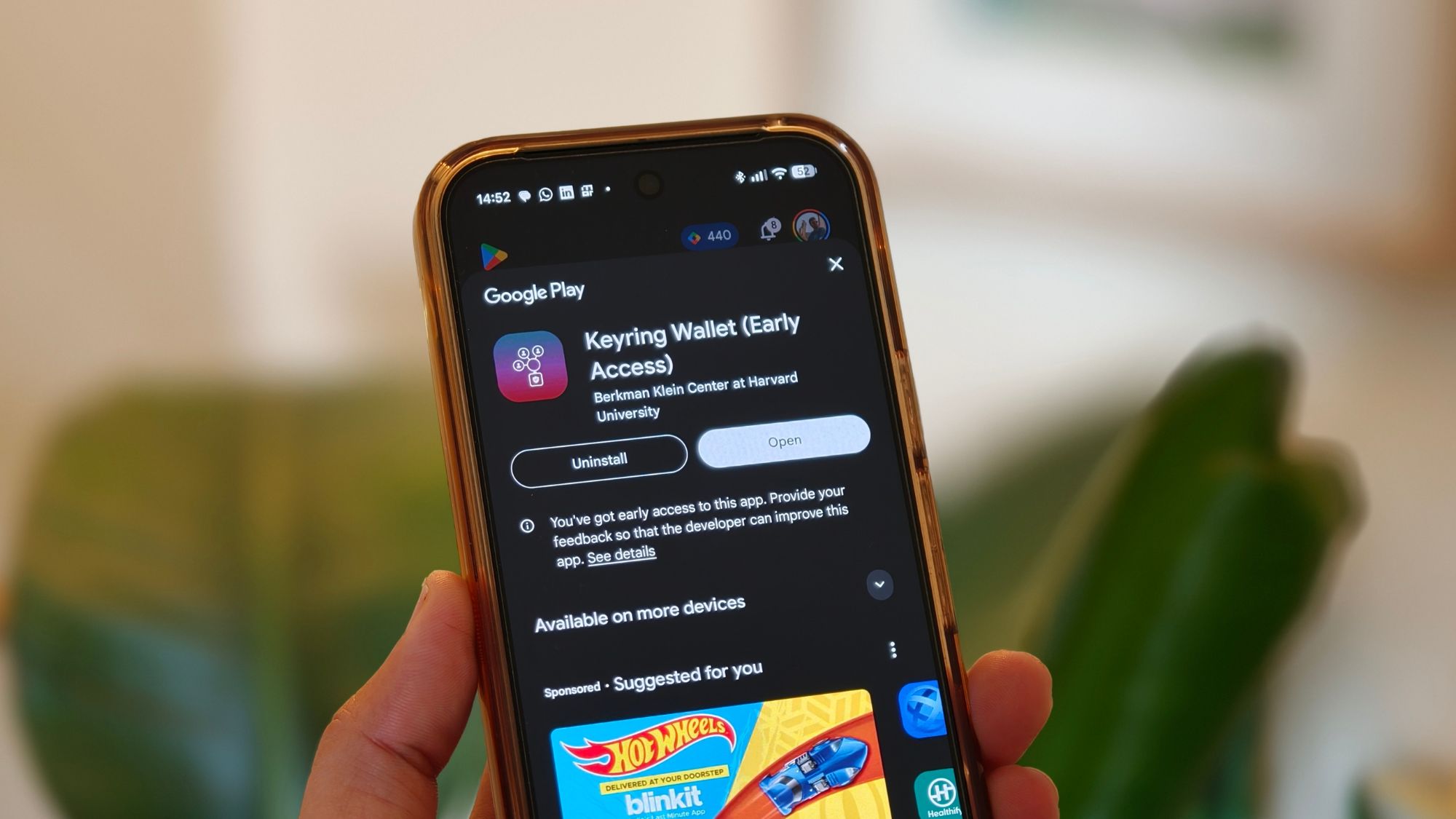
Introducing Keyring Wallet
Keyring works as a digital identity wallet that stores credentials locally on your device.
- Selective disclosure – Only the data strictly required for a transaction is shared. For example, a service can verify you’re over 18 without receiving your exact date of birth.
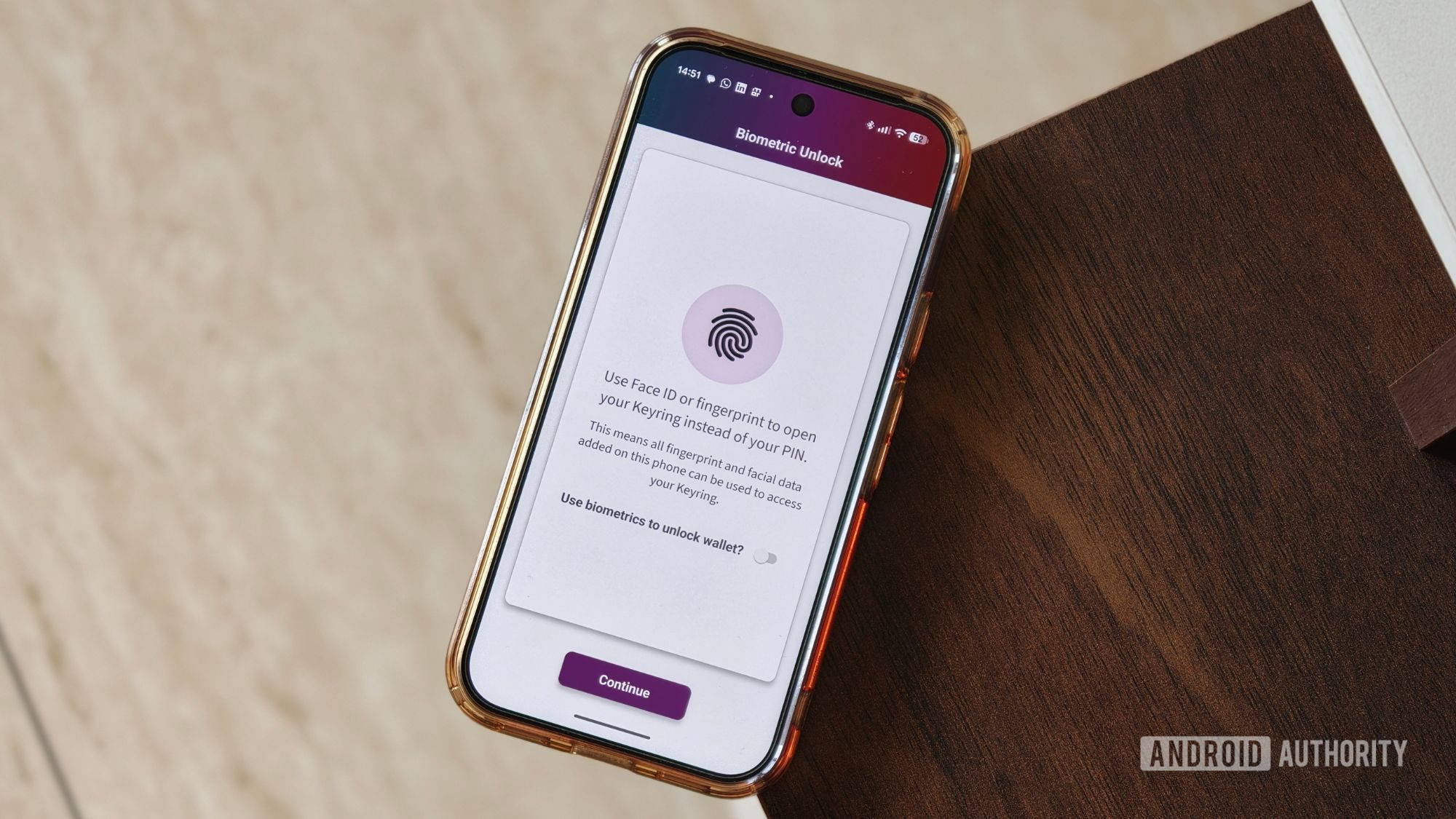
- Local authentication – Biometrics such as Face ID or fingerprint unlock the wallet, keeping verification data on the device rather than transmitting it to external servers.
- Credential storage – You can keep driver’s licenses, proof of employment, and other verified credentials, choosing exactly what to share and when.
- Peer‑to‑peer verification – Two users can confirm they have met or exchanged credentials in person without a third‑party platform acting as an intermediary.
Shimul Sood / Android Authority
How It Differs from Existing Solutions
Google Wallet
- Supports digital IDs, passes, and secure storage backed by on‑device protections.
- Relies on Google’s infrastructure and APIs for identity verification.
Keyring
- Takes a hardline, decentralized approach, removing large companies from the verification flow.
- No central gatekeeper; the user controls identity data via open standards.
Outlook
Whether Keyring can scale in the real world remains an open question. However, as data sharing becomes increasingly automatic, Keyring represents a quiet attempt to reset how the internet handles identity—shifting control back to the individual.