
This handy feature gives PC gaming on Android a major boost
Source: Android Authority
TL;DR
- A developer has ported the Lossless Scaling Frame Generation tool from PC to Android.
- The tool uses Vulkan to deliver frame generation in a variety of games, improving performance.
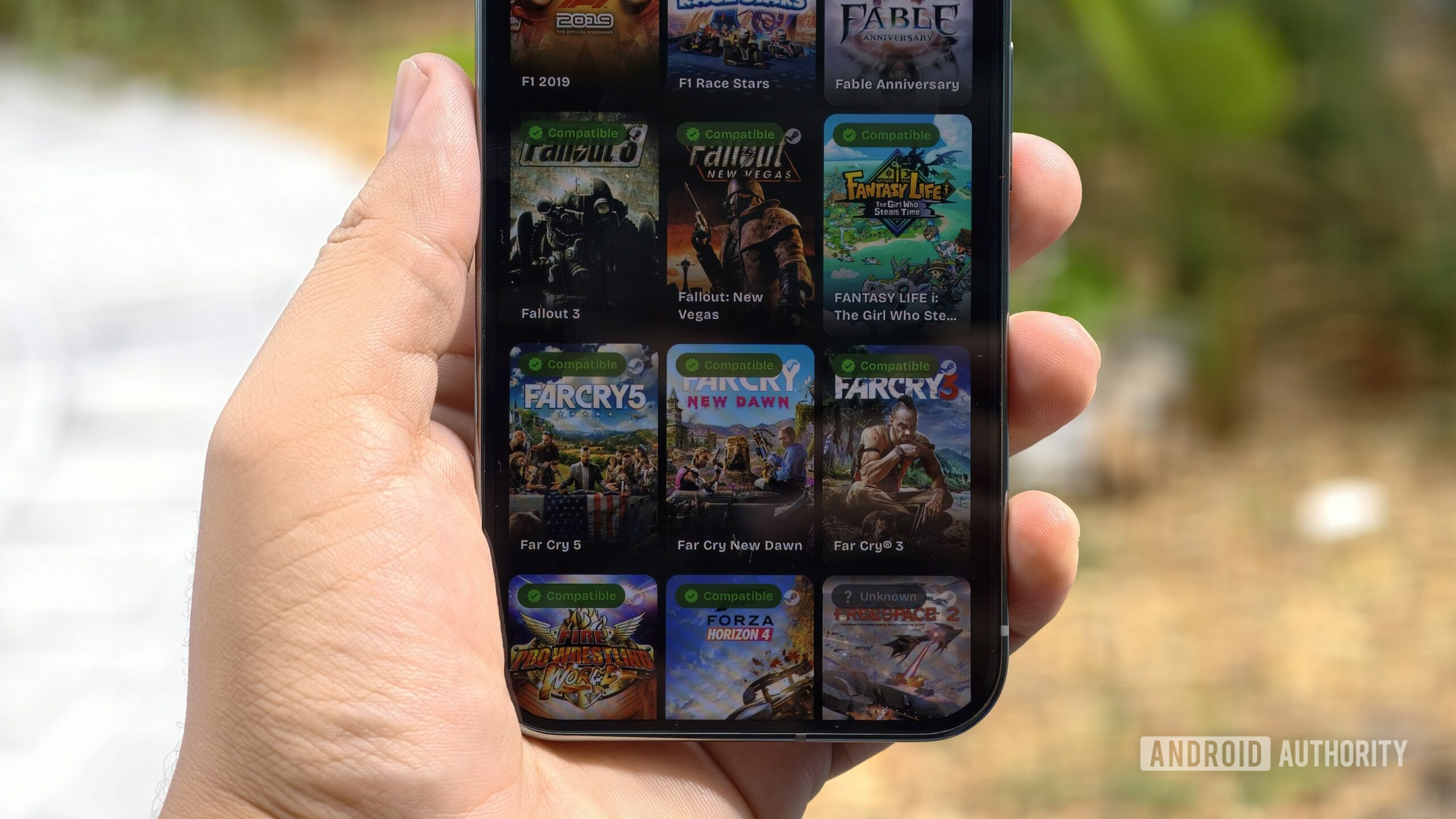
- It is currently supported by the GameNative app.
Overview
Frame interpolation has long been used to smooth gaming experiences, but PCs have moved beyond that with frame generation, which uses AI to create additional frames. The most notable frame‑generation utility, Lossless Scaling Frame Generation (LSFG), is now available on Android.
Developer FrankBaretta released an Android port of LSFG:
Lossless Scaling Frame Generation (LSFG) – Android
The original tool was released on Steam and leverages Vulkan to generate frames for games that lack built‑in frame generation or scaling.
Integration with GameNative
The feature is integrated into version 0.9.1 of the GameNative app (used for playing PC games on Android). The option appears in the quick‑access menu, allowing on‑the‑fly adjustments. Note that the mobile port requires a copy of the $7 PC app.
“If you enable in container settings, you will be prompted to download the lossless scaling app if entitled in Steam, otherwise told to buy it.” – GameNative changelog
Hardware requirements: Snapdragon processor with an Adreno 600 series GPU or newer.
How It Works on Android
- Android 12+ blocks loading external code into non‑debuggable processes, so LSFG cannot hook another app’s Vulkan swapchain.
- Frame generation runs on a MediaProjection screen‑capture stream, and the result is composited in a system overlay over the target app.
“Sneaky addition to GameNative between the v0.9.1‑prerelease and v0.9.1: frame generation via lsfg‑VK.” – Developer note
Performance and Latency
The Android port introduces 50–80 ms of additional latency compared to the Linux version. This latency makes the feature less suitable for games that demand split‑second reflexes.
Benchmarks & User Reports
- The Last of Us Part 1: from 30 fps to over 80 fps (video from the GameNative X account).
- Other user reports:
- 30 fps → 60 fps – Reddit discussion
- 60 fps → 120 fps – X post
While the frame‑generation boost is impressive, the added latency means it may not be ideal for fast‑paced titles. Additionally, LSFG cannot compensate for devices that already struggle to maintain a playable frame rate.
Other Apps Adopting Frame Generation
- GameHub recently added an AI frame‑generation feature in version 6.0.1. It is unclear whether GameHub’s implementation is based on LSFG.
GameHub – Android Authority article