
The Razr Fold finally fixes my long-running problem with Motorola phones
Source: Android Authority
Overview
For so long, I’ve wanted to wholeheartedly recommend Motorola phones. I like so much of what the company does, but it always finds one or two ways to let me down—either with underwhelming specs on its cheap phones or limited availability at premium price points. So, when I first got to hold the Motorola Razr Fold back at CES, I knew I had to keep my hopes in check. No matter what the company promised, I figured it would still find a way to let me down.
But now that we have more of the Razr Fold’s official specs, I’m not so worried. In fact, I think what was once Motorola’s most glaring flagship weakness is about to become its biggest strength. Here’s how the newest competitor in the US foldable race put me at ease ahead of its upcoming launch.
Will you buy the Razr Fold this year?
16 votes
Maybe it’s not perfect, but Motorola’s hardware shows promise
Ryan Haines / Android Authority
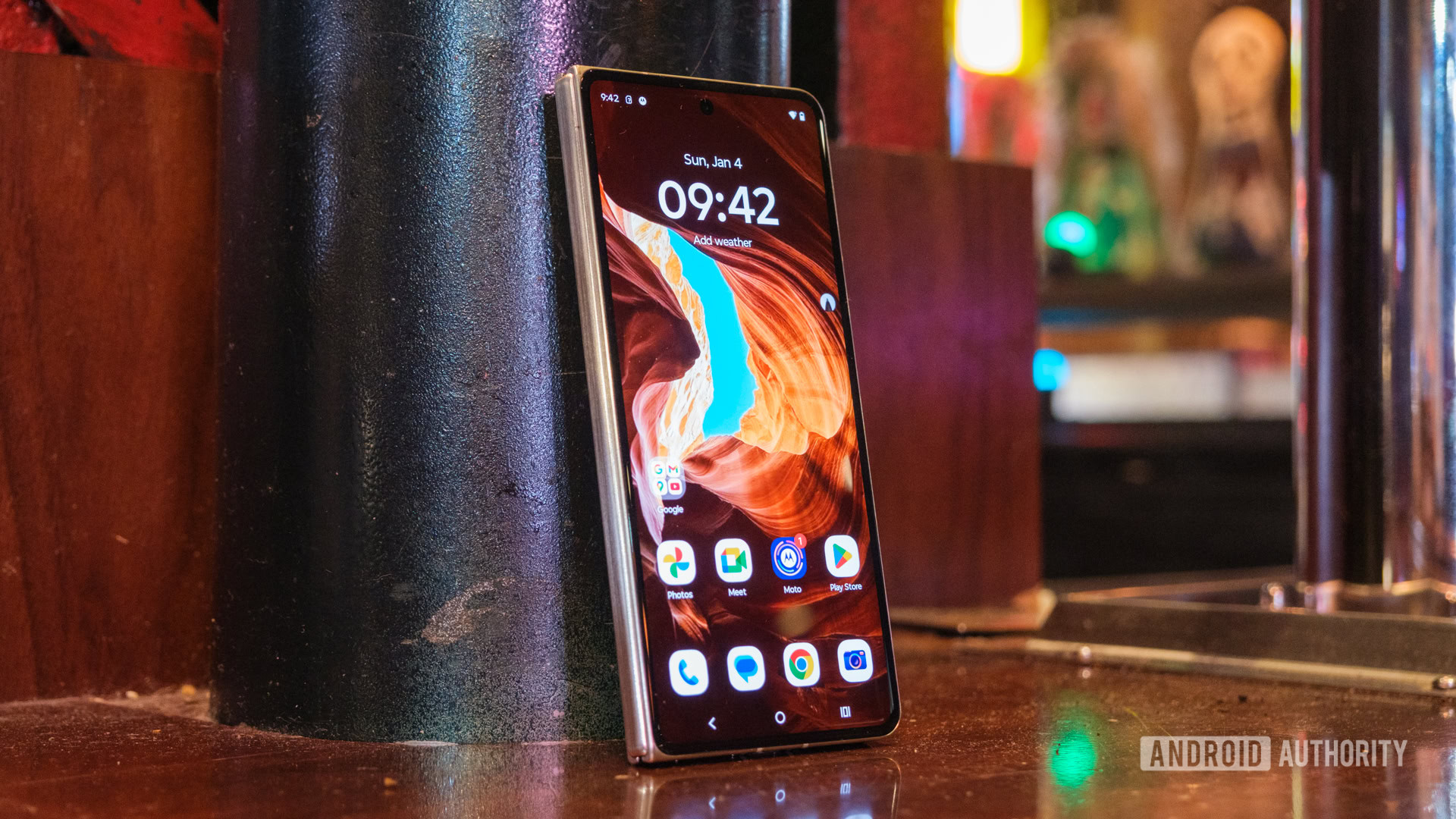
When I first got to explore the Razr Fold, Motorola wouldn’t tell me much. I couldn’t dig into specs, charging speed, camera hardware, or anything else, for that matter. All I could do was check for a display crease and feel how the foldable handled in my hand. It’s enough of a limitation to make a Motorola fan nervous, but I was probably just one trade‑show too early.
Now that Motorola has revealed a little more about its first book‑style foldable at MWC, I have to say it looks pretty good. It doesn’t sport Qualcomm’s top‑end Snapdragon 8 Elite Gen 5 chipset, nor does it carry a full IP68 rating like the Pixel 10 Pro Fold, but I’m not too worried. The Snapdragon 8 Gen 5 will still deliver solid performance, and its IP48 / IP49 water‑resistance rating is respectable—even if the dust protection is only average.
Keep your Snapdragon 8 Elite chipset; I’ll take a big battery and a durable display any day.
Display
- Cover display – Corning’s new Gorilla Glass Ceramic 3
- Refresh rate: 165 Hz
- Peak brightness: 6,000 nits
- Internal display – 8.1‑inch panel
- Peak brightness: 6,200 nits
Both screens read like something out of a tech‑enthusiast’s dream journal.
Battery & Charging
- Capacity: 6,000 mAh (first in the U.S.)
- Wired charging: 80 W TurboPower
- Wireless charging: 50 W
- Reverse wireless charging: 5 W
These numbers feel like something Google or Samsung would be scared to match—perhaps the OnePlus Open 2 we’ve been waiting for.
Camera
- Triple‑stacked Sony LYTIA sensors, each 50 MP
- Primary sensor: f/1.8 aperture
- Ultra‑wide sensor: autofocus down to 3.5 cm for macro shooting
- Telephoto sensor: 3× optical zoom
Overall, the Razr Fold packs a compelling mix of hardware that, while not flawless, shows a lot of promise.
Finally, a Motorola update commitment I can respect
Ryan Haines / Android Authority
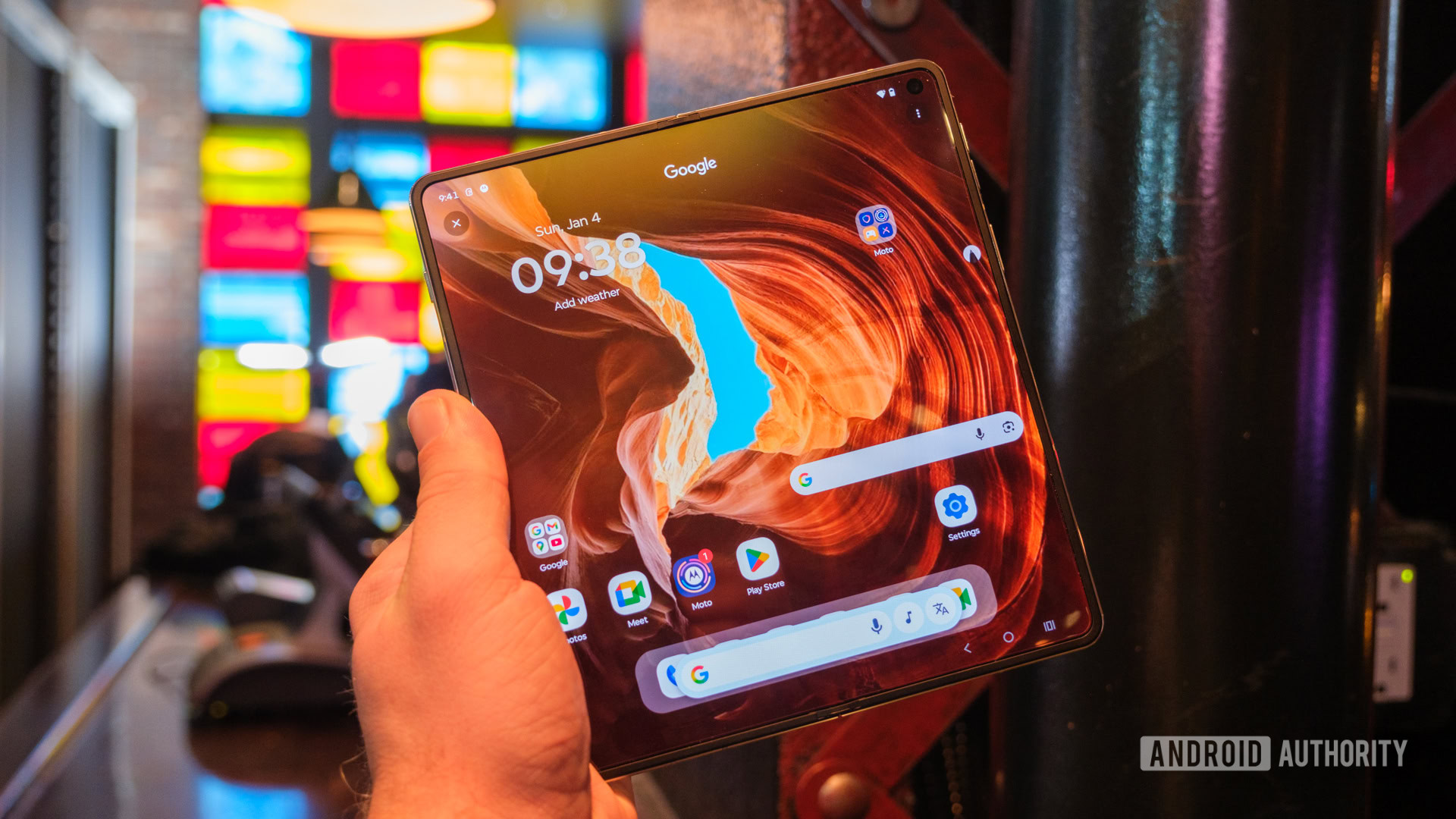
All of that hardware stuff is well and good — very good, in fact. Better, though, is what the Razr Fold fixes after years of my asking. It’s finally a Motorola foldable with a flagship‑level commitment to updates, just like the Motorola Signature. When the top‑end Razr Ultra landed with only three years of Android updates and four years of security coverage, I wasn’t sure I’d ever see Motorola reach for more. However, the Razr Fold adds those digits together for seven years of support on both fronts.
That’s good — really good. With this level of support, Motorola is matching Google and Samsung and outpacing OnePlus. It may not beat the foldable iPhone when it launches, but support through 2033 is certainly in the neighborhood of the best Android foldables. And, when book‑style foldables still cost north of $1,500 at launch, Motorola needed such a commitment if the Razr Fold were ever going to make an impact.
Motorola is finally taking Android updates seriously, at least at the premium end.
If we break things down on a per‑update basis, I was worried about justifying the cost of Motorola’s debut foldable. We still don’t know the US launch price of the Razr Fold, but I’m hoping it’s around $1,699. That price, when split across what I figured might be four Android updates, comes out to about $425 per update, which isn’t even close to the $285 per update of the Galaxy Z Fold 7 or the $257 of the Pixel 10 Pro Fold.
Now that we know the Razr Fold will get seven years of updates, competition with the best foldables is back on the menu.
And yes, maybe I’m putting the cart before the horse — we don’t know how quickly these updates will land — but we know they’re coming. For me, that’s more than enough peace of mind to welcome Motorola into the world of book‑style foldables, even if I’m not sure about repurposing the Razr name.
Follow
Thank you for being part of our community. Read our Comment Policy before posting.