
Seagate FireCuda X1070 SSD spotted at retailers — listed at $829.99 before any official announcement
Source: Tom’s Hardware
Overview
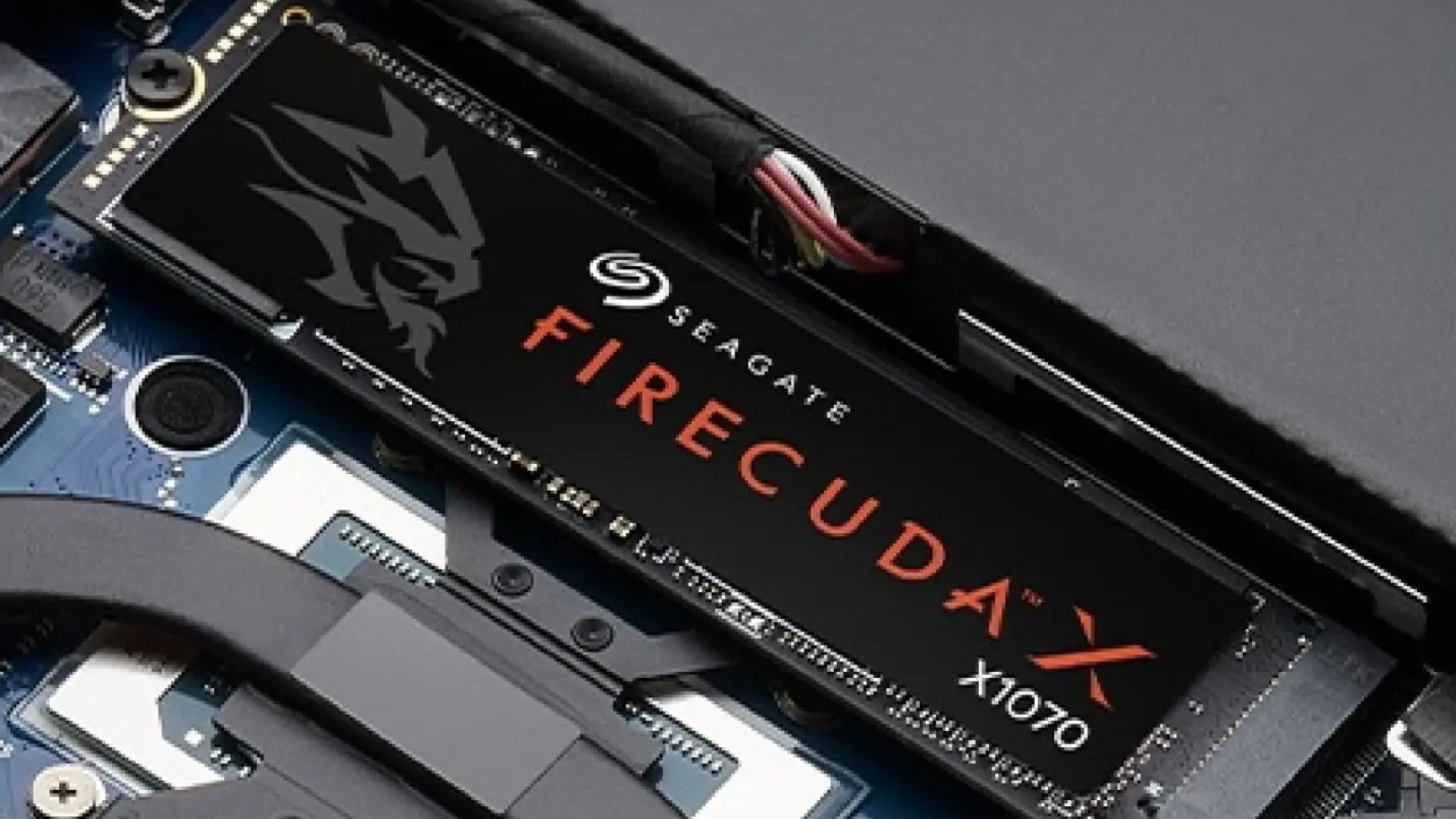
Image credit: Seagate
Seagate’s unannounced FireCuda X1070 NVMe SSD appeared on Amazon and Best Buy listings this week, with a full spec sheet from Best Buy and an indicated price of $829.99 before its product page went offline, suggesting an announcement could be imminent. The drive is a PCIe Gen4 ×4 M.2 2280 model offered in 1 TB, 2 TB, and 4 TB capacities, marking Seagate’s first new consumer SSD in more than a year.
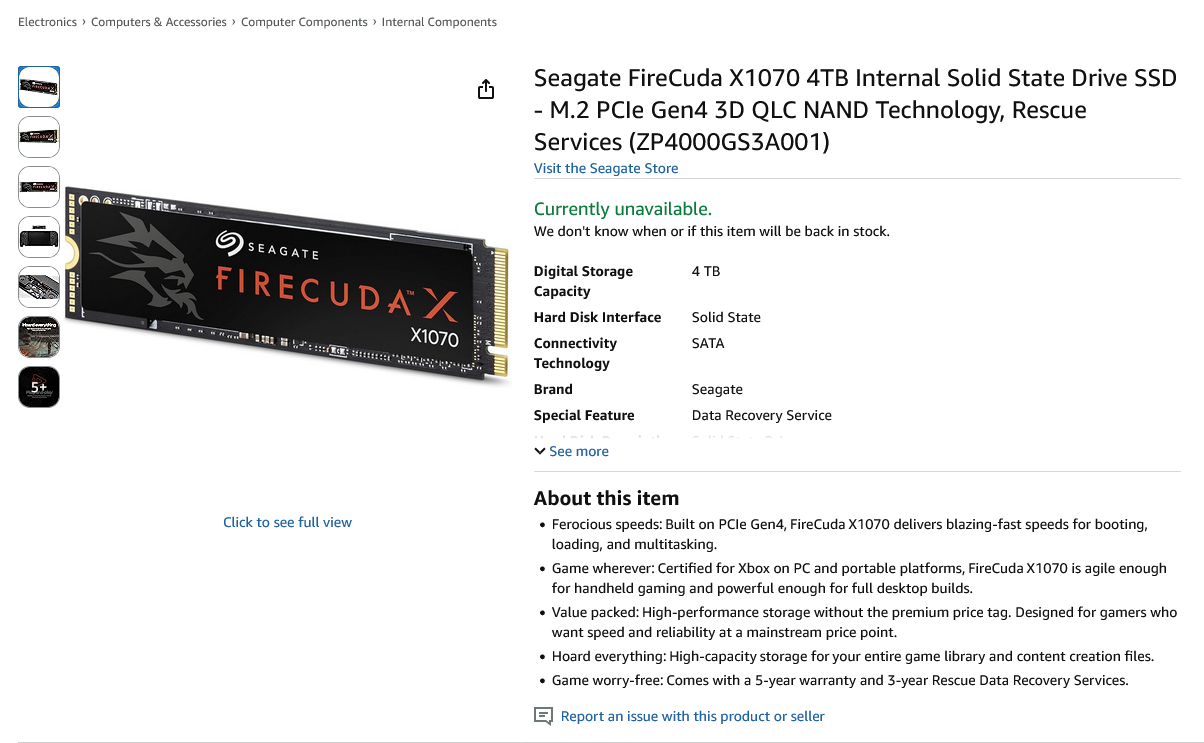
Image credit: Future
Specifications
| Model | Interface | Seq. Read (MB/s) | Seq. Write (MB/s) | Rand. Read (IOPS) | Rand. Write (IOPS) | Durability Rating (TBW) | NAND |
|---|---|---|---|---|---|---|---|
| X1070 1TB | PCIe 4.0 ×4 | 7,200 | 6,000 | 850,000 | 900,000 | 600 | TBC |
| X1070 2TB | PCIe 4.0 ×4 | 7,200 | 6,500 | 900,000 | 1,000,000 | 1,200 | TBC |
| X1070 4TB | PCIe 4.0 ×4 | 7,200 | 6,500 | 900,000 | 900,000 | 2,400 | TBC |
| 530R 1TB | PCIe 4.0 ×4 | 7,400 | 7,000 | — | — | 1,275 | 3D TLC |
| 530R 4TB | PCIe 4.0 ×4 | 7,400 | 6,900 | — | — | 5,100 | 3D TLC |
Comparison with FireCuda 530R
The X1070 trails the current FireCuda 530R on several key specs. Sequential read and write speeds are lower across all capacities, and the 530R’s 4 TB model is rated for 5,100 TBW versus the X1070’s 2,400 TBW.
NAND Type and Performance
Amazon’s listing describes the X1070 as using 3D QLC NAND, though the performance figures are closer to what TLC‑based drives typically deliver. QLC SSDs tend to drop off more sharply under sustained sequential writes once the SLC write cache is exhausted, which also explains the lower TBW ratings. Neither the controller nor the NAND has been confirmed by Seagate, so both remain unknown until an official announcement.
Certification and Box Contents
The drive is certified for the ROG Xbox Ally handhelds. According to the Best Buy spec sheet, the retail box includes:
- A one‑month Xbox Game Pass Ultimate trial
- A two‑month Adobe Creative Cloud Pro subscription
PCIe Generation Choice
Choosing PCIe Gen4 rather than Gen5 is notable because the FireCuda 540 uses a Gen5 interface. PCIe 5.0 SSDs remain expensive and tend to run hot, so Gen4 makes sense for the X1070’s target applications, even if the drive appears to slot below the 530R on paper rather than above it. Seagate released no new consumer storage products in 2025, making the X1070 its first client‑SSD release in over a year.
Conclusion
At this stage, no official information or launch date has been announced, and it remains unclear whether the $829.99 price tag is accurate.