Microsoft launches Cloud‑Initiated Driver Recovery for remote rollback of faulty updates — no user action or OEM intervention will be needed to handle broken drivers delivered via Windows Update
Source: Tom’s Hardware
Overview
Microsoft has outlined a new Windows feature called Cloud‑Initiated Driver Recovery (CIDR). This capability lets Microsoft remotely roll back a faulty driver to a previously known good version on affected PCs, without requiring any user action or OEM intervention. CIDR will only work with drivers that are distributed via Windows Update.
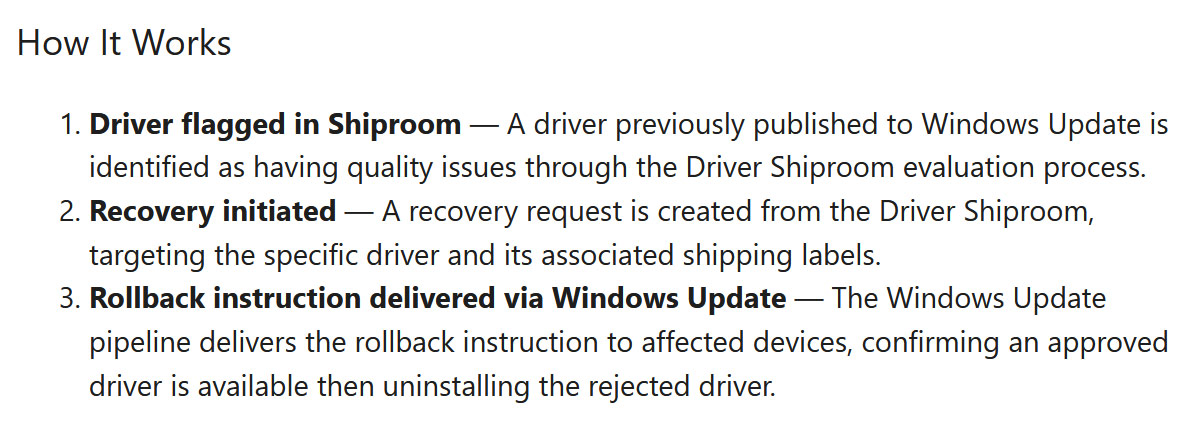
Image credit: Tom’s Hardware
Why CIDR matters
When a bad driver slips through testing and is pushed through Windows Update, it can cause a range of problems—from system instability and BSODs to lost productivity. Historically, users have had to manually intervene and roll back to an older driver, often enduring reduced functionality for an extended period. CIDR aims to automate this recovery process, delivering the fix through the existing Windows Update infrastructure—no new client agent or partner tooling is required.
Microsoft notes that partners do not need to be involved in the recovery process; however, they are asked to continue monitoring driver quality metrics in the Hardware Dev Center dashboard and respond promptly to any feedback on rejected submissions.
Rollout and future support
CIDR is currently rolling out for validation and testing. Starting in September, it is expected to be automatically supported as part of the Hardware Dev Center publishing process.