
Japan Science and Technology Agency Develops NVIDIA-Powered Moonshot Robot for Elderly Care
Source: NVIDIA AI Blog
Overview
Using NVIDIA Isaac Sim and RTX GPUs, humanoid‑robot research will automate cooking, cleaning, repositioning, and other caregiving tasks.
January 8 2026 · by Zoe Kessler
The next universal technology since the smartphone is on the horizon — and it may be a little less pocket‑friendly.
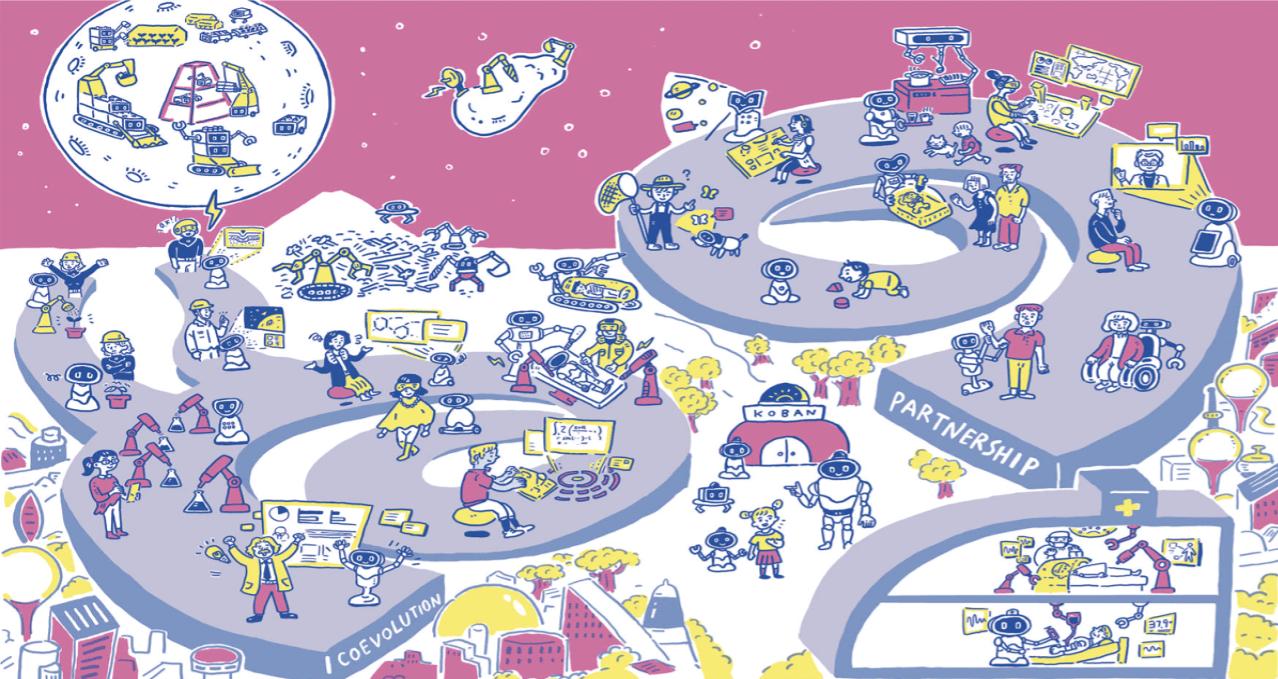
The Moonshot research program, funded by the Japan Science and Technology Agency (JST) and accelerated by NVIDIA AI and robotics technologies, is working to create a world by 2050 where AI‑powered, autonomously learning robots are integrated into Japanese citizens’ everyday lives.
That’s just goal No. 3 of the broader Moonshot initiative, which includes researchers from across Japan’s universities and comprises ten ambitious technology goals — from ultra‑early disease prediction to sustainable resource circulation.
In light of Japan’s rising elderly population, many of the research projects underway focus on how robots can aid senior care. This includes designing a robot capable of caregiving tasks such as cooking, cleaning, and hygiene assistance.
NVIDIA Architecture Powers Moonshot Robots
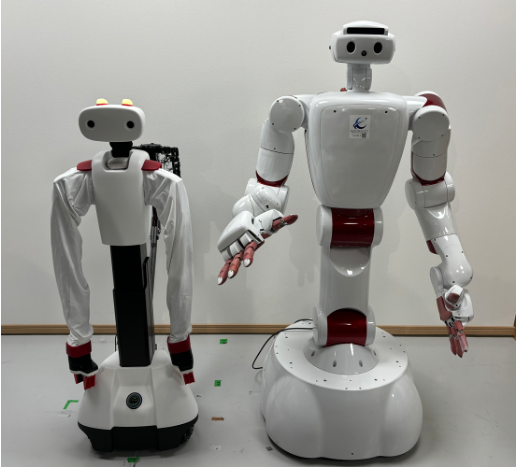
NVIDIA technologies are integrated into every level of the Moonshot project’s senior‑care robots, known as AI‑Driven Robot for Embrace and Care (AIREC).
- Dry‑AIREC – the larger, more mobile member of the Moonshot family – carries two NVIDIA GPUs onboard.
- AIREC‑Basic – primarily used for data collection for the motion‑foundation model – is powered by three NVIDIA Jetson Orin NX modules for edge AI processing.
Simulation & Training
- NVIDIA Isaac Sim – an open‑source robotic simulation framework – was used to train the AIREC robots to perform specific tasks, such as estimating forces between objects.
The integration of NVIDIA hardware and AI tools has accelerated the project from a far‑fetched dream to a tangible reality.
“Five years ago, before generative AI, few people believed that this application was possible,” said Tetsuya Ogata, professor and director of the Institute for AI and Robotics at Waseda University. “Now, the atmosphere surrounding this technology has changed, so we can seriously think about this kind of application.”
Building a Full Set of Caregiving Capabilities
Additional research projects are underway to develop the Moonshot robot’s elderly‑care capabilities.
“We’re focusing on things like changing diapers, helping patients take baths and providing meal assistance, so those actions can be supported by the robots, and caregivers can focus on improving the patients’ lives,” — Misa Matsumura, bioengineering master’s student, University of Tokyo.
A recent paper by Matsumura, presented at the IEEE/RSJ International Conference on Intelligent Robots and Systems, focused on repositioning—an essential action in elderly care to prevent bed sores and enable diaper changing.
Key Technical Points
- Humanoid robot (Dry‑AIREC) must consider each patient’s personal state and bodily needs.
- Training was performed on laptops equipped with NVIDIA RTX GPUs.
- The pipeline combined 33D posture estimation, trajectory calculation, and force estimation.
- Dry‑AIREC’s fisheye and depth cameras captured the movements required to reposition patients.
- Trajectory calculations, derived from skilled caregiver data, determine the exact repositioning method for each patient.
- Force prediction (shoulder and knee pressure) lets the robot apply the right amount of force at the right time, avoiding discomfort.
Preliminary experiments used mannequins; the research has now progressed to human trials to further refine the system.
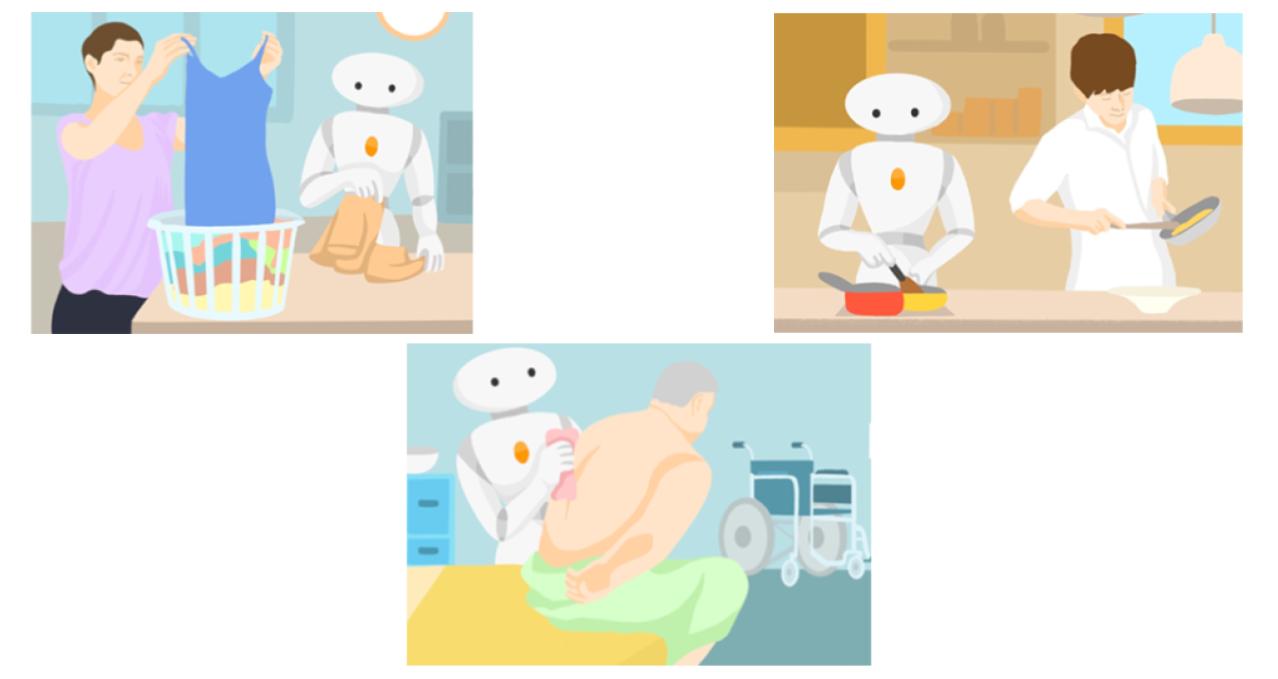
Milestone images for Goal No. 3, Japan Science and Technology Agency.
Personal Motivation
“Although my study focus is on medical robotics, I decided to join this project because my mother is growing older, and that experience has given me an appreciation for the importance of personal care,” said Etsuko Kobayashi, professor of bioengineering, University of Tokyo and Matsumura’s graduate advisor. “I found that my experience in medical robotics can be meaningfully extended to care robotics, contributing to the development of safe and reliable robotic systems for human‑centered applications.”
The Moonshot team for Goal No. 3 will showcase their progress at the 2026 International Symposium on System Integration (SII 2026) in January.
Learn more about NVIDIA Isaac Sim.