
I’ve used Pixel Weather for 2 years — here’s why I’m ditching it for Gradient Weather
Source: Android Authority
*Joe Maring / Android Authority*
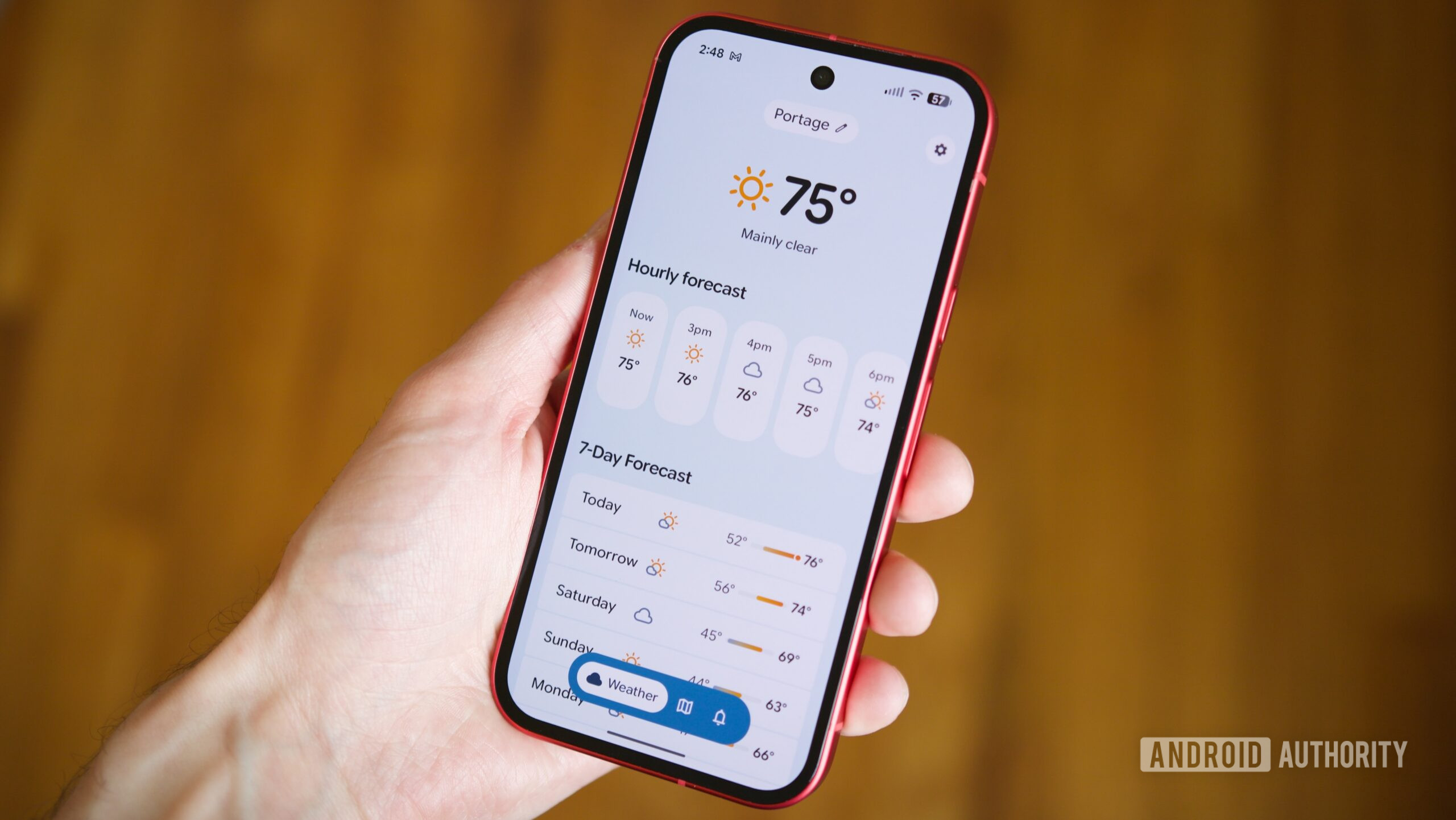
Ever since it debuted on the Pixel 9 series in 2024, [Google’s Pixel Weather app](https://www.androidauthority.com/google-basic-app-turned-dad-pixel-superfan-3658953/) has been my go‑to weather application. I love its simplistic and Pixel‑y UI, the customizable home screen, the excellent pollen tracker, and more. For what I want in a weather app, Pixel Weather checks just about every box.
Recently, though, I’ve been using another app instead. I stumbled across **Gradient Weather** while scrolling through Threads a little over a week ago, and almost immediately after downloading it, I knew I had found something special.
Pixel Weather is still great, but after using [Gradient Weather](https://play.google.com/store/apps/details?id=com.subtlesignals.gradientweather), I think it might be even better.
## Have you heard of Gradient Weather?
*898 votes*Gradient Weather is the Android weather app I’ve been waiting for
Joe Maring / Android Authority
Weather accuracy
First, the (slightly boring) but essential part: weather accuracy.
From my experience using Gradient Weather in southwest Michigan, the forecasts have been consistently reliable.
- Multiple data sources – Gradient pulls information from several providers, including public weather stations that you can view on the map.
- Built‑in accuracy engine – All of that data is fed into an internal engine that aims to produce the most accurate forecasts possible. So far, it’s delivering.
Visual presentation
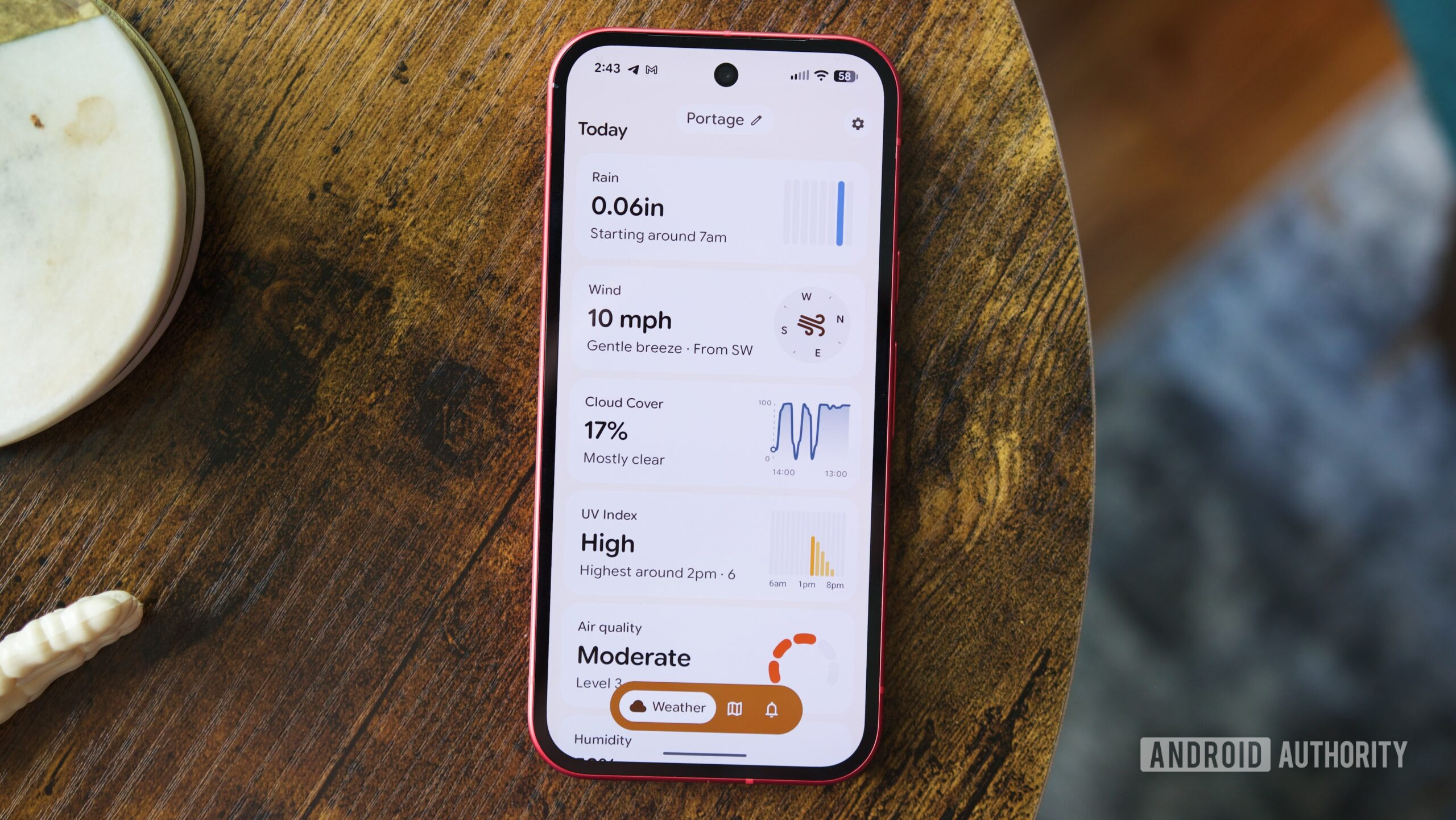
Gradient Weather visualizes data better than Pixel Weather in several ways:
| Feature | Gradient Weather | Pixel Weather |
|---|---|---|
| Hourly forecast | Bar graph showing temperature trends throughout the day | Numbers only, no visual aid |
| Weather alerts | Color‑coded alerts with full text displayed in‑app | Alerts open a browser page |
| Sunrise / sunset widget | Shows remaining daylight (hours & minutes) + detailed sun‑path graph | Simpler display |
| Moon phase | Current and upcoming phase shown | Not available |
| Wind widget | Includes a functional compass | Not available |
These small touches—like the moon phase indicator and compass—add up to a richer experience.
Weather map
The map in Gradient Weather is much more powerful than Pixel Weather’s:
- Filters for temperature, cloud cover, wind speed, and pressure (Pixel only shows precipitation).
- User‑generated reports: you can report real‑time conditions in your area, from “sunny” and “rainy” to more whimsical reports like “rainbow” or “sunset”.
Notifications
Google’s native weather app offers only a few notification types (general forecast, precipitation).
Gradient Weather, by contrast, provides highly customizable alerts:
- Daily “tomorrow’s weather” notification.
- Frost alerts for fall/winter months.
- Imminent rain alerts with selectable lead times (10, 15, 20 minutes).
- Alerts for virtually any weather condition you can imagine.
Customization
Customization is where Gradient Weather truly shines:
- Themes – Auto‑theme based on current weather, match your phone’s accent color, or create a completely custom palette.
- Dark mode – Fully adjustable dark theme.
- Fonts – Choose from multiple typefaces.
- Home‑screen layout – Rearrange widgets and panels to suit your workflow.
- App icons & widget – Custom icons and a highly configurable widget that outclasses any other third‑party weather widget I’ve used.
Overall, Gradient Weather delivers superior accuracy, richer visualizations, a more capable map, granular notifications, and deep customization—making it a clear step up from Pixel Weather.
Is it really better than Pixel Weather?
Joe Maring / Android Authority
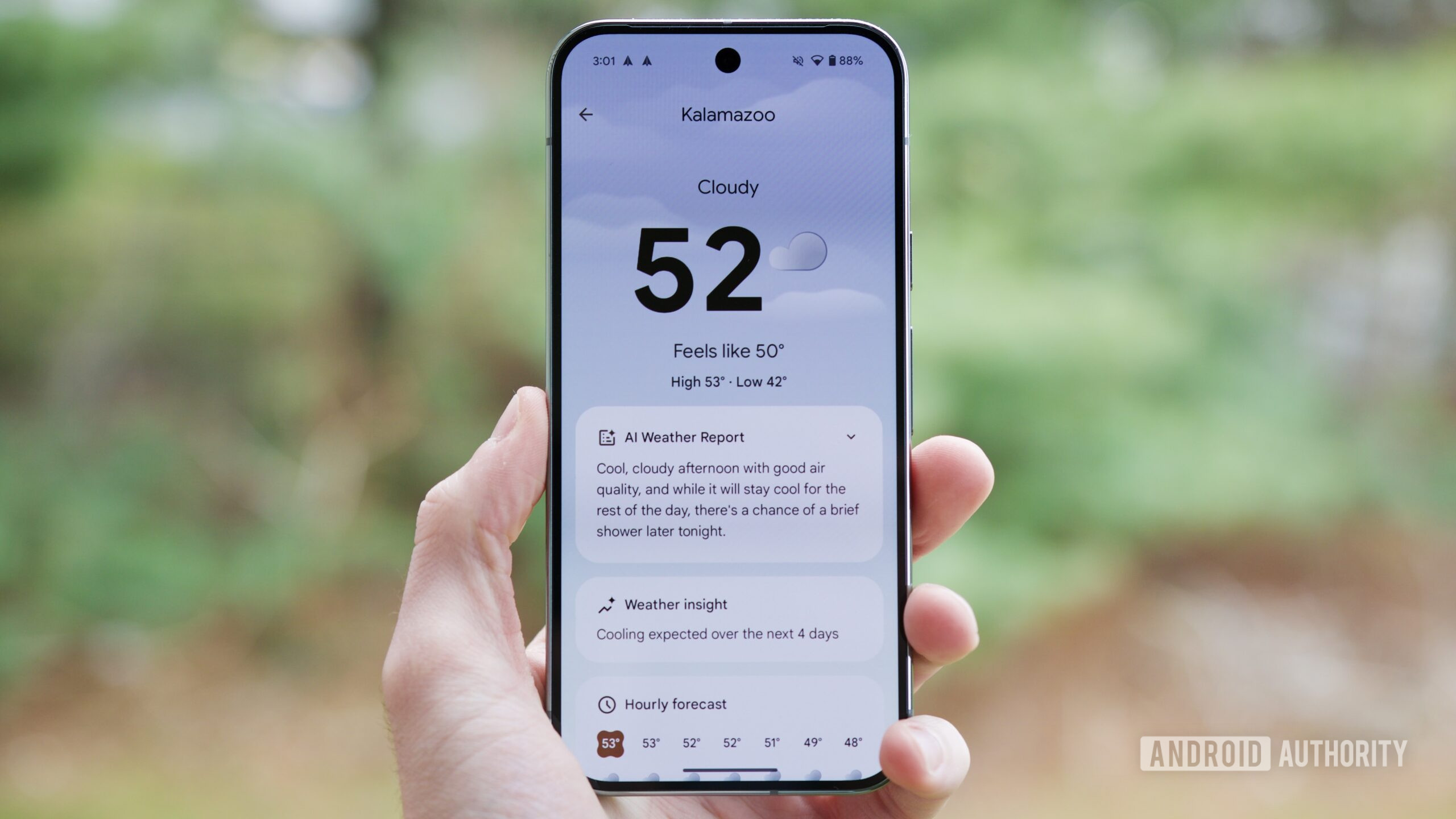
Comparing Gradient Weather side‑by‑side with Pixel Weather, Google’s app still has a couple of key advantages.
- Pollen tracking – Gradient Weather doesn’t have an equivalent to Pixel Weather’s pollen tracker. There is a “Pollen Alert” notification you can enable, but it isn’t currently supported in my area. As someone with seasonal allergies (and who lives with someone with even worse allergies), that’s a bummer.
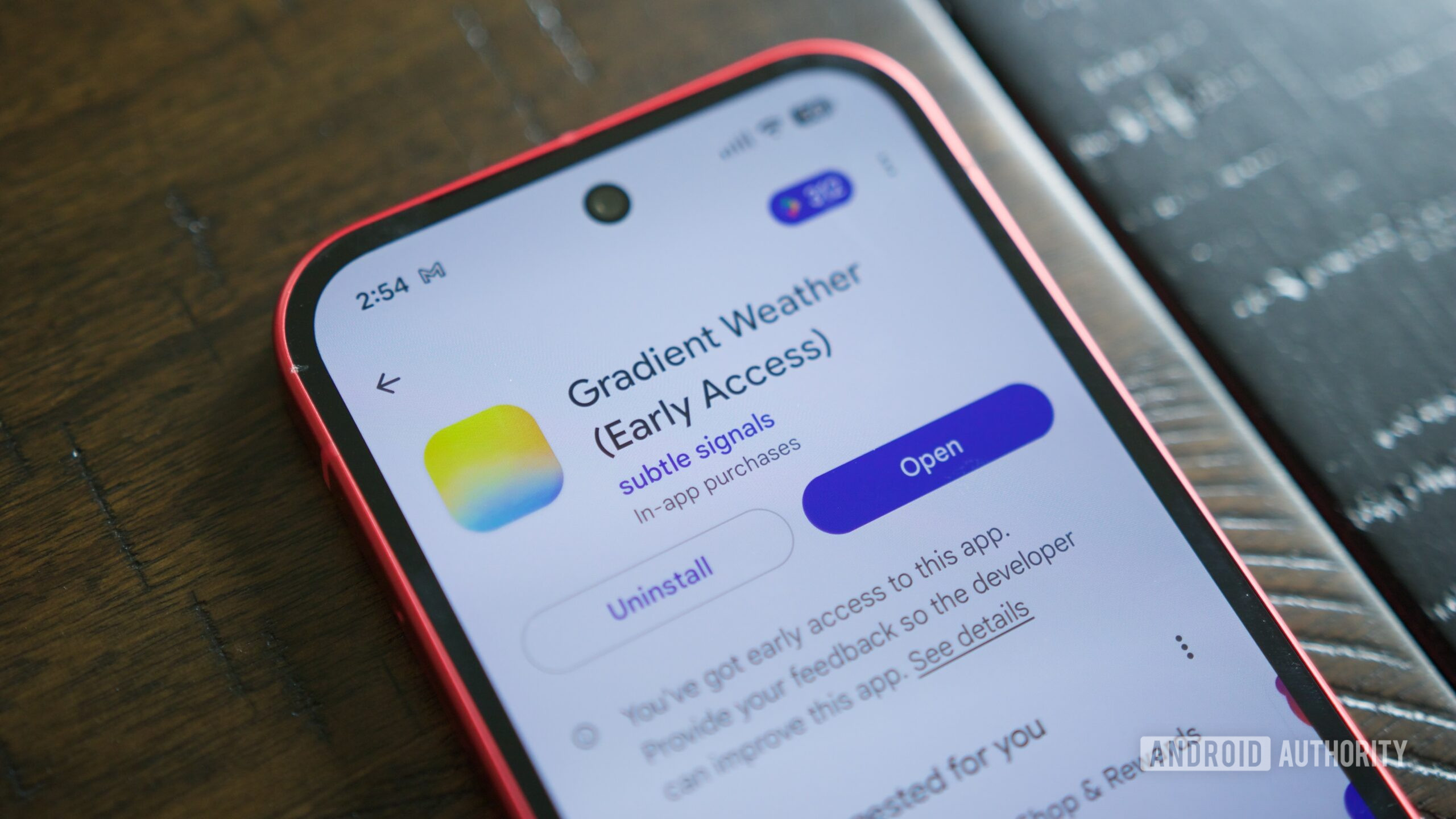
- Cost – To unlock all of Gradient Weather’s features—full notification/alert support, all theme and layout tools, and widget customization—you need a Premium membership. Pricing is $22 / year, $3.50 / month, or $33 for lifetime access. I appreciate the one‑time‑payment option and love supporting a small development team, but it’s less ideal when Pixel Weather is 100 % free.
Joe Maring / Android Authority
However, with everything Gradient Weather gets right — and the fact that you can use it on any Android phone, not just Pixels — I think it’s fair to say that it’s my new favorite weather app on Android. Is it perfect? No. But considering it was just released a little over a week ago and is already this good, I cannot wait to see where it goes next.
I still love Pixel Weather, but for now, Gradient has my heart.
Follow
Thank you for being part of our community. Please read our Comment Policy before posting.