
I finally found a smartwatch that gets my sleep right
Source: Android Authority
*Photo by Megan Ellis / Android Authority*
While smartwatches track more metrics than ever, whether they do this well is another story. I’ve used wearables for years to track different things but gave up on getting accurate sleep results a while ago.
However, my experience with the [Samsung Galaxy Watch 8](https://www.androidauthority.com/samsung-galaxy-watch-8-review-3590714/) changed that. I finally found a watch that can accurately represent my disrupted sleep.
#### Have you found a wearable that tracks your sleep correctly?
**26 votes**Why Smartwatches Struggle to Understand My Sleep
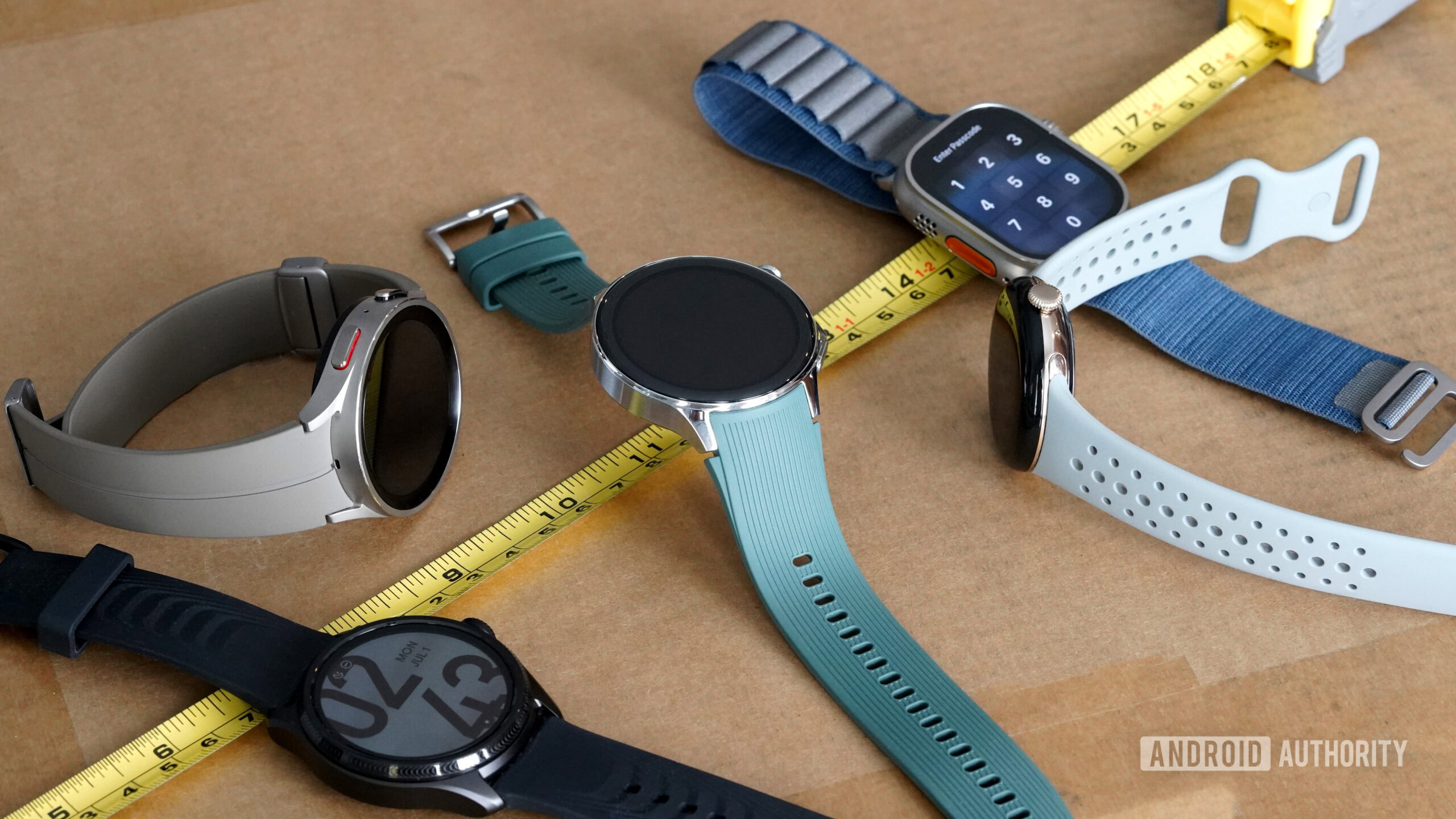
Photo credit: Kaitlyn Cimino / Android Authority
My Experience
I’ve tried a variety of smartwatches and fitness trackers over the years—mostly Fitbit, Samsung, and Huawei models. All of them share a common problem: they overestimate how much I actually sleep.
Health background
- Fibromyalgia → chronic pain and frequent sleep disturbances.
- Typical night:
- Up to 10 hours of total sleep, but with many awakenings.
- Up to 12 hours spent in bed, a large portion of which is spent awake.
- Non‑restorative sleep: Even after a long night, I don’t feel refreshed. Anything less than 10 hours makes fatigue markedly worse.
What the watches got wrong
| Issue | How it manifested |
|---|---|
| Over‑estimated total sleep | Devices reported more sleep than I actually got, leading health apps to suggest I should sleep less. |
| Inflated “restful” sleep | The proportion of deep/REM sleep was exaggerated, despite me feeling unrested. |
| False nap detection | The Huawei Watch GT 4 (and previously the Watch Fit 3) flagged periods of inactivity—physiotherapy sessions, TV time on the couch—as naps. |
| Platform inconsistencies | Fitbit’s “Sleep Animals” feature claimed personalization but still nudged me toward shorter sleep durations. |
The Result
After repeatedly receiving misleading data, I stopped using smartwatches for sleep tracking altogether and now rely on them only for activity monitoring.
The Galaxy Watch 8 Does Things Differently
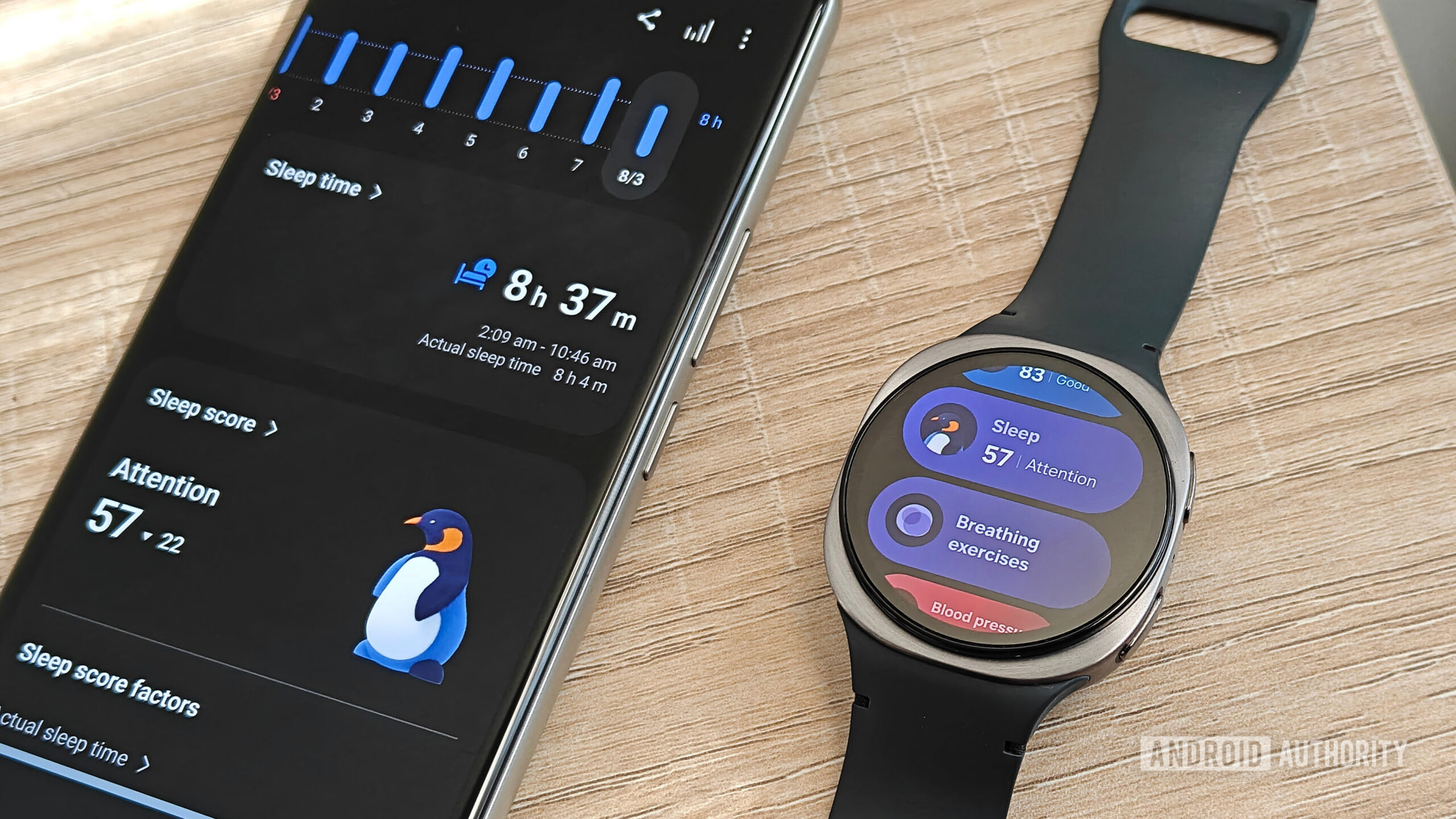
I was skeptical about trying a Samsung smartwatch for sleep tracking. The last time I used one of Samsung’s watches, the tracking was worse than any other solution I’d tried.
When I asked Android Authority colleagues for a wearable that’s available in South Africa, they pointed out that the Galaxy Watch 8 now offers noticeably better tracking than its predecessors.
Why I Chose the Watch
- Oura Ring 4 – still the most insightful, but unavailable locally unless you’re part of a specific medical‑aid‑plus‑bank program.
- Fitbit – no longer sold in South Africa.
Given those constraints, the Galaxy Watch 8 was the most practical option.
What Surprised Me
- Accurate sleep‑onset detection – Over several weeks and varied scenarios, the watch consistently identified when I actually fell asleep.
- Bedtime mode isn’t a shortcut – Even if I enable bedtime mode within 30 minutes of getting into bed, the watch still registers long periods of wakefulness (e.g., a night when it took me > 3 hours to fall asleep).
- Fewer false‑positive naps – Physiotherapy sessions, couch‑surfing binge‑watch marathons, and even my cat’s lap‑naps are no longer logged as naps.
- Migraine edge case – On days when a severe migraine forces me to stay in bed all day, the watch sometimes logs portions of that time as a nap.
Consistency & Detail
The Galaxy Watch 8 records frequent interruptions and accurately marks the moment I drift off. It also logs each awakening throughout the night, which is especially helpful on nights with a lot of wake‑ups.
Because the data feels reliable, the watch doesn’t pressure me to “sleep more” or chase an eight‑hour target. Instead, I get a realistic picture of how much (or how little) I actually slept, without the constant push to adjust my schedule.
Bottom line: The Galaxy Watch 8’s sleep‑tracking has improved enough to be a viable, locally‑available alternative to dedicated sleep rings and former Fitbit devices.
There Is Still Room for Improvement

The Galaxy Watch 8 is great for sleep tracking, but it still needs work in a few key areas.
Main Pain Points
| Issue | Details |
|---|---|
| Battery life | I have to charge the Watch 8 every third day (≈ 1 hour to full). Compared with Huawei smartwatches that can last > 1 week, this feels short. |
| Feature lock‑in | • Snore detection works only when the phone is charging overnight. |
| • ECG & blood‑pressure measurements require Samsung Health Monitor, which runs only on Samsung Galaxy phones. | |
| Energy score | The score is heavily weighted by your average sleep time, so a single bad night (e.g., 4 h) barely affects the rating, even though you feel exhausted. |
| Conflicting notifications | One alert tells you to rest, while another at 11 pm pushes you to meet daily goals, eroding trust in the recommendations. |
Personal Example
- Night before an event: 4 h of sleep → felt terrible.
- Energy score: Still high because the algorithm uses my 10‑h average.
- Next night: 5 h of sleep → only a slight dip in the score, despite feeling drained.
Product Snapshot

- Bright display • Powerful health features • Gemini built‑in
- MSRP: $349.99
What’s New
- “Squircle” design with new band attachments.
- 50 % brighter display than the previous model.
- Slightly larger battery.
- Four configurations: 40 mm (Wi‑Fi/LTE) and 44 mm (Wi‑Fi/LTE).
Verdict
Galaxy Watch 8 shines in activity tracking, sleep monitoring, and smartwatch controls, but its device lock‑in and modest battery life hold it back.
I’m curious to see where Samsung’s wearables head next—especially since they’re available globally and don’t need a subscription. If Samsung focuses on refining metric quality rather than just adding more metrics, the sleep‑tracking experience could become both more useful and more accessible.
Follow
Thank you for being part of our community. Please read our Comment Policy before posting.