
Device that can extract 1,000 liters of clean water a day from desert air revealed by 2025 Nobel Prize winner — claimed to work in desert air with 20% humidity or lower, delivering off-grid ‘personalized water’
Source: Tom’s Hardware
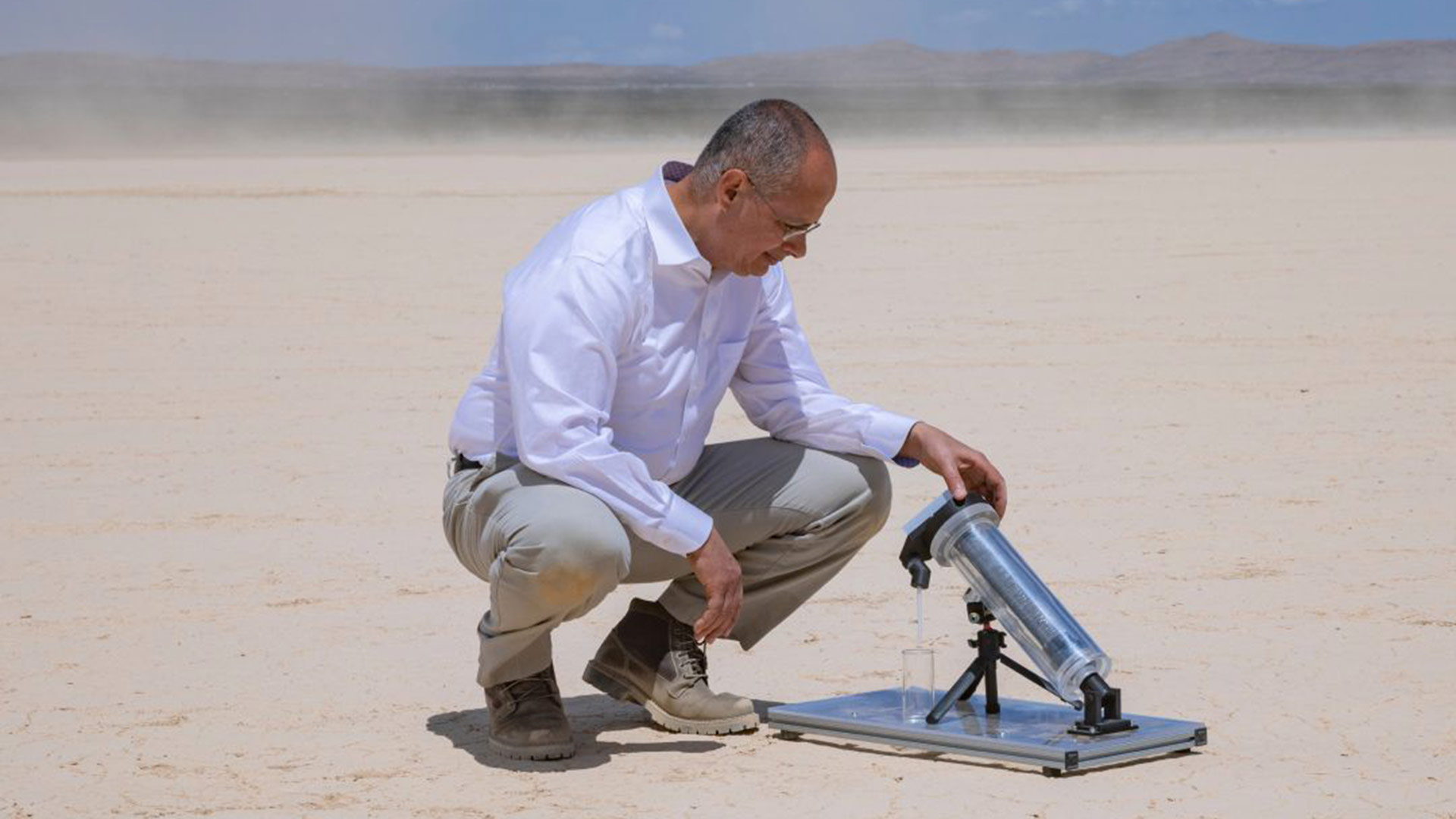
Image credit: Atoco
A 2025 Nobel Prize winner has set up a company to commercialize a machine that it claims can pull 1,000 L (about 264 US gal) of drinkable water a day from thin desert air. As Interesting Engineering reports, Professor Omar Yaghi, a chemist at the University of California, Berkeley, invented a device that works effectively in desert air with 20 % humidity or lower. As a self‑contained off‑grid device, it could provide relief to regions where water shortages are persistent or have been precipitated by natural disasters.
Yaghi’s company, Atoco, also sees a market in “personalized water,” similar to households that generate their own off‑grid power from wind or solar. Prototypes have been successfully tested in places as arid as Death Valley. The 1,000‑L‑per‑day machine is far larger than the social‑media prototype shown alongside the professor in the desert—about 20 ft in length, roughly the size of a shipping container.
The science behind this clean‑water harvesting machine is based on reticular chemistry, one of Yaghi’s specialist areas. The device is packed with metal‑organic frameworks (MOFs), synthetic porous materials engineered at the molecular level to have huge surface areas. A few grams of an MOF can have a surface area equivalent to a football arena.
With this incredibly large surface area in a compact form, the MOF efficiently captures water from the air and condenses it into liquid. Yaghi’s mechanism can do this without an external power source: it uses wind and ambient air for water input, then the sun to drive condensation and evaporative action. In other words, the invention can operate as a self‑contained, entirely off‑grid device.
Atoco also offers on‑grid solutions for larger‑scale deployments.
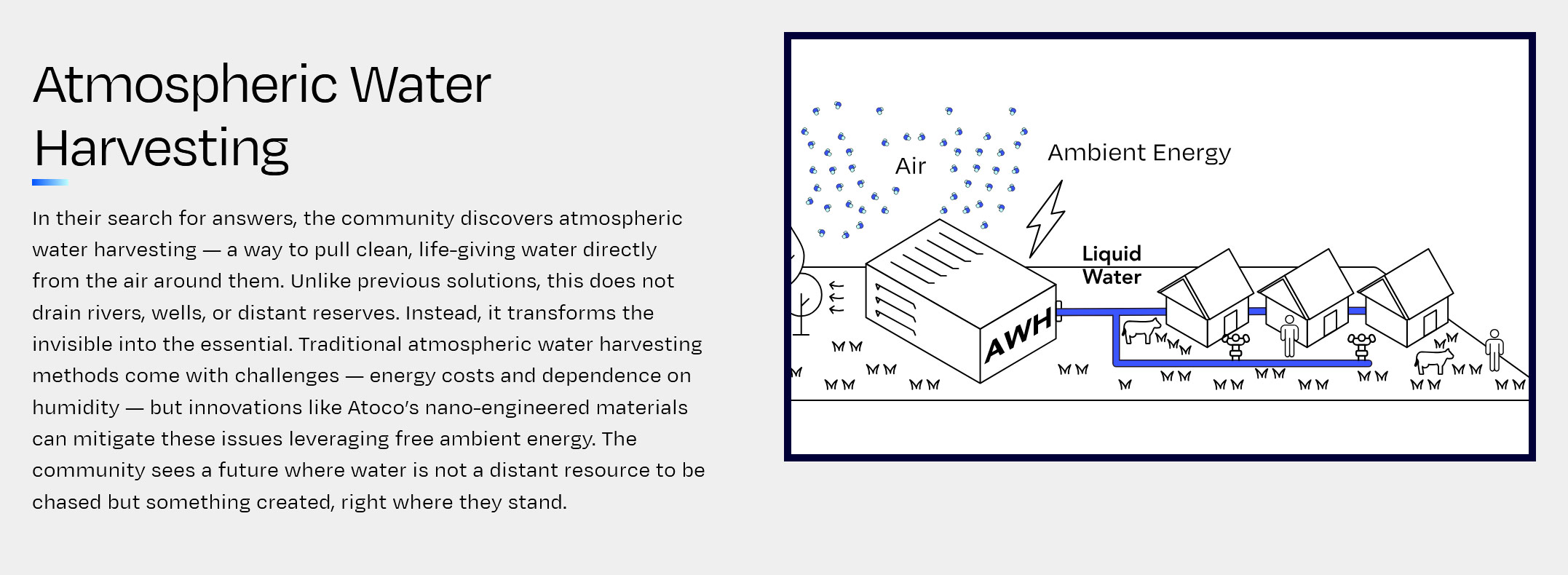
Image credit: Atoco
Inspired by hardship
The MOF Water Harvester was inspired by Yaghi’s personal history, growing up in a refugee community in Jordan, where his family would listen for the arrival of the water truck, hoping to beat the rush and fill their life‑sustaining containers. The UN has been warning about water insecurity, or even water bankruptcy, for years, so inventions like this could have sizable positive impacts for humanity.