
Could Bill Gates and political tussles overshadow AI safety debate in Delhi?
Source: BBC Technology
Could Bill Gates and Political Tussles Overshadow the AI‑Safety Debate in Delhi?
11 minutes ago — Zoe Kleinman, Technology editor
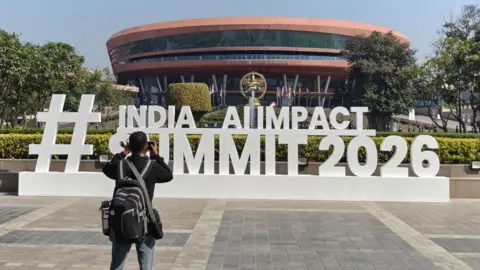
Tech bosses, politicians, scientists, academics and campaigners are gathering at the AI Impact Summit in India this week for high‑level discussions about how the world should steer the AI revolution in the right direction.
The Gates Foundation has confirmed that Bill Gates will deliver his keynote as scheduled, underscoring how the aims of this summit—and others like it—can be eclipsed by other events.
Why the Location Matters
- The loudest voices on AI tend to come from the West (the US and Europe).
- Holding a summit of powerful leaders in the Global South highlights a region that risks being left behind in the AI race.
A Contrast to Western Posturing
Western powers have been jockeying for pole position in Paris, and US Vice President JD Vance delivered a blistering speech insisting that “America’s place at the top of the pack is non‑negotiable.”
In Delhi, the vibe feels more modest. India has helped build the foundations that support today’s mega‑powerful new tech, yet it does not reap as much reward as the more affluent West.
India’s Growing AI Landscape
- Key hubs: Bengaluru, Hyderabad, Mumbai.
- Tech workforce: Large and increasingly skilled.
- Major investments: Google, Nvidia, Amazon, among others.
In Empire of AI, journalist Karen Hao describes an unnamed Indian firm contracted to moderate AI‑generated images, noting that workers were forced to review disturbing content to decide what should be blocked.
According to Glassdoor, the average salary for an AI data trainer in Chennai is 480,000 rupees (≈ £4,000 / $5,000 per year). While essential, this contrasts sharply with OpenAI’s valuation of over $500 bn.
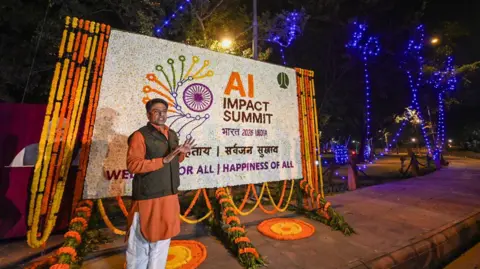
The article reflects on the tension between high‑profile political statements and the on‑the‑ground realities of AI development in emerging economies.
More Than Technology for India
The 2026 International AI Safety Report notes that while “in some countries over 50 % of the population uses AI, across much of Africa, Asia, and Latin America adoption rates likely remain below 10 %.”
Language Barriers
- The world’s biggest U.S. AI chatbots do not work in all of India’s 22 official languages, let alone the hundreds of dialects spoken across the country.
- ChatGPT and Claude currently support roughly half of those languages.
- Google Gemini supports only nine.
“Without tech that understands and speaks these languages, millions are excluded from the digital revolution – especially in education, governance, healthcare, and banking,”
— Prof. Pushpak Bhattacharyya, IIT Mumbai (as quoted by the BBC)
India’s Sovereign AI Push
- The Indian government’s AI Mission aims to build home‑grown AI platforms, but progress is relatively slow.
- Competing products from the U.S. (e.g., OpenAI, Anthropic) and China (e.g., DeepSeek, ByteDance) are racing ahead with frequent releases.
- India’s budget for the mission is $1.2 bn, a fraction of the multi‑billion‑dollar resources of major corporations.
“For India, this is about more than technology; it is about economic transformation, digital sovereignty and building capability at scale,”
— Rajan Anandan, Managing Director, Peak XV
“Within the country there is a strong sense of momentum and confidence.” – Rajan Anandan
Global AI Governance & the Upcoming Summit
- An Indian official (speaking before Christmas) said India is less interested in AI’s geopolitical power struggles and more focused on leveraging the technology for domestic growth.
- The upcoming AI summit proposes a bottom‑up, Global‑South‑led approach that emphasizes people, planet, and progress.
“The Americans will have less to say with the Summit’s proposed bottom‑up, Global South approach to AI governance that focuses on people, planet and progress,” – Prof. Gina Neff, Queen Mary University, London
“We need governments to act together to shape a more inclusive, democratic and people‑centred vision of AI in the face of unprecedented corporate power,” – Jeni Tennison, Executive Director, Connected by Data
“As the world’s largest ‘middle power’, India could make that happen,” – Jeni Tennison
“I hope we will see pragmatic efforts to move beyond a legislative patchwork towards meaningful consensus in addressing AI harms, maliciously caused or otherwise,” – Henry Ajder, AI expert
“For this summit to have any real impact for the Global South, there needs to be access for all to AI and that can only be achieved by opening it up,” – Amanda Brock, CEO, OpenUK
Concerns About Safety & Transparency
- Many AI giants still keep key details—especially training data—confidential.
- Some experts say the agenda’s focus on safety and responsibility has slipped.
- After the first AI Safety Summit (UK, 2023), the word “safety” was quietly dropped from the title.
“I have decided not to go to Delhi this week because I have little confidence in any meaningful outcomes,” – Anonymous expert
“It’s important that we go but my expectations of anything useful coming out of it are very low,” – Prof. Dame Wendy Hall, British computer scientist
Watch
Why India’s AI summit is key to its future in tech – [Video link placeholder]
Images
 |  |
Prepared as a cleaned‑up markdown version of the original content.