
China brain computer interface outfit accelerates to human trials in quest to outpace Neuralink — mix of government backing and investor enthusiasm speeds time to market for NeuroXess
Source: Tom’s Hardware
China could overtake the U.S. in brain‑computer interface (BCI) technology leadership in the coming months/years, thanks to a fortunate mix of government support and investor enthusiasm. In a recent interview with the Financial Times (FT), Tiger Tao, the founder of Shanghai‑based NeuroXess, highlighted the rapid progress of the firm’s BCI technology. NeuroXess (no relation to Intel XeSS) was set up in 2021 and has already reported some successful human BCI trials.
The FT report comes less than six months after we covered news of China’s plans to outpace Neuralink with a state‑backed BCI blitz.
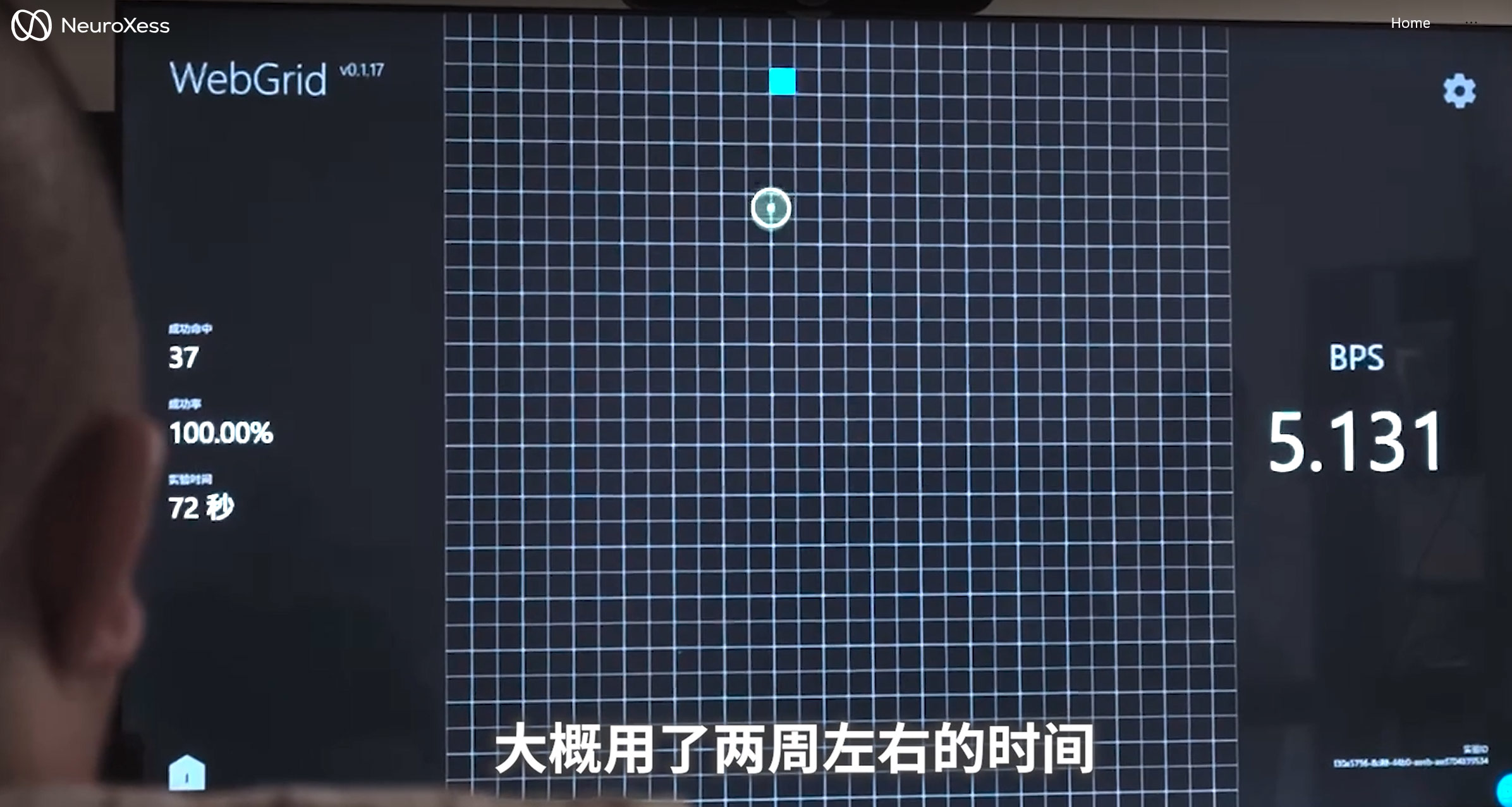
BCI testing: the patient moves the circular cursor to hit the square. (Image credit: NeuroXess)
As for NeuroXess’ success, it seems to have been rapid. Founded in 2021, the company has recently boasted of using its BCI tech to allow a paralyzed patient to control a computer cursor, with the patient performing computing tasks just five days after the implant operation.
NeuroXess technology
NeuroXess trials have been using invasive BCI tech, focusing on areas of strong medical need—such as patients with paralysis or amyotrophic lateral sclerosis (ALS). The NeuroXess BCI uses a polyimide and metal mesh that sits on the brain surface without piercing any brain tissue. This contrasts with Elon Musk’s Neuralink, which employs an implant bristling with microscopic threads that penetrate brain tissue to capture neural signals. Concerns have been raised about electrodes causing scarring and signal degradation over time; Neuralink argues its super‑thin electrodes mitigate this, while NeuroXess sidesteps the issue entirely by avoiding tissue penetration.
Performance data shared by the FT indicates that Neuralink has achieved brain‑link speeds of about 10 bps in trials, whereas the Chinese tech is capable of roughly 5.2 bps. The NeuroXess speeds are confirmed in the video linked in the introduction.
A BCI expert quoted by the FT noted that advances from invasive systems are feeding improvements in non‑invasive BCIs. The hope is that future non‑invasive devices could become minor or unnecessary, reducing the need for surgical implants. This optimization work may progress more quickly in China, where a virtuous circle of more data, lower costs, and increased user adoption is expected to accelerate development.