
Sam Altman fires back at Elon Musk's proposal for space-based data centers, says orbiting data centers 'ridiculous' for now — cites high failure rates and cost as primary limiters
Source: Tom’s Hardware
Overview
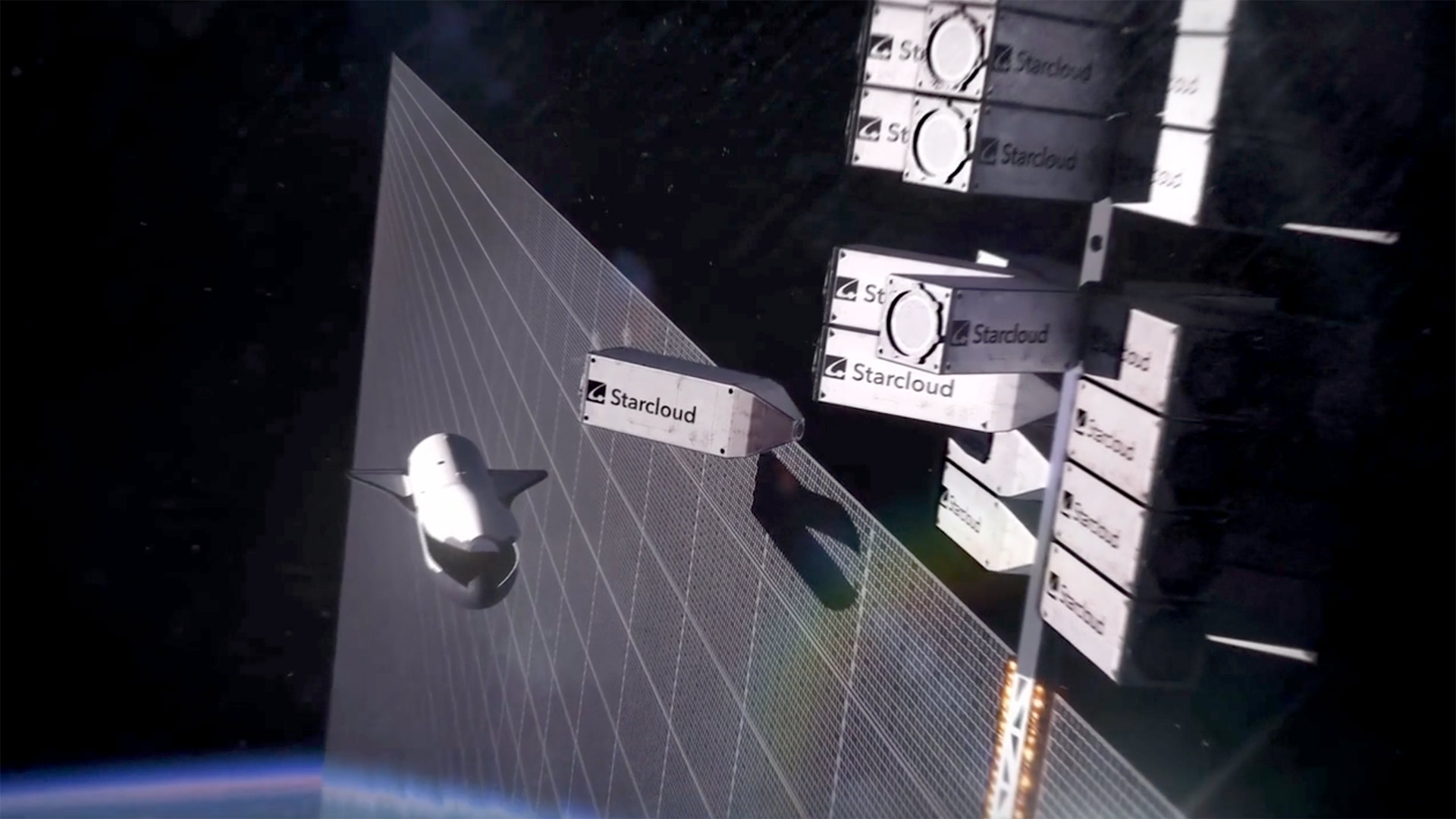
Image credit: Starcloud
Numerous visionaries—including Elon Musk and Jeff Bezos—are exploring the idea of placing AI data centers in orbit to tap into unlimited power, fewer physical constraints, and the lack of regulations. While the concept may have long‑term potential, Sam Altman, CEO and co‑founder of OpenAI, calls it “ridiculous” for now.
- Launch cost: $5.6 million to send 1,764 lb (800 kg) to low Earth orbit (LEO) via a SpaceX rocket.
- Weight: A single Nvidia NVL72 GB200 rack‑scale solution weighs 3,000 lb–3,245 lb (1,360 kg–1,472 kg) without additional data‑center‑scale connectivity, cooling, and power infrastructure.
Even with volume discounts, launching data centers into space remains extremely expensive, making economic viability uncertain in the near term.
“There will come a time — space is great for a lot of things. Orbital data centers are not something that is going to matter at scale this decade.” — Sam Altman
Radiation‑Hardened Components Required
Leading‑edge process technologies—such as TSMC’s N4 (4 nm class) used for AI accelerators like Nvidia’s B200/B300, advanced CPUs, DPUs, and network processors—are not radiation‑hardened, meaning they cannot survive in space. Existing radiation‑hardened fabrication technologies are typically older (e.g., 90 nm), so new space‑worthy process technologies must be developed before such hardware can be deployed.
In addition to radiation‑hardened microelectronics, the industry needs:
- Space‑qualified cooling systems
- Power‑generation solutions capable of supporting millions of AI accelerators
Companies like Elon Musk’s SpaceX and Jeff Bezos’s Blue Origin are likely better positioned to develop this infrastructure than traditional terrestrial data‑center firms. This explains their vocal advocacy for orbital data centers despite the technology still being at least a decade away from viability.