
Volunteering at FOSDEM: my best way to experience the conference
Source: Dev.to
Overview
FOSDEM is huge, busy, and full of amazing open‑source energy. But behind all the talks, devrooms, booths, and hallway conversations… there’s one simple reason it works:
FOSDEM is built by volunteers.
FOSDEM is a free, non‑commercial, two‑day event run by volunteers to support Free and Open Source Software. It’s where open‑source developers and communities meet to share updates, learn from each other, and collaborate.
It’s also massive: the 2026 schedule includes around 70 tracks across many rooms, with lots of talks happening in parallel, and is expected to have more than 8 000 attendees.
FOSDEM 2026 will take place at the ULB Solbosch campus in Brussels, Belgium, on 31 January and 1 February 2026.

Where do I register?
This is the most common question, and the answer surprises everyone: you don’t register. FOSDEM is free and has no registration; you just show up.
The only “registration” you might see is for separate co‑located events (e.g., independent events run by other groups).
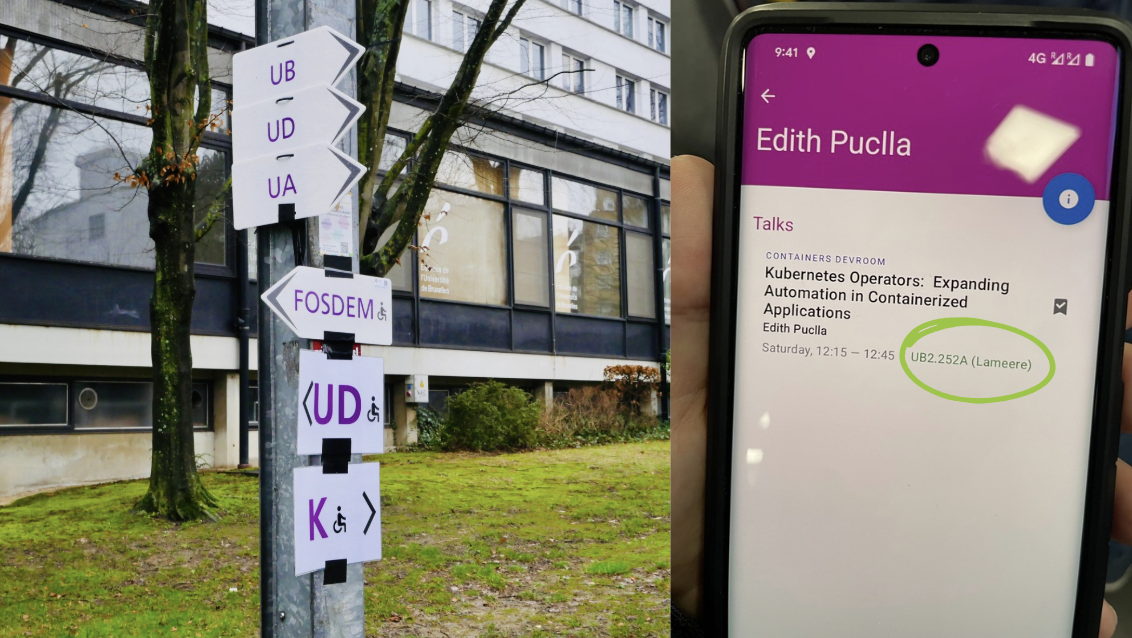
FOSDEM is spread over a campus with multiple buildings. Talks are distributed across those buildings, and the schedule tells you exactly which room. Every talk has a building and room name in the schedule, for example:
K.1.105 = building K, floor 1, room 105
So expect to walk between buildings and leave a little time between talks.
Below is my talk from the previous year and how it was scheduled:
How talks work
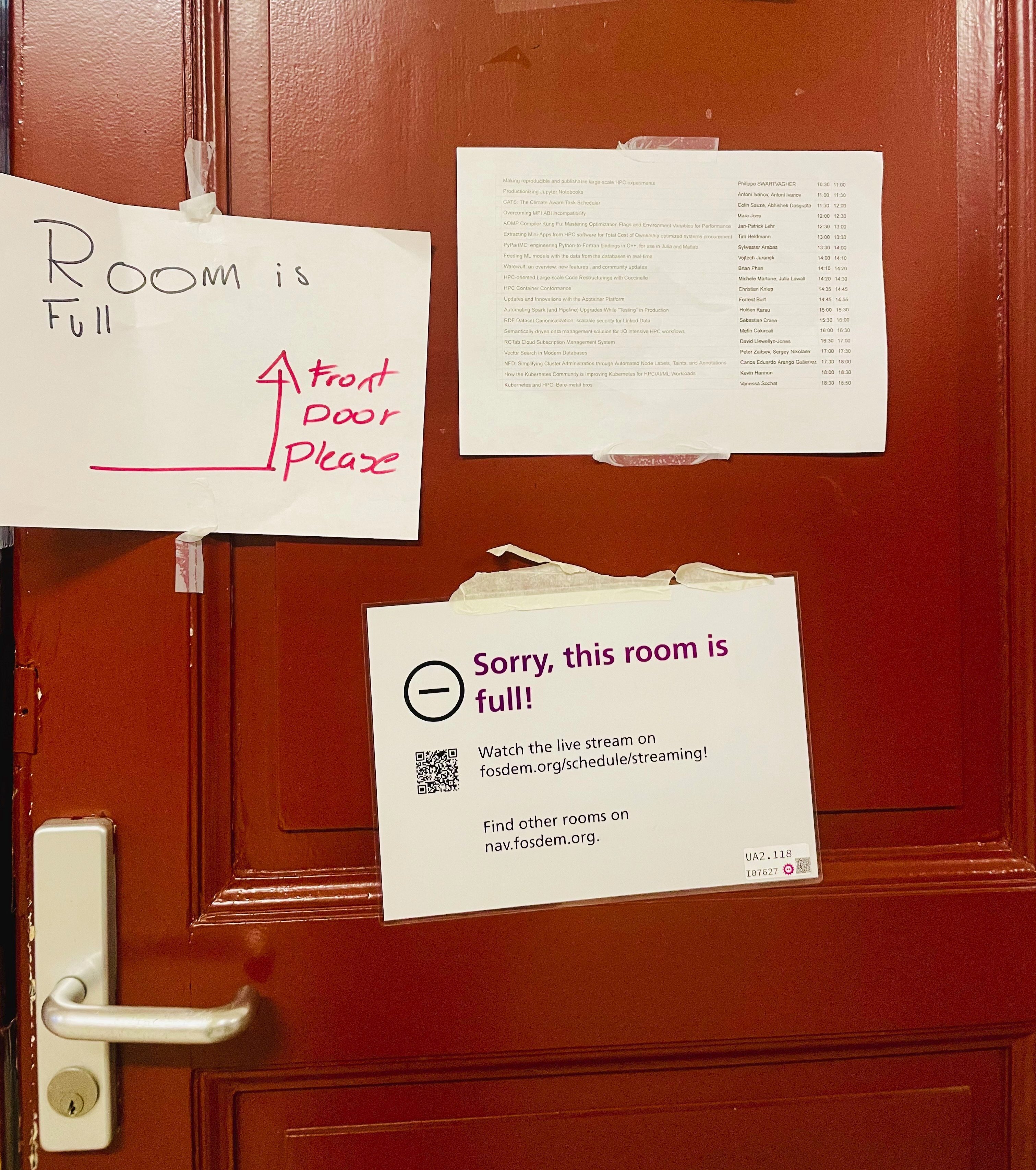
The schedule is organised into tracks/devrooms. Think of each devroom as a mini‑conference run by a specific community. Since many sessions happen at the same time, you’ll need to pick what you want to attend. Some rooms fill up quickly, so for must‑see talks it’s worth arriving 10–15 minutes early… otherwise you might be greeted by a “Room full” sign at the door.
What to expect
- It’s busy, fun, and full of people everywhere.
- Plenty of coffee, and the classic Belgian combo of beer and fries.
- The best parts are the talks and the “hallway track” (all the great conversations you’ll have between sessions).
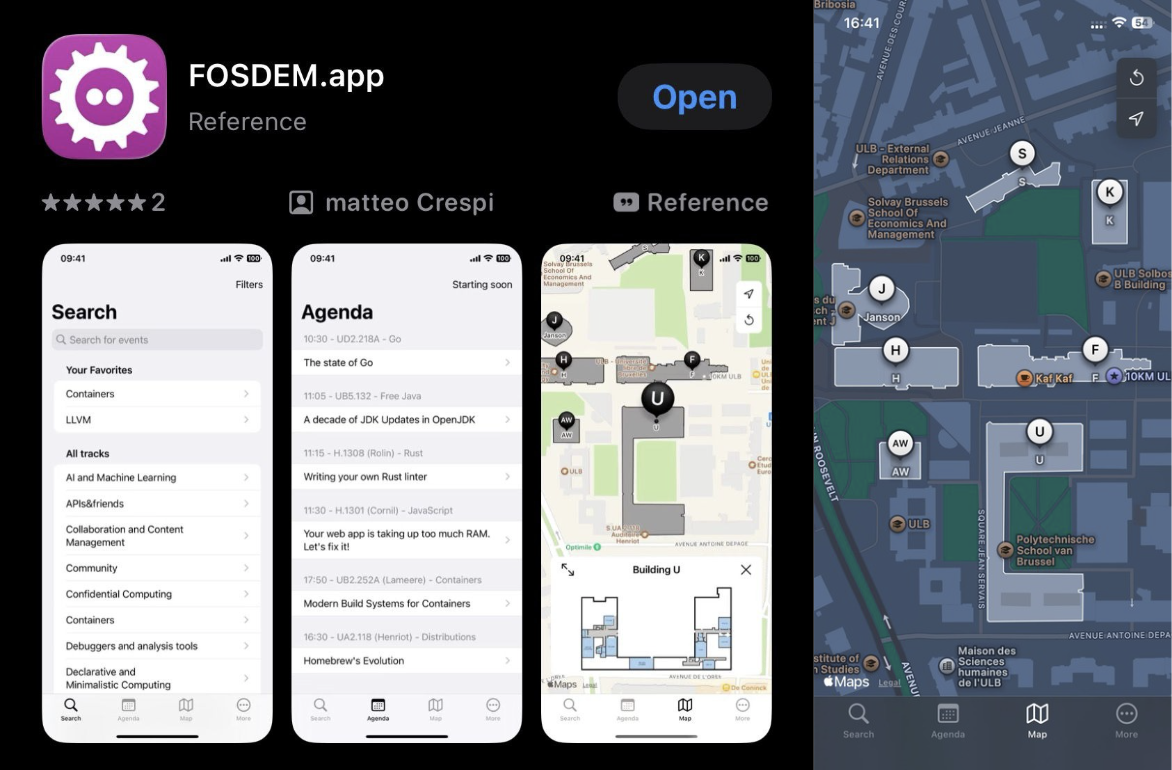
Keep the schedule open on your phone so you can quickly find rooms and move between talks without getting lost. You can download the official mobile app to view room distributions and the agenda.
What does it mean to volunteer at FOSDEM?
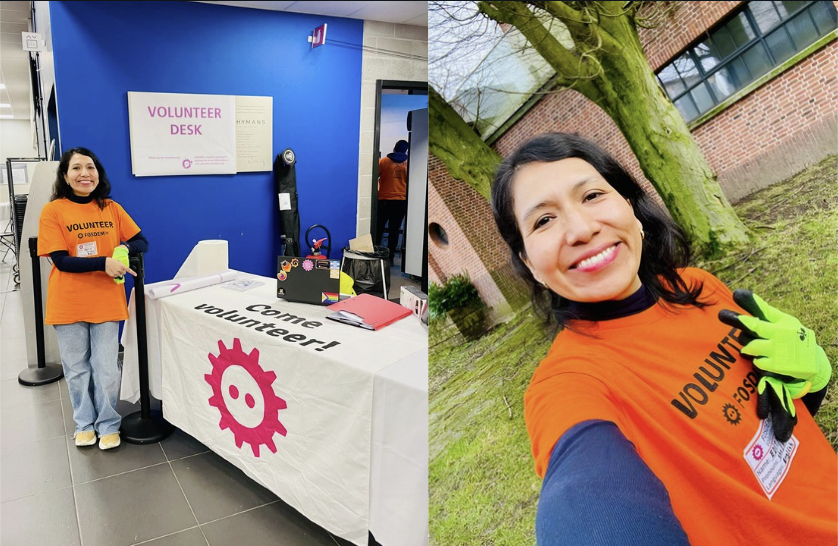
I volunteered at FOSDEM in the past (yes: clean‑up, set‑up, carrying stuff, helping where needed 😄), and I’m planning to volunteer again this year. Volunteering means donating a bit of your time to help the event run smoothly and stay safe and welcoming for everyone.
A small crew works on FOSDEM year‑round, but during the event the team grows into a large group of volunteers doing practical, hands‑on tasks. Volunteering can range from a couple of hours to half a day, and you can take on one task or several.
And the best part: you can still enjoy the conference. Many tasks happen on Friday (build‑up), so you can help without missing talks.
What kind of volunteer tasks exist?
Tasks vary each year, but the most common ones look like this:
1) Build‑up (usually Friday)
- Helping with room setup (chairs, signs, cables)
- Preparing information points
- Supporting devrooms with last‑minute logistics
2) During the conference (Saturday & Sunday)
- Assisting speakers / room introductions
- Guiding attendees (directions, queues, where to go next)
- Supporting volunteers/devrooms when something unexpected happens
3) Clean‑up (after sessions / end of day)
- Collecting leftover materials
- Resetting rooms
- Keeping spaces tidy and safe
My experience volunteering
Volunteering at FOSDEM is not just helping out; it’s also a great way to practice useful skills, meet new people, and get a behind‑the‑scenes look at one of the biggest open‑source events in the world.
(Feel free to add your own anecdotes or tips here.)
Why volunteer in a real, fast‑paced environment?
For example, Infodesk shifts help you build communication, active listening, and calm problem‑solving when people ask questions; being a Runner or doing transportation/van loading builds coordination, prioritisation, and logistics thinking; Buildup / cleanup improves teamwork and getting things done efficiently (I love this one); the Cloakroom is great for organisation and handling high traffic; Heralding (introducing talks) is a fun way to practise confidence and public speaking; and the Video team / camera operator roles teach basic AV workflows and attention to detail.
You can choose tasks that match what you want to grow, and even a 2‑hour shift can teach you a lot.
A first‑time volunteer story
Matteo Lopez (one of my friends) shares a great first‑time volunteer experience where he practised his communication skills and public speaking in front of a big audience. This is his experience on day 1!
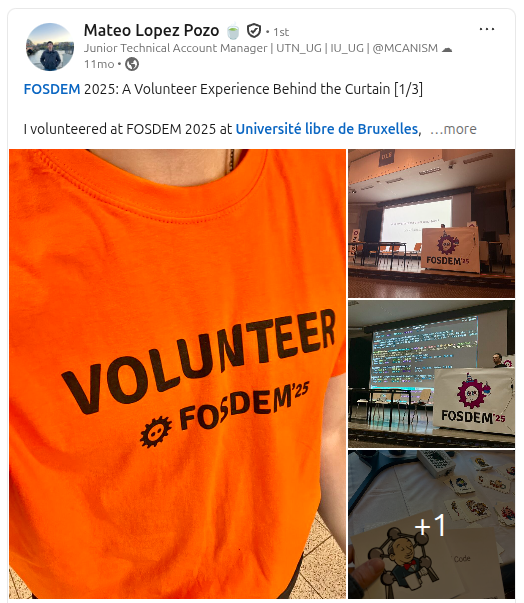
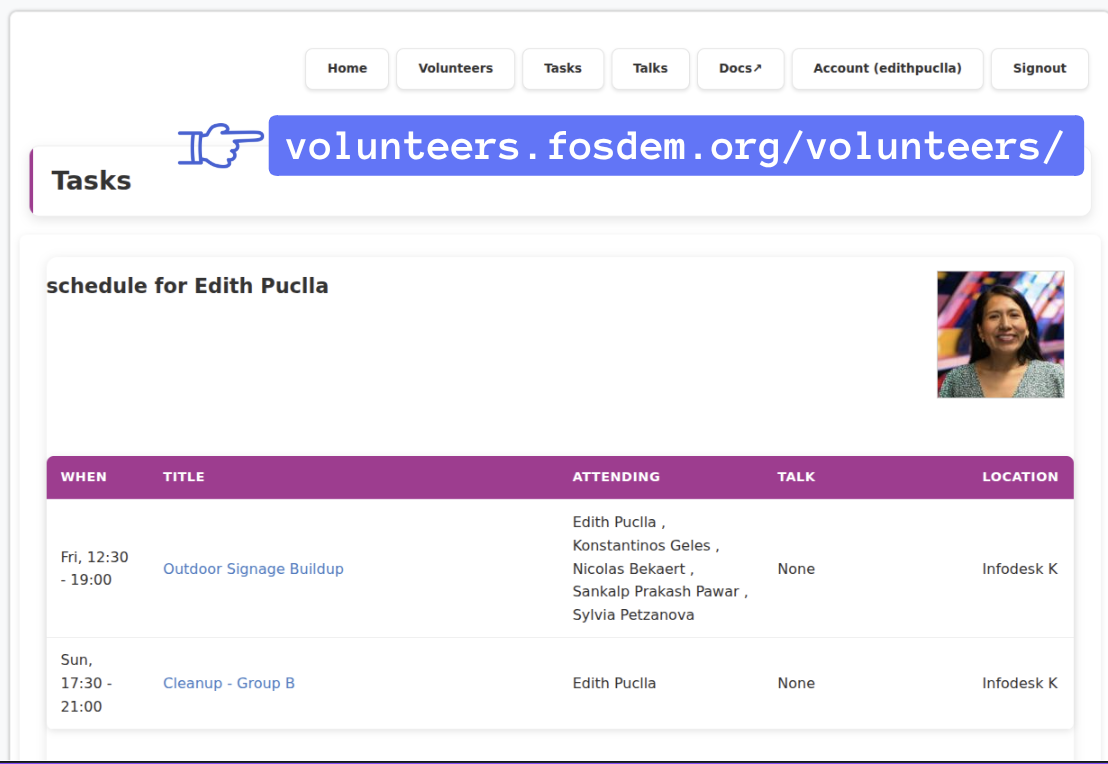
My first time volunteering was after a very busy day; I had attended several talks and walked a lot. I signed up on the FOSDEM volunteering website for a cleanup shift. The work was coordinated by experienced FOSDEM organisers who assigned tasks and guided volunteers during the shift.
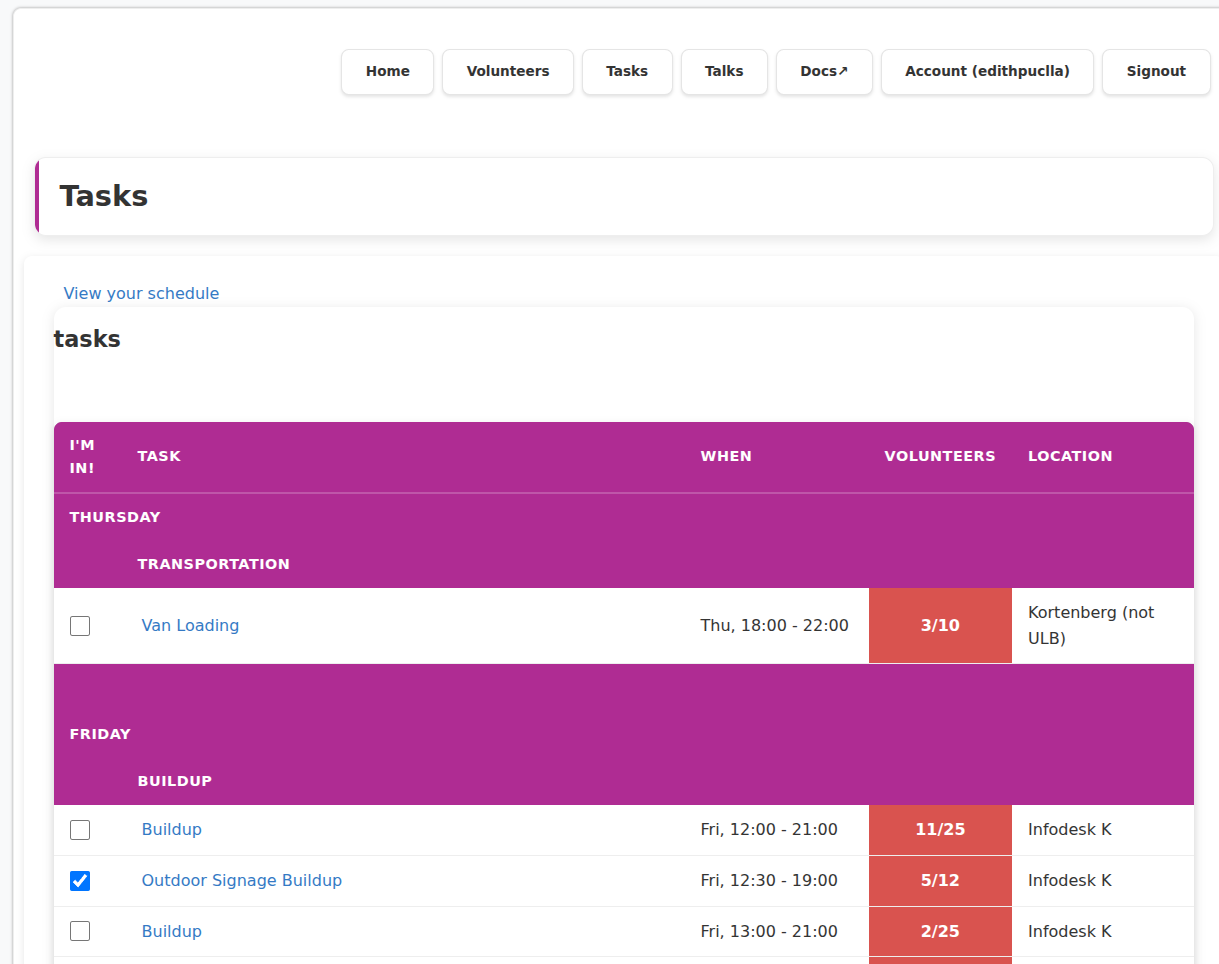
The key is to register in advance, then show up at the exact place and time listed for your task. On the volunteer website, you can browse the available tasks, choose one, save it, and find the instructions you’ll need.
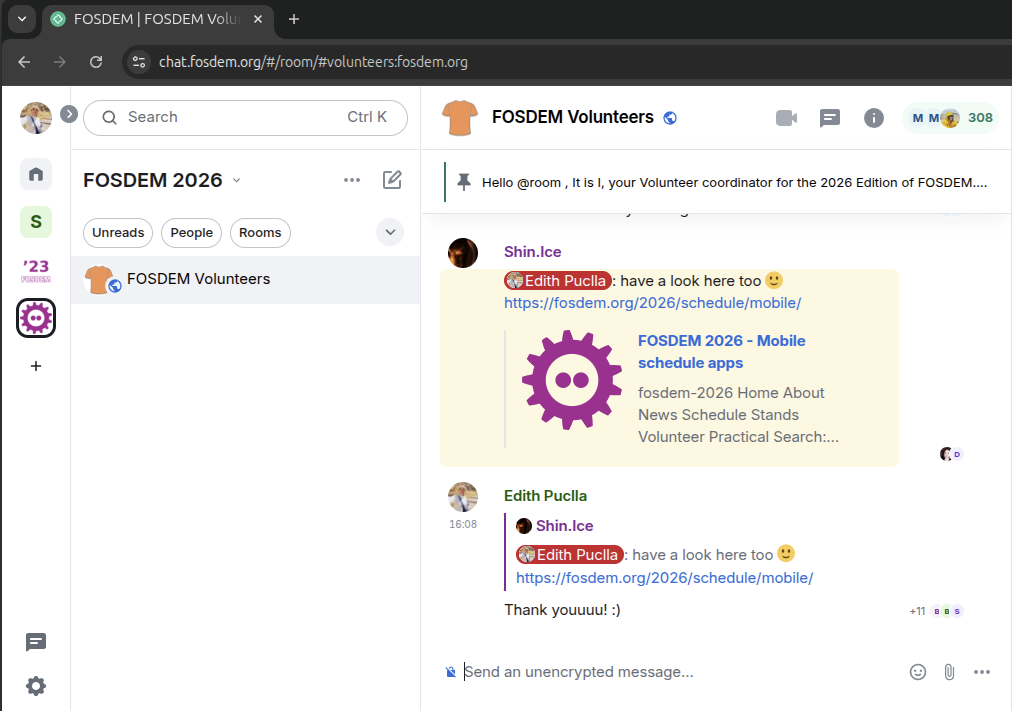
You can also join the Matrix chat to talk with other volunteers, coordinate tasks, and stay in the loop when something changes.
You meet people fast, you learn how the event runs behind the scenes, and you often pick up new skills – at least that was the case for me. It’s also a refreshing change from daily work. Even small tasks matter because FOSDEM is huge, and small problems can quickly become big problems if nobody is there to help.
Volunteering also gives you a different kind of confidence at the conference. You stop feeling like a visitor and start feeling like part of the community.
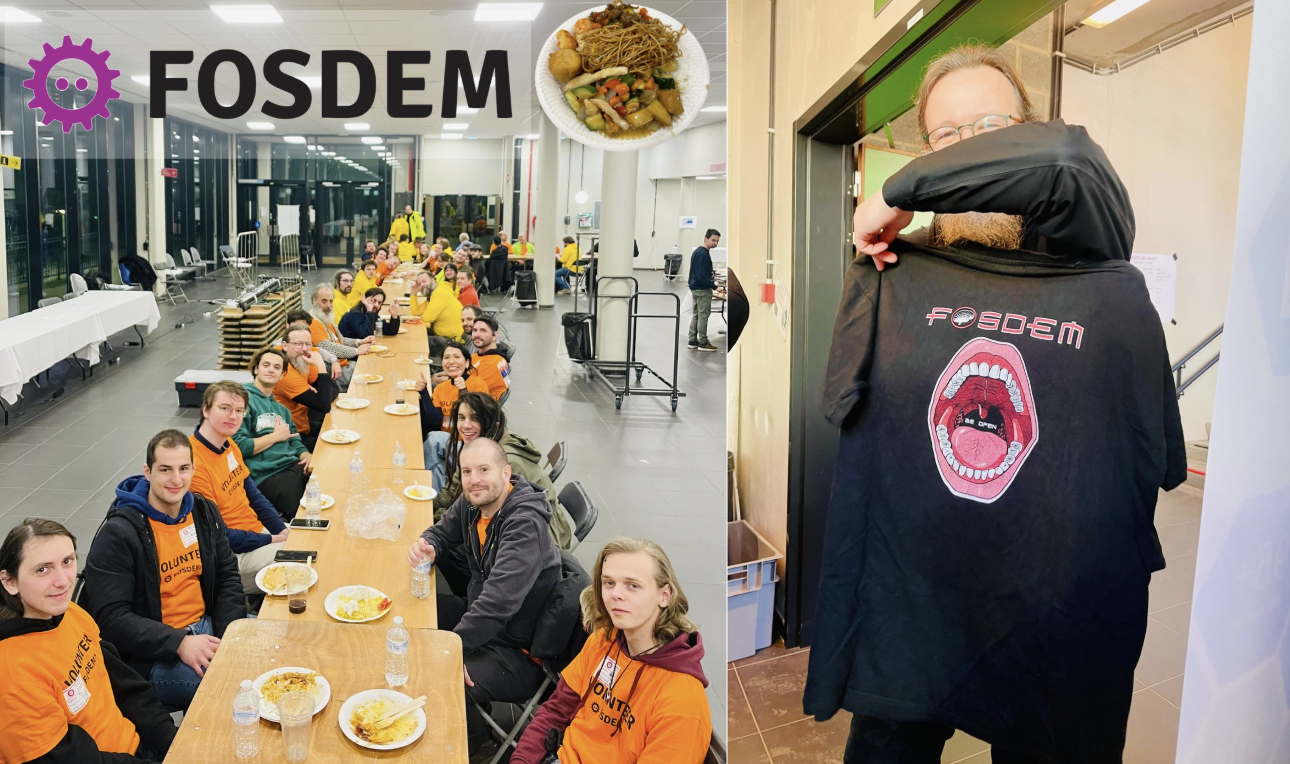
After a day of volunteering there’s usually a dinner for volunteers. This is my favourite part: we can finally sit down, talk, share ideas, and really connect. It’s amazing how easy it is to chat with people about anything, and you often meet folks you’ll see volunteering again next year. I’m excited about it! (Also: after a full day of work, your appetite definitely increases 😄)
How to volunteer
- Volunteers can choose tasks and shifts through the FOSDEM volunteer portal.
- There’s task documentation for volunteers; it’s worth reading before the event so you know what to expect.
- A volunteer chat channel and a mailing list share updates, especially close to the event.
- If it’s your first time: don’t worry. Volunteering is designed to be approachable. You’ll be supported, and you can always ask for help.
Tips if it’s your first time volunteering
- Wear comfortable shoes (you’ll walk a lot).
- Bring a water bottle and a snack.
- Keep your phone charged (maps + coordination).
- If you’re unsure, ask. It’s normal.
- Pick one short shift to start; you can always add more later.

My final thought
If you’re already attending FOSDEM, volunteering for even 2–3 hours is one of the easiest ways to give back, and honestly, one of the best ways to get the most out of the conference.
## Ways to Experience the Conference
You’ll help the event run smoothly, meet great people, and leave with that warm feeling of:
> “I helped make this happen.”
**Volunteer here:** – the 2022 volunteer program is open.
If you’re going this year, maybe I’ll see you on a volunteer shift! See you soon! 👋
[](https://media2.dev.to/dynamic/image/width=800,height=,fit=scale-down,gravity=auto,format=auto/https%3A%2F%2Fdev-to-uploads.s3.amazonaws.com%2Fuploads%2Farticles%2F9xlximrfky5s98n6rqse.jpeg)The structure and original content have been preserved while fixing typographical errors, improving readability, and adding a descriptive alt‑text for the image.