
US startup plans to build data centers inside ocean-based wind turbines, servers water cooled via chilly North Sea — each leg houses a data center, firm set to launch three-legged prototype in Norway’s North Sea this year
Source: Tom’s Hardware
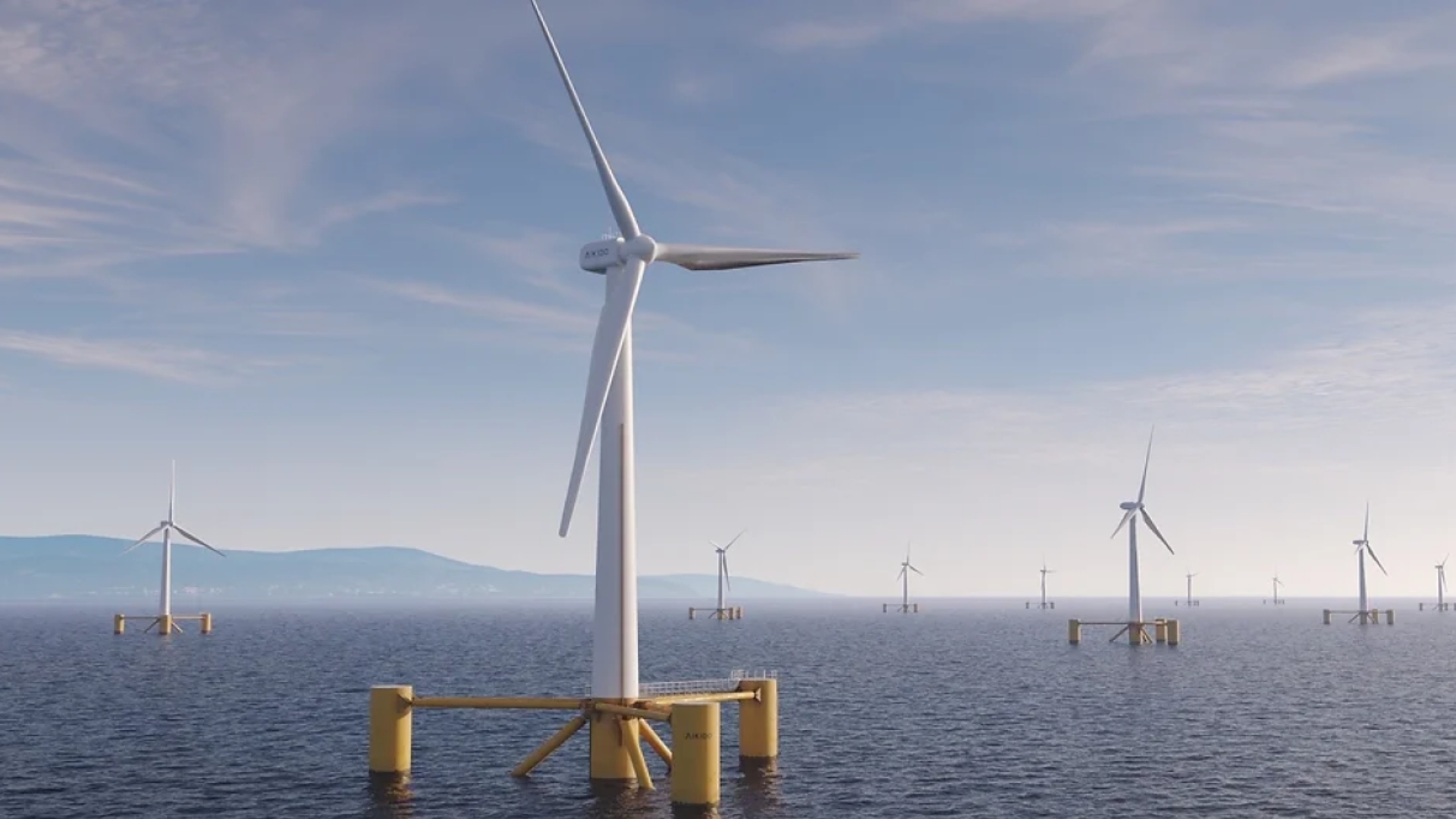
Image credit: Aikido Technologies
Aikido Technologies’ Offshore Wind‑Powered Data Center Concept
San Francisco‑based startup Aikido Technologies, which builds offshore wind turbines, is experimenting with integrating data centers into its platforms. According to IEEE Spectrum, the company plans to launch a 100‑kilowatt unit that combines a wind turbine with an AI server off the coast of Norway in the North Sea by the end of 2026. The goal is to address the power‑and‑space challenges faced by AI hyperscalers, especially as many projects encounter “not in my backyard” opposition.
Design and Cooling Approach
Aikido uses a semi‑submersible design similar to those employed by oil and gas companies in high seas. The structure features three ballast‑filled legs, each filled with fresh water to maintain buoyancy and stability. The legs are anchored to the seabed with chains, keeping the platform in place despite wind and wave forces.
- Data‑hall capacity: Up to 3–4 MW per leg, potentially yielding a 9–12 MW data center per turbine.
- Cooling system: Fresh‑water ballast stored in the lower part of each leg is pumped through the AI chips for cooling. Warm water returns to the ballast, where it is cooled by the chilly North Sea water. An additional air‑conditioner manages the temperature of components outside the water‑cooling loop.
“We have this power from the wind. We have free cooling. We think we can be quite cost‑competitive compared to conventional data‑center solutions,” said Aikido CEO Sam Kanner to IEEE Spectrum. “This crunch in the next five years is an opportunity for us to prove this out and supply AI compute where it’s needed.”
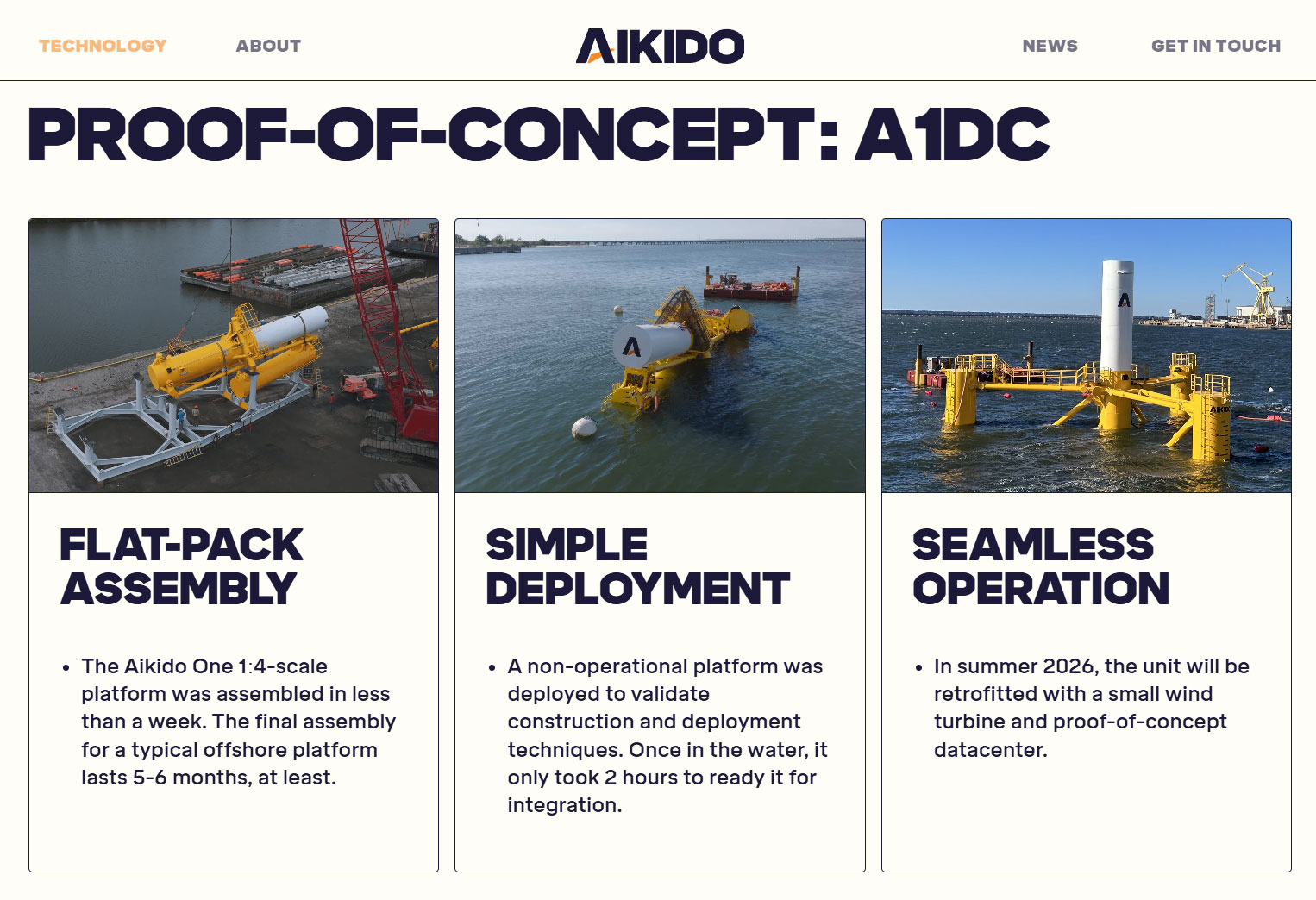
Image credit: Aikido Technologies
Challenges
- Intermittent wind power: The platform will require batteries to store excess energy and supply power during low‑wind periods. If the lean season extends longer than expected, the system can draw power from the grid.
- Marine environment: Salt water is highly corrosive, potentially increasing maintenance costs.
- Structural durability: The sea can be unforgiving, demanding robust engineering to withstand harsh conditions.
Related Initiatives
- China’s underwater data center: A wind‑powered underwater data center prototype was launched in Shanghai in October 2023.
- Space‑based concepts: Elon Musk’s proposal to deploy a million satellite data centers in orbit remains far more speculative than Aikido’s near‑term offshore plan.