
Dynamic MFG comes to RTX 50-series GPUs to push monitor refresh rates to the max — more flexible mode with 5x and 6x multipliers arrives March 31
Source: Tom’s Hardware
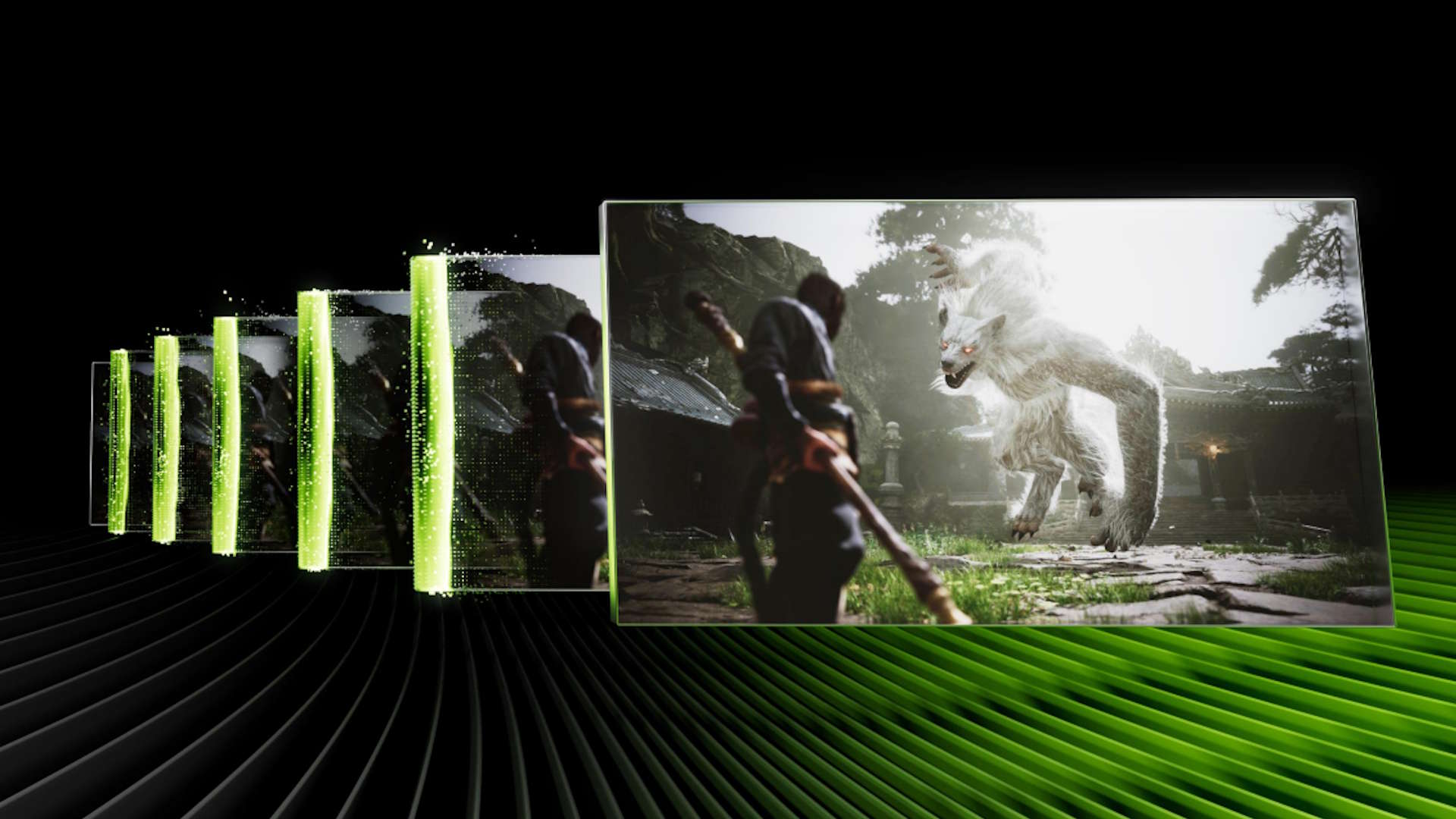
Image credit: Nvidia
Overview
The annual Game Developers Conference (GDC) kicks off amid turbulence in the games industry and an AI‑driven hardware supply shock that is delaying mid‑cycle and next‑gen gaming hardware. Nvidia isn’t unveiling new GeForce cards at the show; instead, the focus is on software performance enhancements and game‑tech integrations for upcoming titles.
Dynamic Multi‑Frame Generation (MFG)
Dynamic MFG now supports 5× and 6× modes on RTX 50‑series GPUs. These higher multipliers are especially useful for gamers with high‑refresh‑rate displays, helping systems maintain the FPS needed to keep screens operating near their peak output rates.
DLSS 4.5
The already‑available DLSS 4.5 delivers noticeably better image quality than previous implementations, even at relatively low input resolutions. Combined with Dynamic MFG, it gives RTX 50‑series owners more tools for a consistently smooth gaming experience.
Reflex 2 and Frame Warp
Given the input‑latency trade‑offs of MFG, an update to Nvidia’s Reflex 2 with Frame Warp latency‑reduction technology would be logical. However, Nvidia has indicated that this feature remains “Coming Soon” and has asked users to “stay tuned.”
Path‑Traced Lighting in Upcoming Titles
Nvidia’s partners are integrating resource‑intensive path‑traced lighting effects in several upcoming games, including:
- Control Resonant
- 007: First Light
- Resident Evil Requiem (recently launched)
- Pragmata (upcoming)
These titles showcase the benefits of DLSS 4.5 and Dynamic MFG for handling demanding rendering techniques.
RTX Mega Geometry Enhancements
Nvidia is extending its RTX Mega Geometry technology to aid CD Projekt Red in creating richer forested vistas for the upcoming The Witcher IV. The enhanced version allows selective updates of ray‑tracing data structures and supports finer‑grained opacity micromaps, enabling real‑time ray tracing of complex scenes such as entire forests.
- Architecture: Optimized for Blackwell GPUs, leveraging fourth‑generation RT cores.
- Release timeline: The Witcher IV is expected in 2027, but Blackwell owners will benefit from the optimized RT effects now.
Generative AI at GDC
Local asset generation is increasingly performed with ComfyUI, a node‑based application that can be intimidating for newcomers. Nvidia collaborated with ComfyUI to introduce a more user‑friendly “app view” interface at GDC and improved resource utilization through better quantizations of models like LTX‑2. These enhancements allow creators to iterate more quickly on generative content across a broader range of hardware.
Outlook
Even without new GPUs in 2026, Nvidia’s GDC presentation gives RTX 50‑series owners reasons to be excited. Existing hardware can upscale higher‑quality frames and generate more of them when higher output frame rates are required. While DLSS 4.5 works well on both RTX 40‑series and 50‑series GPUs, Dynamic MFG remains exclusive to Blackwell‑based cards. Until the AI chip crunch eases, extracting more performance from current hardware appears to be the short‑term path forward.