
This open-source E-Ink smartwatch project trades features for extreme battery life
Published: (April 29, 2026 at 07:35 PM EDT)
2 min read
Source: Android Authority
Source: Android Authority
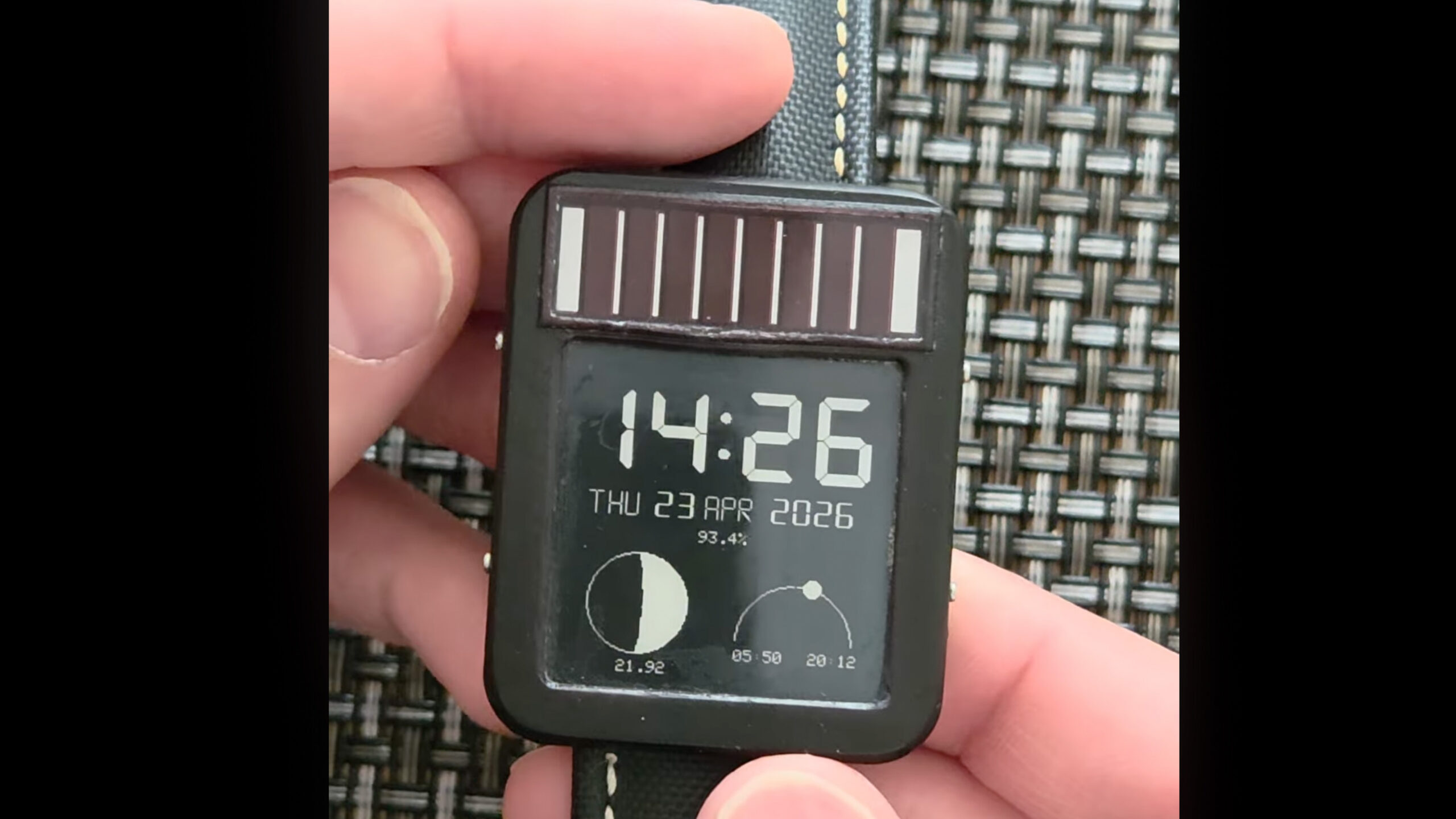
TL;DR
- An open‑source project called LightInk puts an ultra‑efficient E‑Ink display on your wrist.
- The watch uses roughly 0.5 mAh per day, giving about 40 days of battery life with a typical 20 mAh cell.
- It includes solar charging and aggressive power optimisation for potentially “infinite” runtime under the right conditions.
Overview
E‑Ink displays are well‑suited for reading, and now they’re being explored for wearables. The LightInk project (source on GitHub) turns a small E‑Ink panel into a minimalist wristwatch, prioritising battery life over feature richness.
Hardware
- Microcontroller: ESP32 – low‑cost, Wi‑Fi capable, with ultra‑low‑power sleep modes.
- Display: Small E‑Ink panel similar to those used in DIY e‑readers (see our previous coverage here).
- Power source: 20 mAh rechargeable cell plus optional solar panel for energy harvesting.
Power Consumption
- The ESP32 is kept in deep sleep as much as possible, waking only for brief tasks.
- Reported draw: ≈0.5 mAh per day.
- With a 20 mAh battery, this translates to ≈40 days of operation on a single charge.
- Solar support can replenish the battery faster than it drains under suitable lighting, offering the possibility of “infinite” runtime.
Features
| Feature | Description |
|---|---|
| LED light | Small indicator, used sparingly due to power cost. |
| Vibration motor | Haptic feedback for alerts. |
| Speaker | Basic audio output, limited use. |
| GPS | Location data, intended for occasional queries. |
| LoRa | Low‑power long‑range communication, also occasional. |
| Touch controls | Simple gestures for time display and alarms. |
| Environmental data | Sunrise/sunset times, moon phases integrated into the watch face. |
| Customizable alarms | User‑defined alerts. |
Note: Many of the above features consume noticeable power and are meant for intermittent use. The core experience remains a stripped‑down time‑keeping device.
Conclusion
LightInk is not a polished consumer smartwatch like the Google Pixel Watch; it’s a DIY project with all design files and instructions publicly available. While feature‑wise it is limited, its extreme power efficiency showcases the potential of E‑Ink for wearables and highlights how far the technology can go beyond tablets.