
Tap to Share is coming to Android: Here is our best look yet at the new interface
Source: Android Authority
TL;DR
- We’ve managed to activate the UI for Tap to Share, an upcoming feature that will allow instant transfer of photos, videos, contacts, and more.
- Users will have to overlap the top of their phones to account for differing NFC antenna positions across Android phones.
Overview
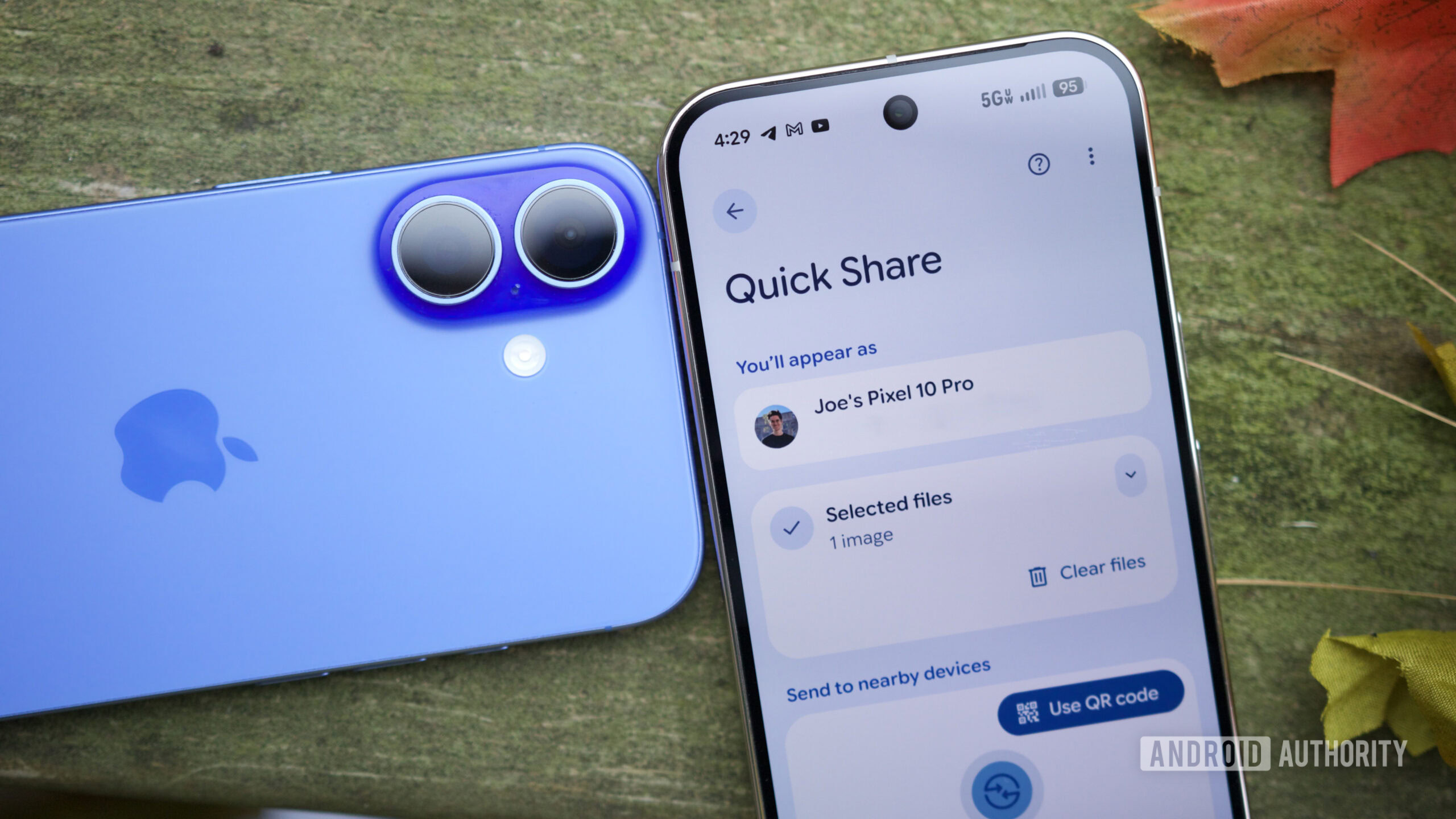
Late last month, we joined the dots on Android’s upcoming “Tap to Share” feature, as code for it appeared across One UI builds and Android Canary releases. We’ve now managed to activate the UI for the feature, giving us a better look at what to expect from Android’s AirDrop‑style Tap to Share.
UI Preview
Tap to Share, in its current state of readiness in Google Play Services v26.15.31, looks like this:
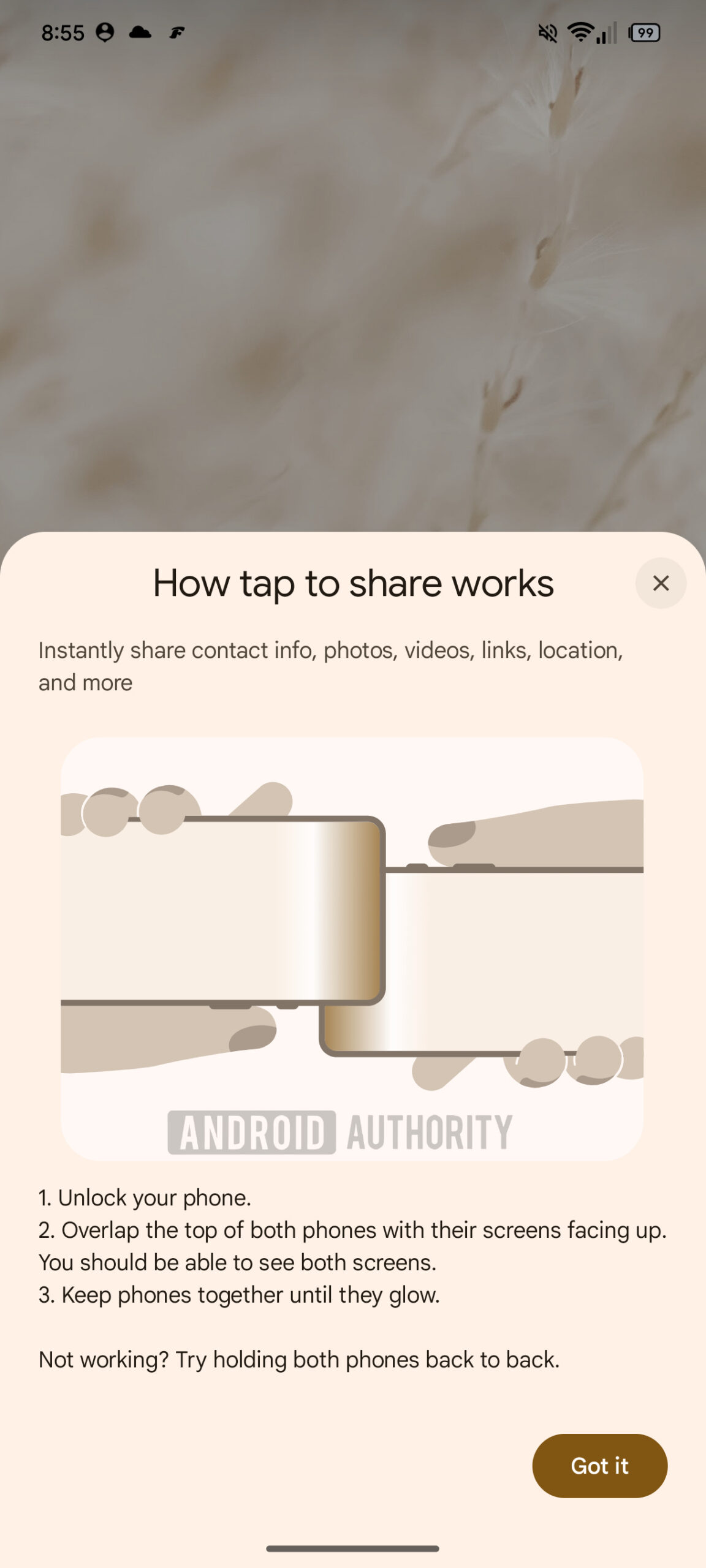
Through this preview we learn that users can instantly share:
- Contact info
- Photos and videos
- Links
- Location
- “More”
Much like iOS AirDrop, Tap to Share requires users to unlock their phones for a transfer. However, unlike iOS, it requires the top of both phones to overlap (iOS uses a bump of the top edge). Google explicitly states that you should be able to see both screens and that you must keep both phones together until they glow. If the feature doesn’t work right away, Google advises trying to hold the phones back‑to‑back.
The overlap instruction likely accounts for different NFC chip placements on Android devices—some have the antenna below the camera module—so overlapping the backs gives the chips enough proximity to communicate.
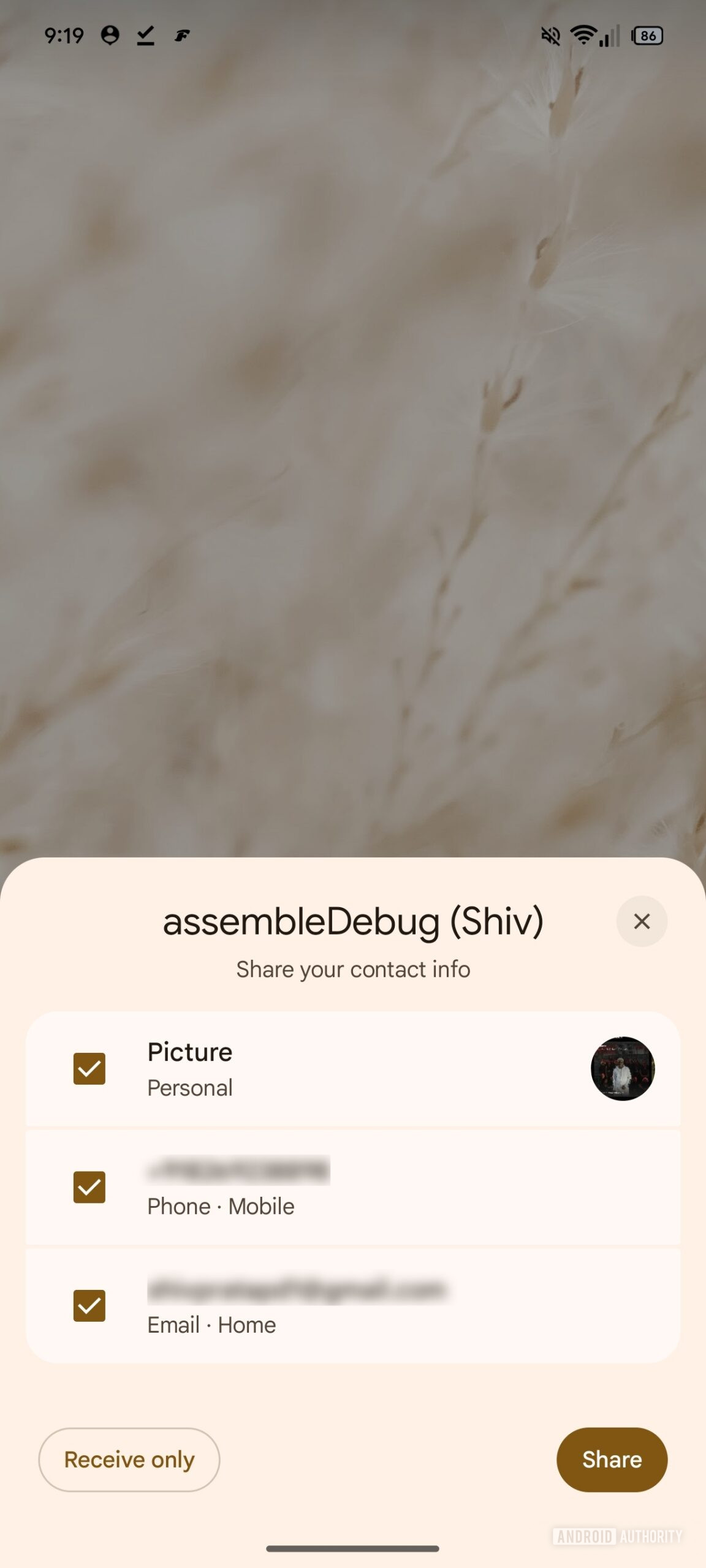
Contact Sharing Screen
The contact‑sharing UI looks slightly different from our initial coverage:
Future Outlook
We’re excited to see Android’s Tap to Share evolve with convenience and simplicity in mind, mirroring what makes AirDrop so popular. We’ll still have to wait for Google to announce and release the feature, and the upcoming stable Android 17 release could be the perfect opportunity.
⚠️ An APK teardown helps predict features that may arrive on a service in the future based on work‑in‑progress code. However, it is possible that such predicted features may not make it to a public release.