Starmer vows to act on social media after meeting bereaved parents
Source: BBC Technology
Government pledges decisive action on social‑media harm to children
By Liv McMahon, technology reporter; Zoe Kleinman, technology editor; and Hugh Pym, health editor
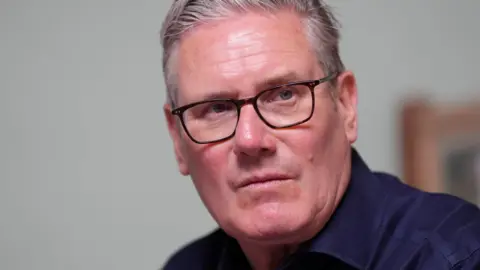
Reuters – Sir Keir Starmer (centre) speaking to families and campaigners outside 10 Downing Street.
The Prime Minister, Sir Keir Starmer, has pledged to take “decisive” action to tackle the impact of social media on UK children as the government’s consultation on the issue draws to a close.
“It is important that we act and will act,” he told families and campaigners who claim their children have died as a result of social‑media use.
Speaking ahead of a meeting with those families on Tuesday, Starmer said any action must be a “game‑changer,” amid growing calls to ban social media for under‑16s. Nevertheless, many parents remain skeptical that the government will act strongly enough.
“Am I confident? Definitely not,” said Ellen Roome, speaking to the BBC outside 10 Downing Street after a meeting with the Prime Minister.
“We’ve heard it so many times before. Until I see real change, I’ll remain sceptical.”
A BBC reporter noted that Roome “would like to believe” Starmer will take action, but warned that the “same status quo” persists, with tech firms rapidly rolling out new products—including AI chatbots.
“We do not want this group to grow any further,” one parent said. “We want all our asks to be adhered to.”
Another added, “We want no more children to die as a result of online harm.”
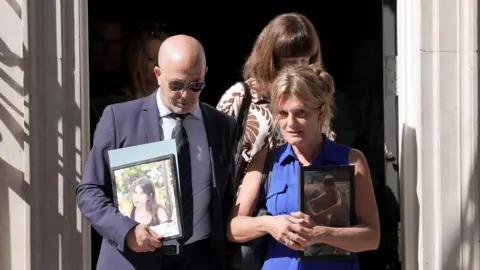
PA Media – Parents Mariano Janin (left) and Ellen Roome among those who spoke to the Prime Minister.
The meeting was described by officials as a “listening exercise” for the Prime Minister, with participants laying their concerns on the table in hopes of prompting change.
Political Context
Former health secretary Wes Streeting has also called for a ban on under‑16s using social media, likening big‑tech tactics to those of the tobacco industry:
“The precautionary principle should apply here,” he said, adding that the UK is “behind the curve” on this issue.
Since leaving his government post, Streeting said he feels “liberated” to speak more freely, but he expressed confidence that Technology Secretary Liz Kendall will act quickly now that the consultation has closed.
Kendall has indicated that new measures for under‑16s will be introduced by the end of 2026.
The consultation closes today. The government’s next steps will determine whether the promised “decisive” action becomes a reality for the children most at risk from online harm.
Consulting on Measures
Banning social‑media apps for under‑16s – as Australia has done – is one of the options being considered in the UK.
Liz Kendall said a response to the consultation would be published in the summer. Campaigners are broadly split on whether an outright ban on social apps for children is the best approach.
Since March the government has been asking parents and children whether measures such as app curfews and stronger age checks would improve online safety, and has trialled these in some UK homes (BBC article).
“The question isn’t whether we’re going to act – we will,” Kendall told the BBC.
She added that the government’s scope is looking at a broad range of issues and features and how these affect children. This could see the UK examine platforms not covered by Australia’s restrictions, such as Roblox and Discord.
Kendall stressed that the government wants to hear all views before the consultation closes at the end of Tuesday:
“We’ve got to get this right, and we’ve got to make it last.”
Key figures from the consultation
- 80,000+ submissions from charities, campaign groups and the public.
- 42,410 parents and 13,890 young people have completed the survey (Press Association data).
Respondents were asked for opinions on possible restrictions, including:
- Night‑time curfews.
- Disabling features such as auto‑play and infinite scroll.
A range of organisations – from police leaders to children’s groups and trade bodies – have already shared their views.
Donya Soni‑Clark, associate director of TechUK, told Today: “Regulating by features, not by platform, would be the best way forward.”
Medical community input
In a submission published on Tuesday, the Academy of Medical Royal Colleges recommended that doctors routinely ask younger patients about their device and social‑media use. Their response framed screen‑time and social‑media use as a parallel problem, citing physical and mental health issues linked to exposure to extreme violence online.
- There is no consensus among the wider scientific community that overall screen time is harmful to children (BBC fact‑check).
- Jeanette Dickson, Academy Chair, likened the issue to past public‑health campaigns on smoking and seat‑belt use, calling it a “unifying force” for the profession.
Industry and political reactions
-
Lord Nash, former Conservative education minister, reminded Parliament that the government has pledged to introduce age or functionality limits on social media for children and must “deliver on that commitment fully and in the shortest possible timeframe.”
-
Ian Russell, chair of the Molly Rose Foundation, argues the government should enforce existing laws rather than adopt “sledgehammer techniques like bans” (BBC article).
-
An open letter signed by child‑safety charities urges tech firms to align with the British Board of Film Classification (BBFC) standards, similar to how films are rated for cinema release.
“Hundreds of millions of websites are already classified to our standards and filtered by mobile network operators,” said David Austin, BBFC Chief Executive. “Why can’t social‑media companies do the same?”
-
Meta (owner of Facebook, Instagram and WhatsApp) says it wants age verification handled at the device level, blocking under‑age children from downloading certain apps.
-
Kendall affirmed she will act even if big tech pushes back:
“No one’s going to stop me from doing what I think is right for this country.”
Images