Remote work, offices shut: Tech giants scramble to respond as Middle East tensions escalate
Source: BBC Technology
Overview
Some of the world’s largest companies are moving to protect employees and facilities in the Middle East during the US‑Israel war with Iran. Amazon, Google, Snap and Nvidia are among the firms that have implemented emergency protocols as the safety of thousands of their workers across the region is brought into sharp focus.
The conflict has also raised fears of global tech shortages, but chip leader Nvidia says it is not currently experiencing any supply chain disruptions.
“The escalation raised red flags for technology companies which have committed billions of dollars to the region,” said Francisco Jeronimo, a specialist covering the Middle Eastern and European markets for data firm IDC.
Since the US‑Israeli attacks began on Saturday, Iran has launched a series of strikes on US bases and its allies across the region.
Nvidia
Nvidia said in a statement it was keeping a close watch on its operational footprint, but would not confirm reports that it had temporarily shut its Dubai office. The company, best known for making computer chips for AI companies, said it was “managing our supply chain to address changing conditions”.
A spokesperson added: “Regarding our operations in Israel and the Middle East, our primary concern is for the safety of our employees, their families, and all those affected during this difficult time.”
Amazon
Amazon has begun an assessment of its regional sites, which spans corporate offices, fulfilment centres, delivery stations, and quick‑commerce outlets.
“We are adjusting operations in response to the evolving situation, including temporary pauses where necessary,” an Amazon spokesperson confirmed, noting that the safety of employees and partners is the company’s top priority.
The incidents happened on Sunday morning, with the cloud‑computing business saying that “objects” had hit a data centre in the UAE, creating “sparks and fire”. Also on Sunday, AWS said it was investigating power and connectivity issues at a facility in Bahrain.
Amazon has asked its corporate workforce in the region to work remotely—a move mirrored by social‑media company Snap.
Snap
Snap told the BBC that it is urging staff to follow advice from both local authorities and foreign embassies, including specific instructions for shelter‑in‑place orders and departure recommendations.
Google said it has activated security and safety protocols and remains in contact with its Middle East teams. Like its industry peers, the search giant is advising staff to rely on official government channels as the conflict continues.
Wider Impact
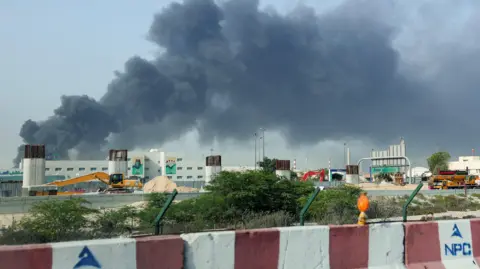
Debris from an aerial interception caused a fire in a berth in Dubai’s Jebel Ali port over the weekend, but on Wednesday operator DP World said the port was operating smoothly.
For now, tech’s biggest players are adopting a “wait and see” attitude as the situation unfolds. Jeronimo noted that while companies may “slow or temporarily pause new investments” to see how the situation evolves, the Middle East “still remains strategically important” enough for global technology firms not to leave the region.
“The key question for the industry is not whether the region matters, but whether stability can be maintained to support the scale of investment that has been planned,” he said.