
NASA's Curiosity rover gets its drill stuck, recordings from the Arctic seafloor and more science stories
Source: Engadget
NASA/JPL‑Caltech
What a week. Beloved nature communicator David Attenborough turned 100 on Friday, and scientists named a newly discovered species of wasp in his honor: the Chilean Attenboroughnculus tau — the latest addition to a list of more than 50 organisms named after him.
Also this week, NASA shared an update about its Curiosity rover, which encountered a sampling issue on Mars, and the agency released a new batch of photos from the Artemis II mission.
Read on to learn more about those and other science stories we found interesting this week.
Curiosity runs into a bit of trouble
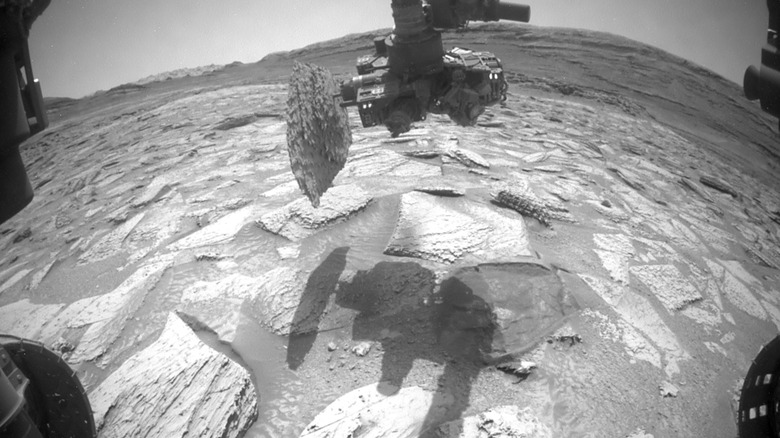
NASA’s Curiosity rover found itself in a pickle after drilling into a Martian rock that proved unexpectedly clingy. In footage captured on April 29, the rover can be seen with a slab of rock stuck on its drill bit after it attempted to collect a sample. The rock—dubbed Atacama—was about 1.5 ft wide and weighed nearly 30 lb, according to NASA.
“When the rover retracted its arm, the entire rock lifted out of the ground, suspended by the fixed sleeve that surrounds the rotating drill bit,” NASA explained in a blog post. “Drilling has fractured or separated the upper layers of rocks in the past, but a rock has never remained attached to the drill sleeve.”
After a few more attempts over the next couple of days, the team freed the rock by tilting the drill more, rotating and vibrating it, and spinning the drill bit. We can see the rock finally dropping away from Curiosity and breaking apart in images taken on May 1.
Curiosity has taken dozens of samples from the Martian surface, as shown in this image from 2024 (trypophobia warning). After drilling, the rover collects the powdered rock and analyzes it with its Sample Analysis at Mars (SAM) and Chemistry & Mineralogy (CheMin) instruments to determine composition. Now that the mishap has been resolved, Curiosity can get back to work.
What goes on at the bottom of an Arctic fjord
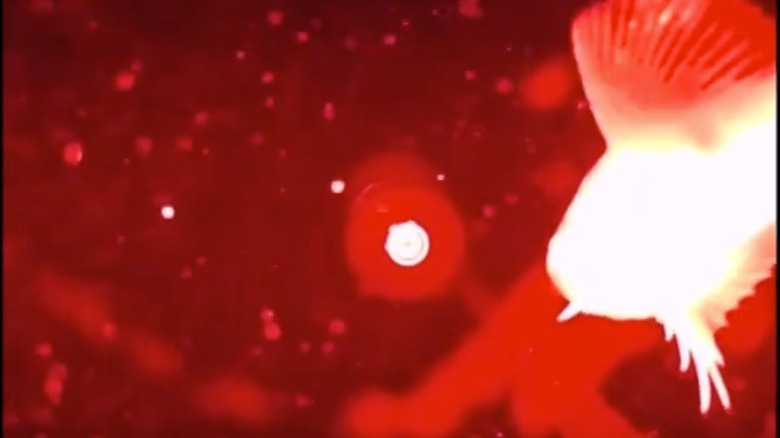
The Arctic seafloor isn’t exactly an easy place to observe, but a long‑running research program at Inglefield Bredning in northwest Greenland has given us a glimpse of life deep beneath the surface. As part of this effort, researchers deployed a video camera and hydrophone 260 m deep in the fjord for a week in August 2025 to assess the seafloor environment and biodiversity. Their findings were just published in the journal PLOS ONE, along with stunning photos and videos (the eerie hue is due to the red light used underwater).
- Organisms recorded: 478 species, including comb jellies, arrowworms, snailfish, and shrimp.
- In one clip, a snailfish can be seen passively riding the current to drift backward—described by the authors as “peculiar.”
- Highlights are available here.
Podolskiy et al.
The instruments also picked up the sounds of nearby narwhals (present on every day of the study except one), cracking and melting icebergs, and boat engines. The footage shows abundant marine snow—organic debris such as feces and dead animal/plant material—that many deep‑sea creatures rely on.
Based on the success of their observations, the researchers suggest that compact, portable moorings with video recorders could become “an important tool for exploration of the Arctic seafloor,” helping to fill a major knowledge gap.
Feast your eyes on 12,000+ photos from Artemis II
NASA
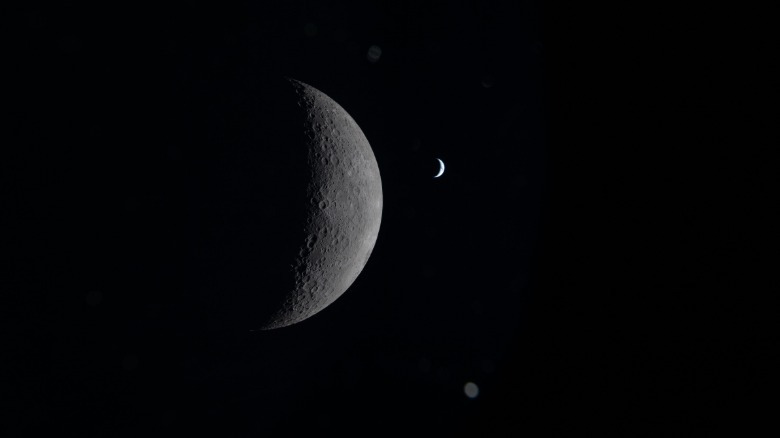
NASA this week released thousands of pictures captured during last month’s Artemis II mission around the Moon. You can explore the full collection here.
The UI of the NASA photo catalog is a bit clunky—classic government‑website fashion—but it’s well worth clicking through if you have some time. While the target was the Moon (and there are many great shots of the Moon both up close and afar), there are also striking images of Earth and the Milky Way.
Before you go, be sure to check out these stories too
- Department of War sets up UFO website, but there isn’t much to see
- A study shows that cellphone bans didn’t improve US students’ test scores
All links and images are current as of May 2026.