
Microsoft adds Shader Execution Reordering (SER) in latest DirectX SDK for more efficient ray tracing — Intel Arc B-series GPUs show 90% performance uplift
Source: Tom’s Hardware
Image credit: Microsoft / CD Projekt Red
Background
In 2022, Nvidia introduced hardware‑level Shader Execution Reordering (SER) with its RTX 40‑series GPUs to make ray tracing less taxing. SER is now officially part of DXR 1.2, which is included in the new DirectX Agility SDK (v1.619). The accompanying blog post is dense with technical jargon, so here’s a concise breakdown of what SER means for performance.
What is Shader Execution Reordering (SER)?
SER reduces per‑pixel rendering time in highly intense ray‑traced or path‑traced scenes. Unpredictable ray bounces are a GPU’s worst nightmare; they create irregular workloads that stall execution units. SER dynamically categorizes reflections and light bounces, grouping similar work together to improve cohesion and keep the silicon busy.
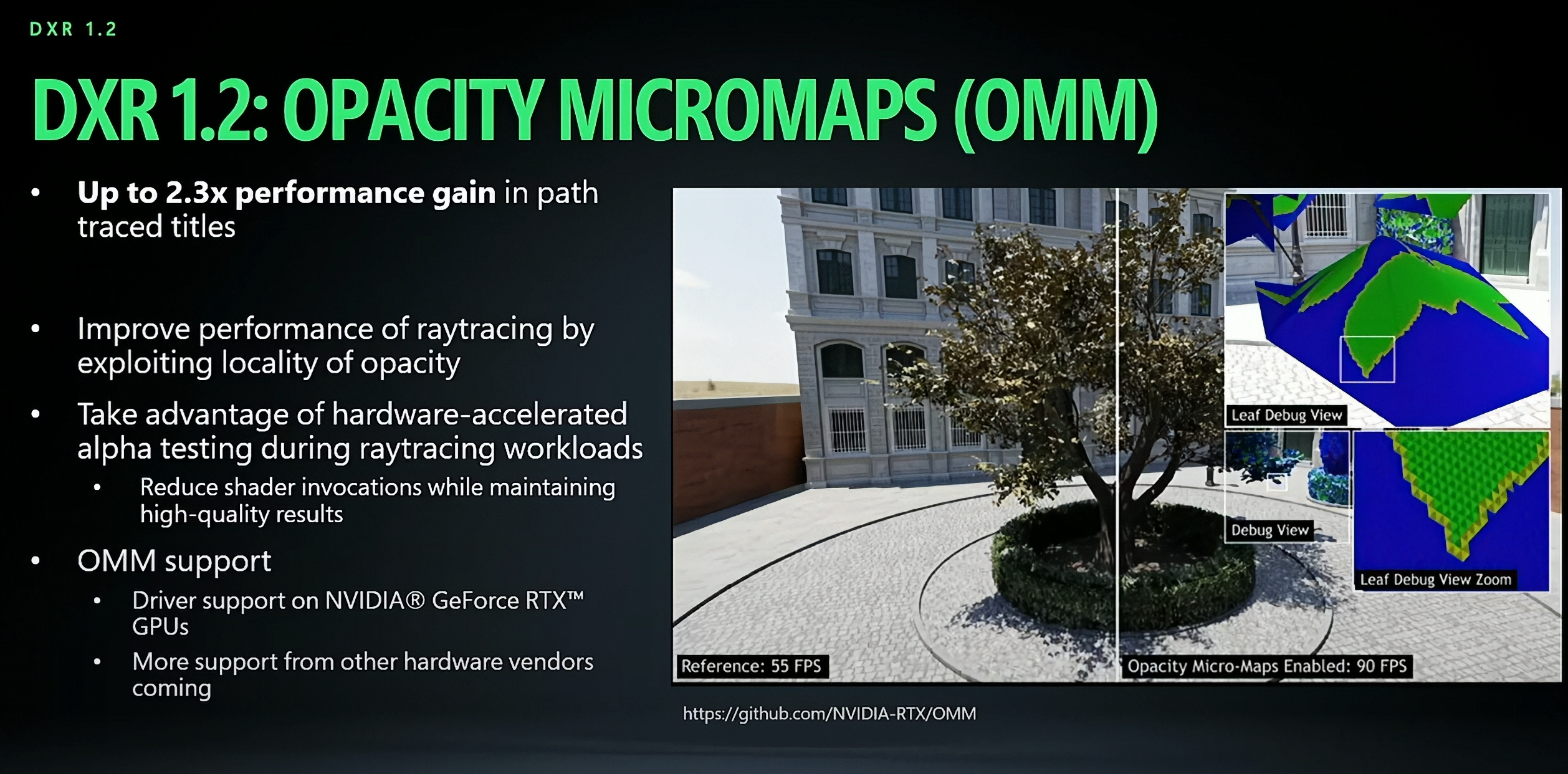
Image credit: Microsoft
Performance Gains
Microsoft’s demo (see the branching blog) shows side‑by‑side comparisons:
- Nvidia GPUs achieved roughly a 40 % performance boost with SER enabled.
- Intel Arc B‑series GPUs saw up to 90 % more FPS in the same test.
These results suggest that once SER becomes standardized, Intel and AMD could implement their own hardware‑level solutions in upcoming GPUs.
Shader Model 6.9
The SDK update also introduces Shader Model 6.9, which provides the programming interface for both Opacity Micromaps (OMMs) and SER. This gives developers the tools to leverage these features, though actual player‑facing improvements depend on game‑engine integration.
The features were originally announced last year (Tom’s Hardware coverage) and have now moved out of preview.
Other Notable Changes
- Long Vector support – expands the range of vector operations available to shaders.
- 16‑bit float operations – improve performance for workloads that can tolerate reduced precision.
- General reductions in hardware overhead, targeting poorly optimized games that struggle with limited VRAM (e.g., < 12 GB).
These updates are currently programmer‑focused patches, but they have the potential to translate into real‑world performance gains once adopted by developers.