
Lenovo's Framework-like Modular AI PC concept lets you put a screen just about anywhere — detachable keyboard and ports make the machine customizable
Source: Tom’s Hardware
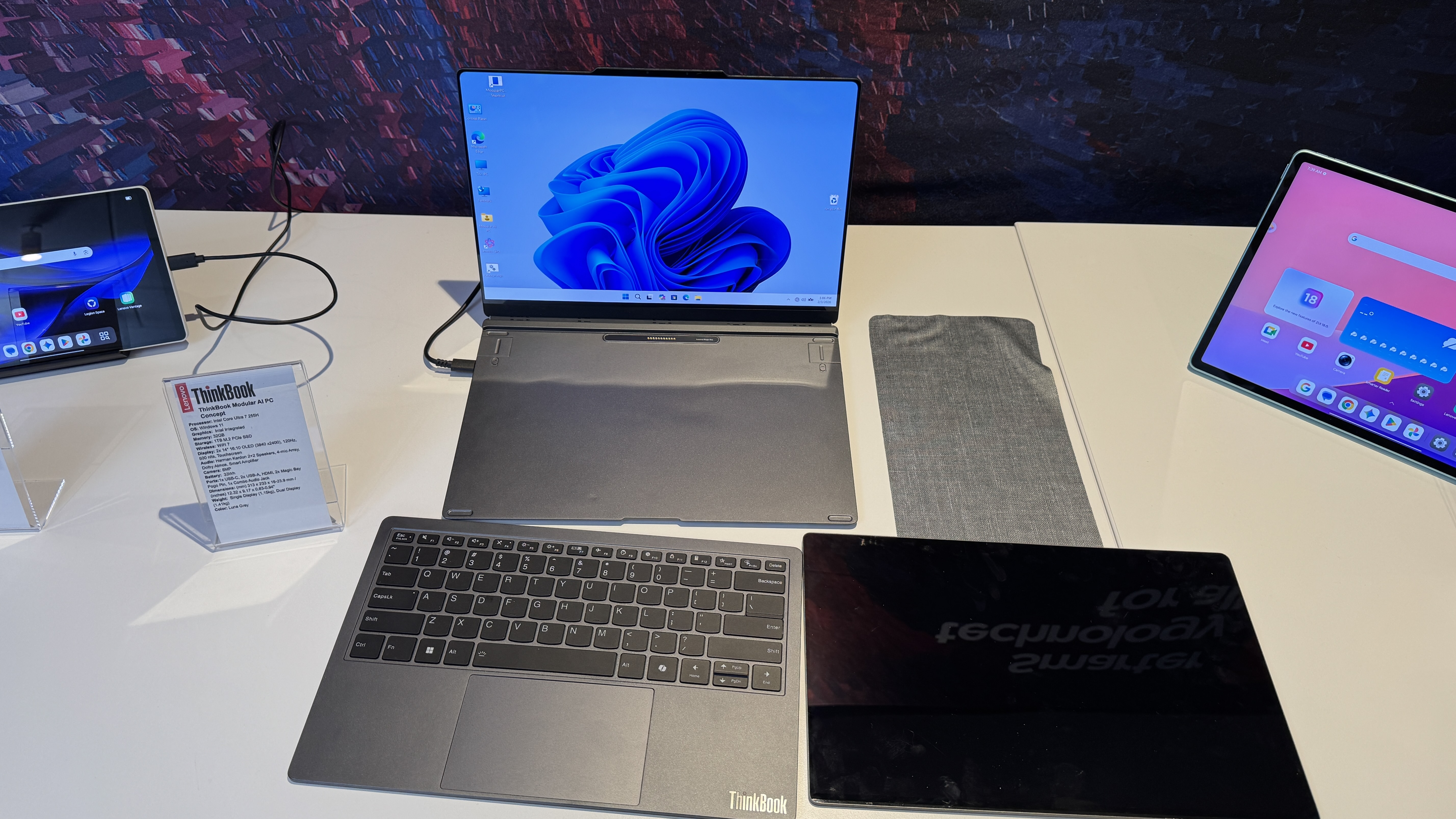
Image credit: Tom’s Hardware
Concept Overview
Lenovo showcased a new “selectively modular” PC concept at Mobile World Congress 2026. The device features a metal base with a single built‑in top display and a Magic Bay on both the keyboard deck and the back of the display. The Magic Bay uses pogo pins to attach accessories, allowing users to reposition a second screen or other modules as needed.
Design and Modularity
Dual‑Screen Options
- Keyboard Deck Placement – The secondary screen can be attached to the keyboard deck, similar to the Yoga Book 9i or an Asus ZenBook Duo.
- Lid Placement – The second screen can also be mounted on the lid, which Lenovo suggests for presentations or closed‑lid use. In practice, this makes the prototype feel top‑heavy.
- Kickstand Mode – The secondary display can be used with a kickstand and a USB‑C cable as a portable monitor, comparable to the best portable monitors. The prototype’s magnetic stand was flimsy, so a sturdier solution would be needed for production.
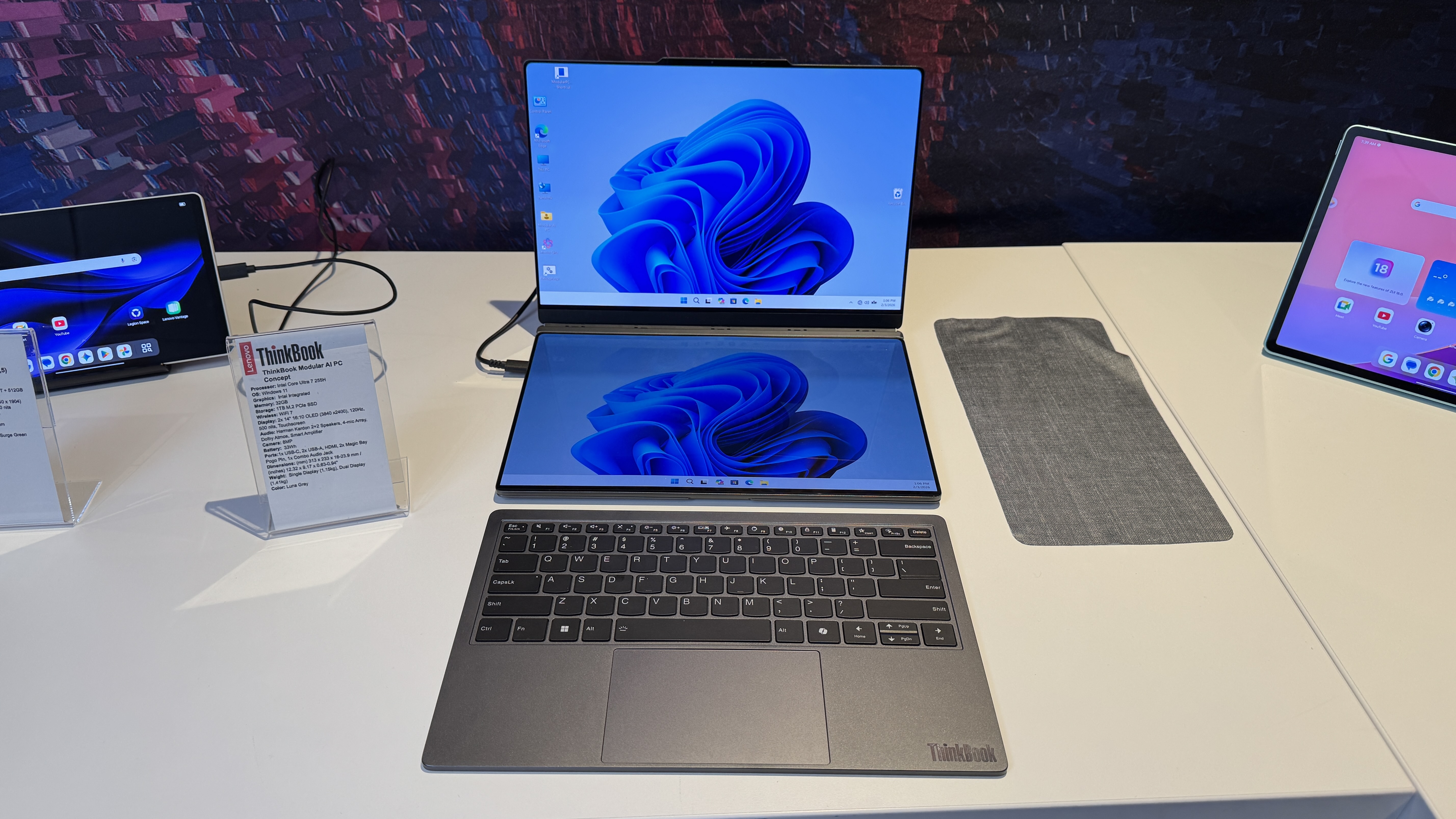
Image credit: Tom’s Hardware
Modular Ports
The concept includes two interchangeable port modules—one on each side of the notebook. Small divots allow users to pull out a module and insert a new one, with options for USB‑C, USB‑A, and HDMI. Unlike Framework laptops, which rely on external adapters, these modules connect directly to the motherboard. A fixed USB‑C port and a 3.5 mm headphone jack are also present.
Specifications
| Component | Details |
|---|---|
| CPU | Intel Core Ultra 7 255H |
| Memory | 32 GB |
| Storage | 1 TB M.2 PCIe SSD |
| Display | 2 × 14‑inch, 3840 × 2400, 120 Hz, OLED touchscreens |
| Battery | 33 WHr |
| Ports | 2 × Magic Bay (choose USB‑C, USB‑A, HDMI), fixed USB‑C, 3.5 mm headphone jack |
| Camera | 8 MP |
| Weight | 2.54 lb (1.15 kg) with single display / 3.11 lb (1.41 kg) with two displays |
Impressions
The Modular AI PC concept offers flexibility that could appeal to users who occasionally need a dual‑screen setup but prefer a lightweight laptop for everyday use. However, the prototype feels top‑heavy with the lid‑mounted screen, and the magnetic stand for the secondary display lacks robustness.
Battery life is a potential concern: the 33 WHr capacity is modest compared to typical best ultrabooks, especially when powering two OLED touchscreens. Lenovo has not disclosed pricing or a release timeline, leaving room for further refinement—such as improving the keyboard attachment on the back of the display.
Overall, the concept demonstrates an intriguing direction for modular laptops, blending the adaptability of Framework’s internals with a focus on external accessories that could be swapped daily.