
Jolla Phone 2026 hands-on: The world outside Android and iOS is exciting
Source: Android Authority
Exploring the 2026 Jolla Phone
I love alternative operating systems—they give us a glimpse of what’s possible beyond the Android and iOS duopoly. One of the most interesting phones of the year is the 2026 Jolla Phone1, which runs Sailfish OS.
Jolla showcased the device at MWC 2026 in Barcelona, and we visited the company’s booth to get our hands on the new phone. So, is it more than just an alternative to Android and iOS? Here’s what I discovered after spending a short amount of time with this €649 (~$755) device.
Jolla Phone 2026 hardware: A mostly good throwback

Hadlee Simons / Android Authority
When I first saw images of the Jolla Phone 2026, I was immediately taken by the orange back. It’s a pleasantly vibrant colour in person, too. I’m also glad to report that this rear plastic cover is removable, although it feels a little cheap. Thankfully, Jolla says users can create their own covers if they’d like. Best of all, you can swap out the battery by removing a single screw—you love to see it.
Turning the phone around reveals a 6.36‑inch FHD+ OLED display. The panel was more than bright enough under the harsh lights of the show floor. It does feature a gigantic display notch (see below) that houses the selfie camera and a notification LED. I’m willing to overlook this huge cut‑out, but I’d much rather see a traditional bezel like on the Sony Xperia phones.
Hadlee Simons / Android Authority
Design & ergonomics
The curved sides help the phone feel more ergonomic, offering a refreshing change from the sea of flat‑framed iPhone clones. Those sharp corners also evoke early Nokia Lumia devices and the Nokia N9. I’m not sure whether these corners might become uncomfortable during extended use, but they can’t be worse than the Galaxy S23 Ultra’s sharp corners.
A privacy switch on the left‑hand side lets you disable a ton of settings with a quick flick (e.g., microphone, camera, location, Wi‑Fi). The switch is customizable, so you can choose which settings it controls.
Key hardware specs
- Chipset: MediaTek Dimensity 7100 (budget‑tier)
- RAM: 8 GB or 12 GB
- Storage: 256 GB internal, expandable via microSD card
- Fingerprint sensor: Side‑mounted
- Battery: 5,450 mAh (removable) with a notification LED
- Cameras: 50 MP main shooter + 13 MP ultrawide lens
Overall, the Jolla Phone 2026 blends nostalgic design cues with modern hardware, delivering a solid, if slightly unconventional, Android experience.
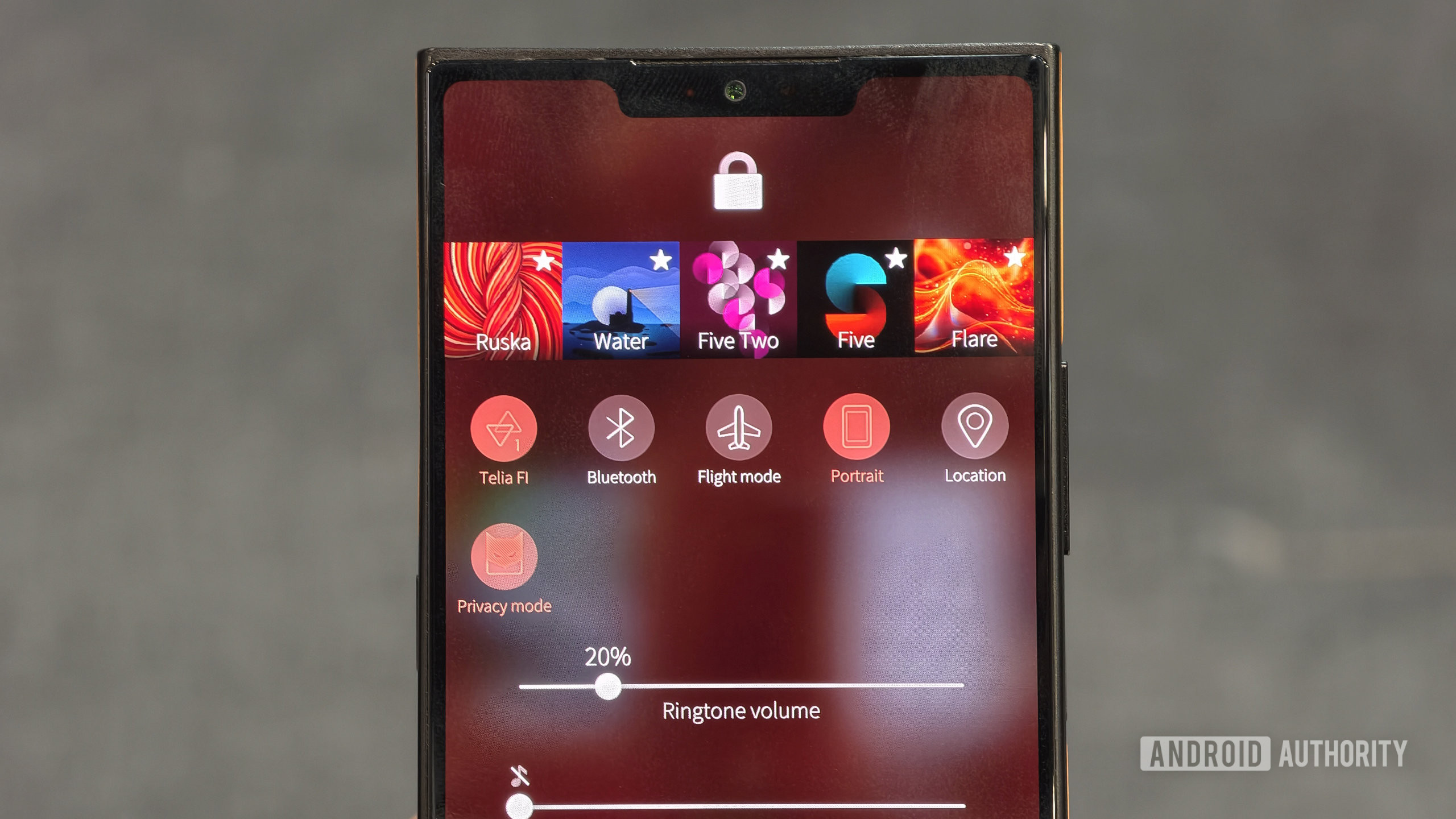
Sailfish OS on the 2026 Jolla Phone
Sailfish OS powers the 2026 Jolla Phone and serves as a spiritual successor to Nokia’s MeeGo platform. I was a big fan of MeeGo when I reviewed the Nokia N9 back in 2011, but years of using Android mean that Sailfish OS feels different at first. Below is a concise overview of the most notable aspects.
1. Gesture Navigation
| Action | Android | Sailfish OS |
|---|---|---|
| Swipe up inside an app | Closes the app | Opens the app drawer |
| Swipe in from the left edge | “Back” navigation | Exits the app |
| Swipe left‑to‑right on the home screen | Switches apps (if enabled) | Returns to the previous screen |
The gestures are not inherently better or worse than Android’s; they’re simply a different paradigm that requires a short adjustment period.
2. Dedicated Multitasking Home Screen
Sailfish OS dedicates one home screen to multitasking, similar to MeeGo and BlackBerry 10. Small app windows appear on this screen, showing all running applications and allowing quick switching.
- Pros: Clear visual overview of active apps.
- Cons: Switching can feel less fluid compared with Android’s recent gesture‑based app switcher.
3. Android App Compatibility
Sailfish OS has supported Android apps for several years via the Android AppSupport layer. The 2026 Jolla Phone retains this capability, and users have a few options for obtaining Android software:
-
microG – an open‑source implementation of Google Play Services.
-
Aurora Store – a client for the Google Play Store that does not require a Google account.
These tools mean developers are not forced to create native Sailfish OS apps, and most Android applications run without major issues.
4. Sailfish OS 5.2 – What’s New?
Jolla states the phone ships with Sailfish OS 5.2. While a full changelog has not been published, the previous Sailfish OS 5 release introduced:
- Android AppSupport upgraded to Android 13.
- Updated default browser engine.
- Improved landscape‑orientation handling.
- Call‑blocking functionality.
The current version does not include on‑device generative‑AI features, which may be a consideration for some users.
5. Quick Takeaways
- Gesture learning curve: Different from Android, but intuitive after a short period.
- Multitasking screen: Visually useful, though app switching feels less seamless than Android’s gestures.
- Android app support: Robust, with microG and Aurora Store providing alternatives to Google Play Services.
- OS version: Sailfish OS 5.2 builds on a solid foundation (Android 13 compatibility, better browser, call blocking) but lacks AI‑centric features.
Overall, Sailfish OS offers a distinctive user experience that blends classic multitasking concepts with modern Android compatibility, making the 2026 Jolla Phone an interesting alternative to mainstream Android devices.
Is the Jolla Phone 2026 Worth Buying?

Hadlee Simons / Android Authority
I’m really glad to see the 2026 Jolla Phone, as alternatives to Android and iOS are few and far between. I haven’t spent enough time with Sailfish OS to give it a definitive verdict just yet, but I’m happy that the platform is getting some love and a new phone in 2026.
What the phone offers
- Processor: Not the most powerful on the market.
- Camera: Triple rear‑camera setup, but not class‑leading.
- Durability: No IP68 rating.
- Charging: No wireless charging.
For a €649 Android phone you’d expect at least some of those features, yet many Linux‑based phones ship with less. Jolla has nailed the fundamentals, and the addition of enthusiast extras—microSD slot, removable battery, and a notification LED—makes the package more tantalising.
Downsides
- Availability: The first batch has already sold out and the second batch is currently on sale, but the phone ships only to Europe for now.
- Market reach: Expansion to North America, MEA, and Asia‑Pacific would be welcome in the coming months.
Follow
Thank you for being part of our community. Please read our Comment Policy before posting.