
GrapheneOS says Google is making life harder for rival operating systems and devices
Source: Android Authority
TL;DR
- GrapheneOS claims Google and Apple are increasingly using device verification systems to lock users into their own hardware and software.
- The platform says tools like Google’s Play Integrity, Apple’s App Attest, and Google’s reCAPTCHA make it harder to use alternative operating systems.
- GrapheneOS argues these systems are presented as security features, but they strengthen Google and Apple’s control over apps and web access.
Overview
GrapheneOS posted a long thread on X, accusing Google and Apple of gradually making the internet and mobile apps more dependent on their own devices and software.
The project says tools like Google’s Play Integrity API and Apple’s App Attest are being pushed as security features, yet they make it harder for users to opt for alternative operating systems.
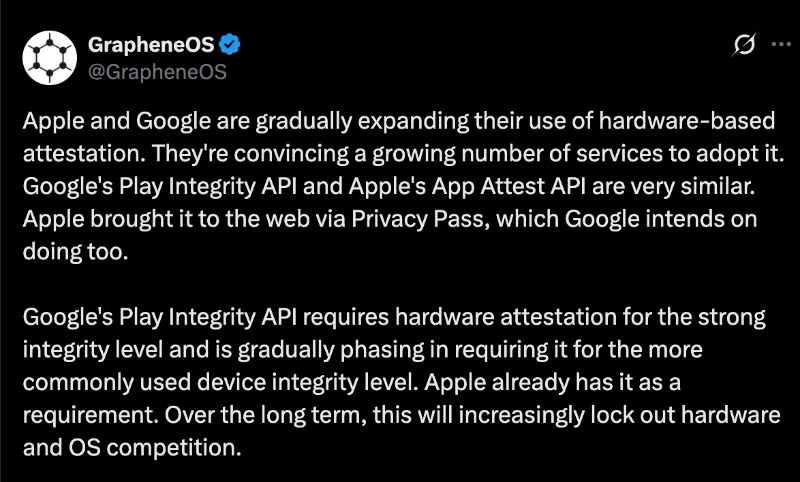
Essentially, more apps and websites are starting to check whether you’re using a trusted phone and approved software before granting access. According to GrapheneOS, this could give Google and Apple absolute control over which devices work properly online.
“Over the long term, this will increasingly lock out hardware and OS competition,” GrapheneOS wrote.
Play Integrity API
The platform mainly focuses on Google’s Play Integrity API, which Android apps use to verify that a device is genuine, secure, and running certified software. Banking apps often employ these checks to block rooted phones or devices running modified versions of Android.
GrapheneOS says the system also blocks legitimate alternatives, including its own OS:
“Google’s Play Integrity API bans using GrapheneOS despite it being far more secure than anything they permit.”
“The purpose of these systems is disallowing people from using hardware and software not approved by Apple or Google. This is wrongly presented as being a security feature.”
reCAPTCHA concerns
GrapheneOS’s post also discusses reCAPTCHA, Google’s CAPTCHA system used across much of the web. The platform notes that Google’s systems require users to verify themselves using a certified Android or iOS device.
In some cases, users must scan a QR code with their phone to prove they’re a real person before accessing a site or service. GrapheneOS says this could eventually affect users on desktop platforms like Windows or Linux as well.
“Control over reCAPTCHA puts Google in a position where they can require having either iOS or a certified Android device to use an enormous amount of the web,” the platform wrote.
GrapheneOS also points out that governments and banks are increasingly adopting these verification systems for payments, digital ID apps, and age verification services.
“Instead of governments stopping Apple and Google from engaging in egregiously anti‑competitive behavior, they’re directly participating in locking out competition via their own services,” GrapheneOS said.
Response
Google and Apple have not publicly responded to the issues raised by GrapheneOS.