
Google talks Aluminium OS: Release plans, continuity, AI, and what happens to Chrome OS
Source: Android Authority
## TL;DR
- Google’s Android Ecosystem President, **Sameer Samat**, says Aluminium OS is still on track for a 2026 debut.
- Samat believes AI is driving renewed interest in laptops, making them better suited for modern workflows and productivity.
- Chrome OS isn’t going away; Google appears to be pursuing a **dual‑OS** strategy.
---
Google’s long‑rumored [Aluminium OS project](https://www.androidauthority.com/aluminium-os-android-for-pcs-3619092/), an effort to unite Chrome OS and Android into a single platform, still appears to be on track for a 2026 debut.
That’s according to **Sameer Samat**, President of the Android Ecosystem at Google, who confirmed to *Android Authority* that the company is still targeting **later this year** for the platform’s first release.
I met with Samat on the sidelines of [MWC 2026](https://www.androidauthority.com/mwc/). When I asked whether Google still expects Aluminium OS to arrive in 2026, Samat hesitated at first, but later said:
> “Yes, I’m super excited about later this year.”
The confirmation, while not entirely explicit, is notable because **recently surfaced court documents** from the Google Search antitrust trial suggested that Aluminium might not be released in full until 2028. Those documents sparked speculation that the project had been pushed back significantly.
However, Samat’s comments indicate that, from Google’s perspective, the 2026 timeline **hasn’t slipped**.
While he stopped short of detailing specific hardware or partners, it was clear from our chat that Google still intends to move forward with its next laptop platform **sooner rather than later**.Aluminium OS: Why Now?
Ryan Haines / Android Authority
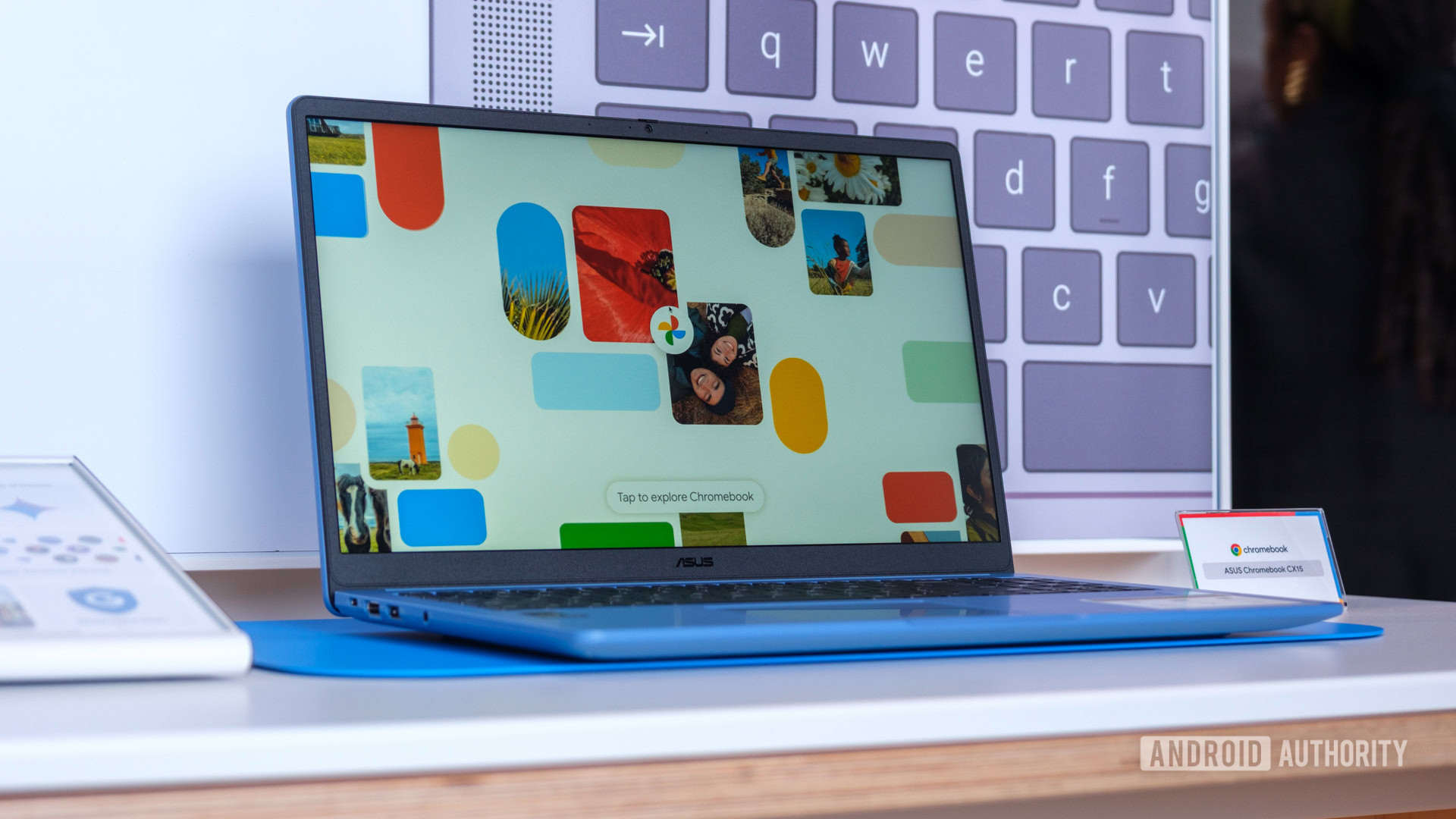
Google believes the laptop is experiencing a comeback. This renewed focus on the form factor isn’t happening in a vacuum; according to Sameer Samat, the rise of AI‑powered computing is reshaping how people think about laptops.
“People had thought this form factor was yesterday’s news.”
— Sameer Samat, President, Android Ecosystem, Google
Samat explains that for a while laptops felt less exciting as smartphones and tablets took center stage. However, AI is rapidly changing that perception.
“AI is really bringing the laptop back,” Samat said. “We’re all using laptops, but in some ways, people had thought this form factor was yesterday’s news.”
The difference now, he notes, is that AI tools are far more powerful and make larger devices more productive. With a keyboard, a large screen, and desktop‑class multitasking, laptops can become the ideal platform for:
- Working with generative‑AI tools
- Automating workflows
- Running more complex tasks
This shift helps explain why Google is investing in expanding Android’s role in the laptop space through Aluminium OS.
Continuity Features
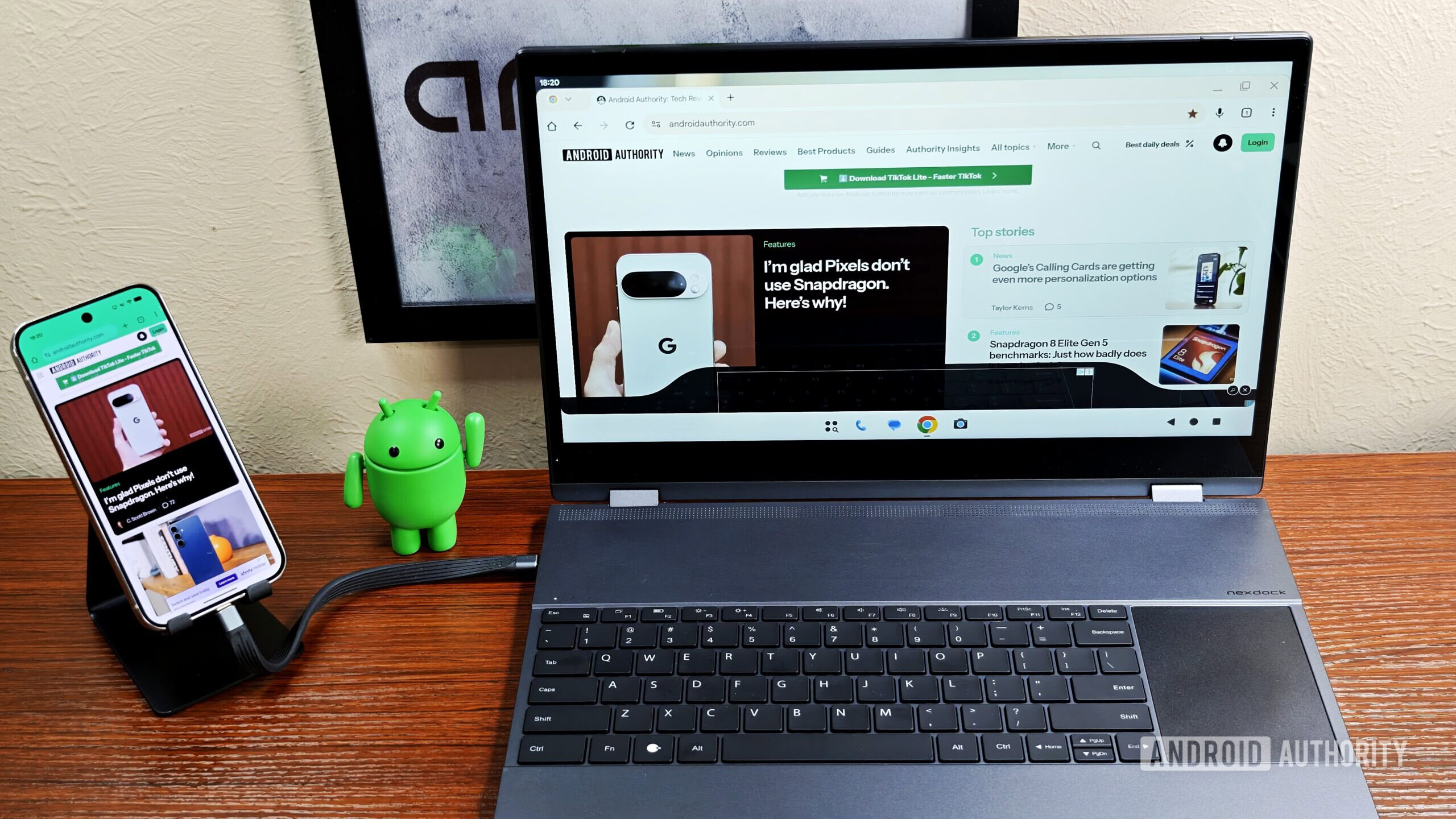
The other big opportunity here is to make phones and laptops work better together. Samat highlighted that cross‑device continuity, something Android users have increasingly asked for as ecosystems like Apple’s become more tightly integrated, is a major focus for Aluminium OS.
Google has experimented with these ideas through Chrome OS over the years, but Aluminium OS will take them to the next level. We’re already seeing features like Handoff appear in Android 17, hinting at how Android phones, laptops, and PCs will work together more effectively in the future.
Just like Apple’s Handoff, Android’s version is a new feature and API coming to Android 17 that app developers can integrate with to provide cross‑device continuity. It allows the user to start an app activity on one Android device and seamlessly transition to another.
“A lot of Android users are excited about the ability to have their phone and their laptop interoperate and work better together,” – Samat
All images and quotes are credited to their original sources.
Chrome OS isn’t going anywhere

Ryan Haines / Android Authority
Despite speculation that Aluminium OS might replace Chrome OS—or that Chrome OS could be retired after a few years—Google’s Samat made it clear that the company has no plans to stop working on Chrome OS.
“Chrome OS has done really well. Its management capability is second to none,” Samat said.
“Development for Chrome OS will absolutely continue as is.”
Chromebooks remain hugely successful in certain markets, particularly education, where their security model, centralized management tools, and browser‑first approach make them easy to deploy at scale.
“Chrome OS is its own use case, and that will remain,” Samat added.
Samat’s comments suggest that Google may not be replacing Chrome OS at all; instead, it could be expanding its laptop strategy.
- Aluminium OS may represent a broader platform designed for consumer laptops, blending Android apps, AI features, and tighter phone integration.
- Chrome OS is likely to stay focused on browser‑led computing, enterprise deployments, and education environments.
“When we think about the laptop segment more generally, I think there’s an offer in there that goes even beyond what Chrome OS is focused on,” Samat said.
In other words, rather than one laptop operating system replacing another, Google may be building two parallel approaches to personal computing:
- Chrome OS – the established, browser‑centric experience.
- Aluminium OS – a new, consumer‑focused platform that integrates Android, AI, and tighter phone connectivity.
Follow
Thank you for being part of our community. Please read our Comment Policy before posting.