
Google finally explains why AICore uses so much storage
Source: Android Authority
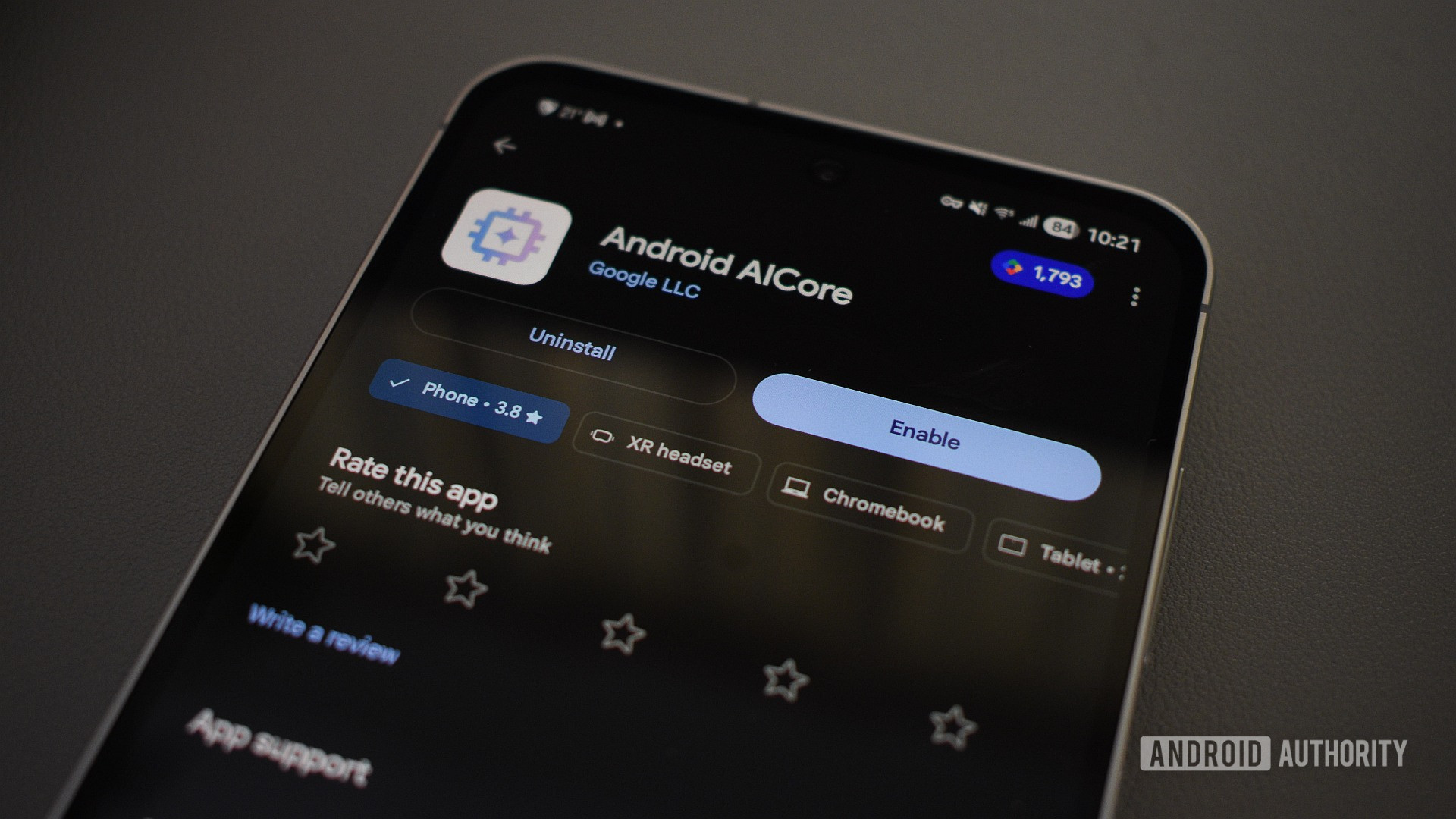
TL;DR
- Google has updated its support page to reveal why the AICore app can use a ton of your storage.
- The app temporarily keeps both new and old versions of an AI model in case the new update experiences an error.
- AICore enables on‑device AI features like text summarization, writing tools, and proofreading.
Google’s AICore app is key for on‑device AI on your Android phone, as it maintains and updates your device’s AI models. However, one frequent complaint is that the app can occupy a large amount of storage. Google has now shed more light on this issue, and it turns out this is intended behavior.
Google’s explanation
The search giant has updated its AICore support page to explain why the app can balloon in size:
You may occasionally find that this service uses a larger amount of storage than expected. This occurs when the system is updating to a new version of an AI model in the background.
To make sure features work reliably, your device temporarily keeps both the old and new versions of the model for up to three days. This fail‑safe allows your phone to instantly revert to an older version if the new update encounters an error, rather than having to download gigabytes of data again.
Google says the extra storage space is automatically freed up once the new Gemini Nano update is confirmed as stable. So users shouldn’t have to manually clear the AICore storage after a few days.
Impact on storage
This approach is sensible because redownloading the old AI model could take a long time depending on your internet connection. It also ensures that on‑device AI features like transcriptions, smart replies, text summaries, and writing tools work normally in the event of a bad update.
Nevertheless, the feature isn’t ideal for Android phones that ship with only 128 GB of base storage. Some users have reported that AICore can occupy up to ~11 GB of storage — see the discussion on Reddit here.
We hope Google will develop alternative solutions for these devices, and that Android OEMs will continue moving toward larger base storage capacities (e.g., 256 GB) for AI‑enabled phones.