
From mainstream to underdog: These are the apps I recommend
Source: Android Authority

Introduction
I’ve always loved a good underdog story. When it comes to tech, I generally find myself gravitating toward the companies that aren’t constantly in the spotlight. There’s a simple reason for that: when you aren’t the default choice, you have to try harder. These companies take more risks to stand out, their products are often more wallet‑friendly, and their customer support actually feels human.
There is also something deeply satisfying about going against the grain. Using a tool that most people haven’t heard of yet makes me feel like I’m forging my own path, guided by utility rather than just following the crowd.
While I’ll be the first to admit my home screen still has its fair share of mainstream giants, I generally enjoy giving underdogs a shot. With that in mind, I want to walk you through a few hidden gems that serve as great alternatives to the household names we all know.
Do you prefer mainstream or underdog apps?
| Option | Votes |
|---|---|
| Mainstream apps | |
| Underdog apps | 12 |
From Chrome to Vivaldi

Mitja Rutnik / Android Authority
We all use a browser, and for most people, Chrome is the default choice. While it’s certainly stable, there are significant drawbacks to staying within Google’s garden. Privacy is a major one, but for me, it’s also about the features. Chrome is notoriously late to the party, often adding highly requested tools months or years after the competition already launched them.
For those looking for an alternative that isn’t Firefox, Edge, or the increasingly popular Brave, Vivaldi is the browser to beat. It’s very privacy‑focused, letting you fine‑tune your tracking and ad‑blocking settings the moment you install it.
Why Vivaldi stands out
- Personalization – Customizable Speed Dial for your favorite sites and a toolbar you can fill with shortcuts.
- Convenient shortcuts – I keep a Translation shortcut right on the bar to translate entire pages with a single click.
- Chromium compatibility – All your Chrome extensions and bookmarks move over seamlessly, so you don’t have to leave your ecosystem behind.
If you value privacy and love to tailor your browsing experience, Vivaldi is worth a try.
From Notion to Anytype
Dhruk Bhutani / Android Authority
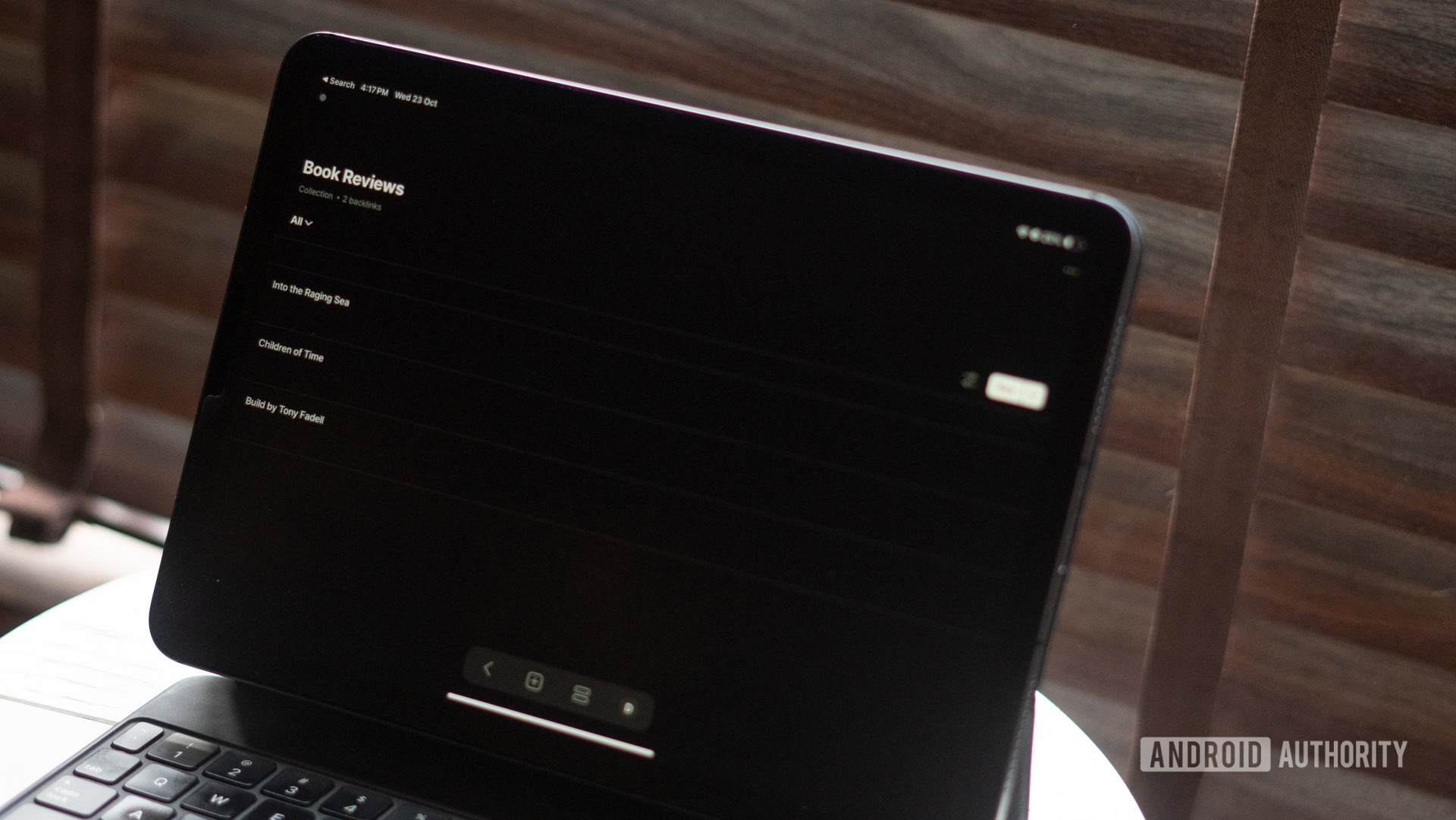
Notion has received a ton of attention over the last few years, and for good reason. I’ve used it myself for a long time and there’s plenty to like, but there are several alternatives available that are just as good — and even better in some specific areas. Anytype is the one that really stands out to me.
What makes it different from Notion is its focus on privacy and security. It is an offline‑first app, meaning all of your data stays on your device by default. This also means it doesn’t require an internet connection; it works just about anywhere, whether you’re in a subway tunnel or 30,000 feet in the air. While Notion technically has an offline mode for its pages, it’s not the default experience and can be a bit finicky.
My colleague Dhruv wrote about this a while back, noting that Anytype essentially takes the best parts of Notion and Obsidian and gives them a unique flavor. If you’re already familiar with those two apps, you’ll find your way around Anytype quickly. If not, be prepared for a bit of a learning curve — these apps are powerful, but they aren’t quite as plug‑and‑play as something like Google Keep.
From Spotify to Deezer

Everyone I know uses Spotify, yet most are barely familiar with Deezer. I’ve spent a lot of time with both over the years, and I’ve reached a bold conclusion: Deezer is actually better than the Swedish giant.
Why Dee Deezer Works for Me
- Comprehensive library – Every artist and song I look for is there.
- Clean interface – Less clutter makes navigation a breeze.
Stand‑out Features
- Flow – An infinite, intelligent mix of your favorites and new discoveries that can be filtered by mood or genre. While every service has a discovery algorithm, Flow feels the most accurate.
- Lyrics timing – A loading circle in the lyrics view tells you exactly when the vocals will start, perfect for sing‑along sessions.
- Music quizzes – Built‑in quizzes keep things fun and test your knowledge.
- Events tab – Tracks local shows based on your taste, turning Deezer into a hub for real‑world music experiences.
Overall, Deezer feels like a platform built for people who actually love music.
From ChatGPT to Perplexity
[Image: Perplexity Android app on a Google Pixel phone]
Joe Maring / Android Authority
ChatGPT dominates the AI market, with Google’s Gemini close behind. If you need a tool that’s less a chatbot and more a precision‑research instrument, Perplexity is the answer.
Why Perplexity stands out
- Reduced hallucinations – Nearly every claim is backed by a verified source, so you can trust the information you receive.
- Transparent sourcing – Tap the sources bar under an answer to see all references on a single page, making fact‑checking a breeze.
- Rich media – Relevant images and videos appear directly in the thread, giving you a visual handle on the topic.
Flexibility with Perplexity Pro
Perplexity Pro acts as a universal interface for the world’s leading AI models. For $20 / month you can switch between:
| Model | Version |
|---|---|
| GPT | 5.2 |
| Gemini | 3.0 Pro |
| Grok | 4.1 |
| Claude | 4.6 Opus |
- Underdog advantage – Instead of locking you into a single ecosystem, Perplexity gives you access to all of them.
- Free tier – A capable free plan is available if you just want to test the waters.
From Todoist to Superlist
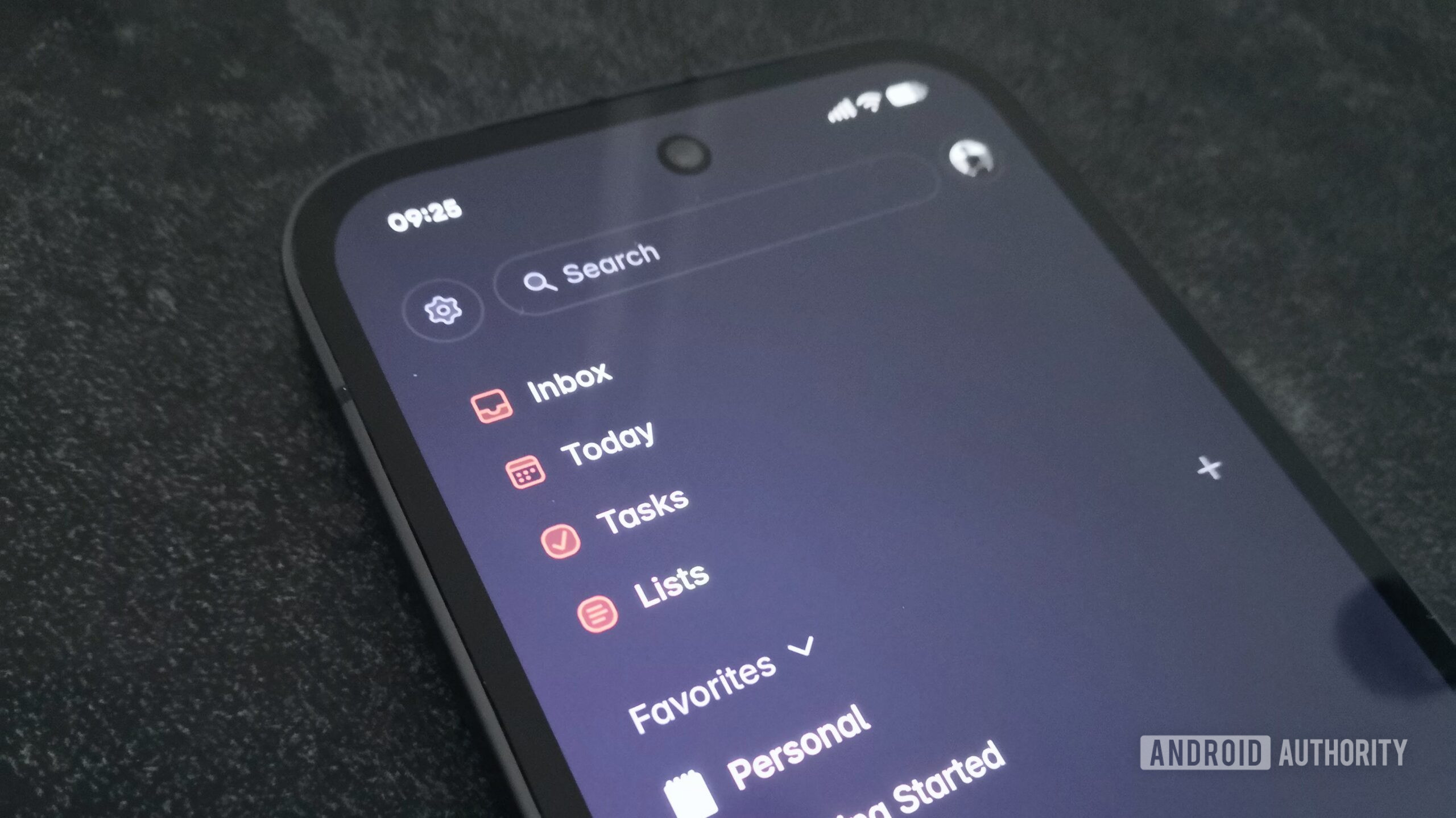
If you want to switch from a mainstream to‑do list app like Todoist to something with a bit more soul, Superlist is well worth checking out. It was built by the same team behind Wunderlist—the legendary app that was eventually bought by Microsoft and folded into their To Do app.
Why Superlist stands out
- Core features you expect: natural‑language input, image/file attachments, and seamless syncing.
- AI integration (2026):
- Talk – simply speak your tasks and let the AI add them for you.
- AI meeting note‑taker – listens to conversations, generates a structured outline, and creates assignable tasks automatically.
- Free tier: generous, but limited to five lists.
- Pro subscription: unlimited lists + full AI meeting features, starting at $5 / month.
Bottom line
If you’re looking to ditch the mainstream giants and give an underdog a chance, Superlist is a solid place to start.
What did I miss? Let me know in the comments—your suggestions are welcome!
Follow
Thank you for being part of our community. Please read our Comment Policy before posting.