
Chinese scientists 3D print tiny items in half a second using holographic light fields — scientists precision fabricate complex millimeter-scale objects in record time
Source: Tom’s Hardware
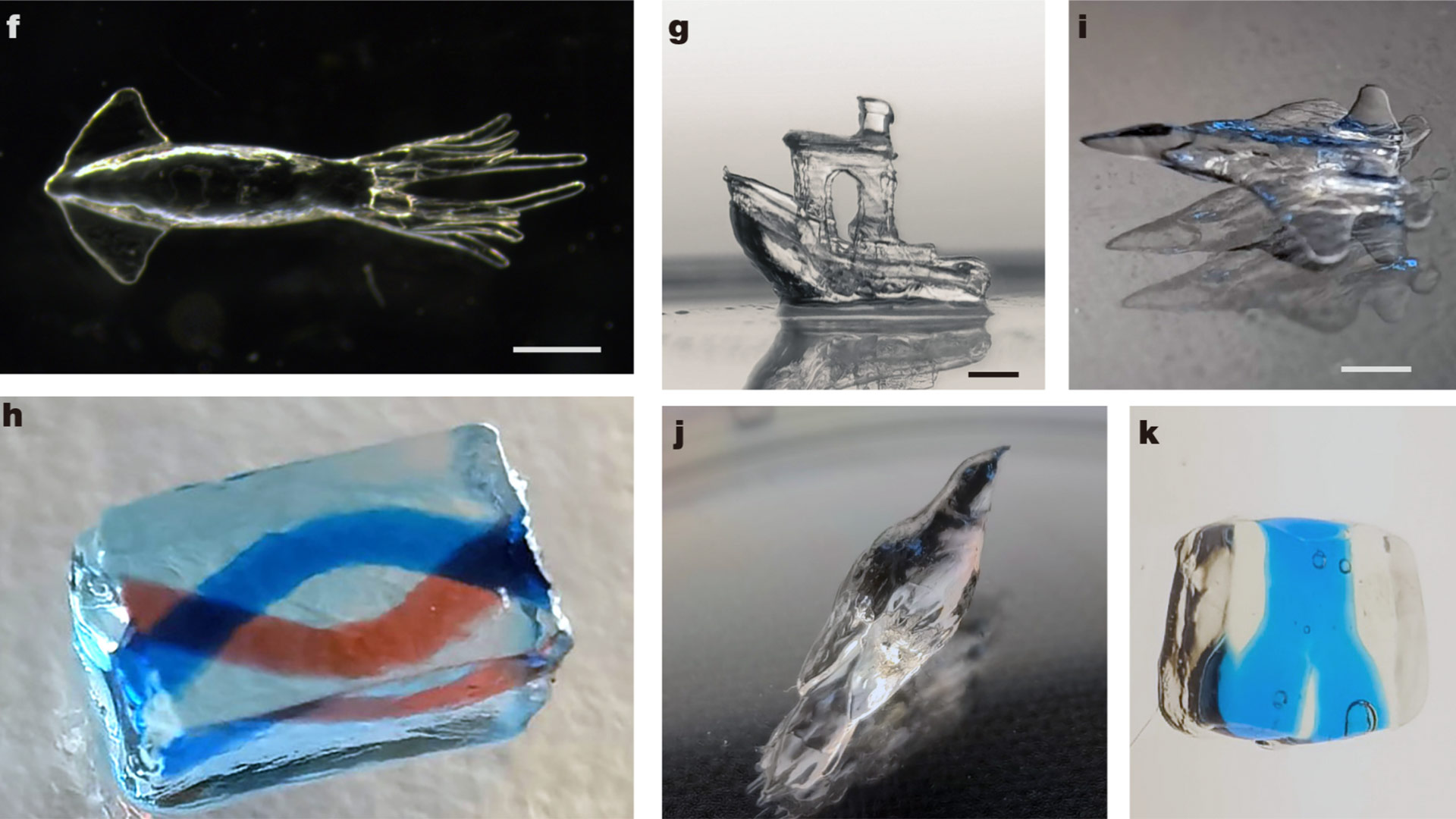
Image credit: Tsinghua University research paper on Nature
A team of scientists from Tsinghua University have revealed a new technique for super‑high‑speed 3D printing of complex objects. Their paper, published in Nature, reports that they can fabricate millimeter‑scale objects “within only 0.6 s” using a method called digital incoherent synthesis of holographic light fields (DISH).
How DISH Works
Traditional volumetric additive manufacturing cures high‑viscosity resins by projecting patterned light through the material while the object rotates 360° on a pedestal. DISH modifies this approach in two key ways:
- Stationary material – The resin remains fixed instead of spinning.
- Rotating light field – A high‑speed, multi‑perspective light field rotates around the material, projecting complex 3D intensity distributions in a fraction of a second.
This precise, multi‑angle light control, enabled by computational optics, allows for rapid curing of intricate geometries without the mechanical motion of the part itself. The result is the ability to produce millimeter‑scale objects in fractions of a second with high stability and accuracy.
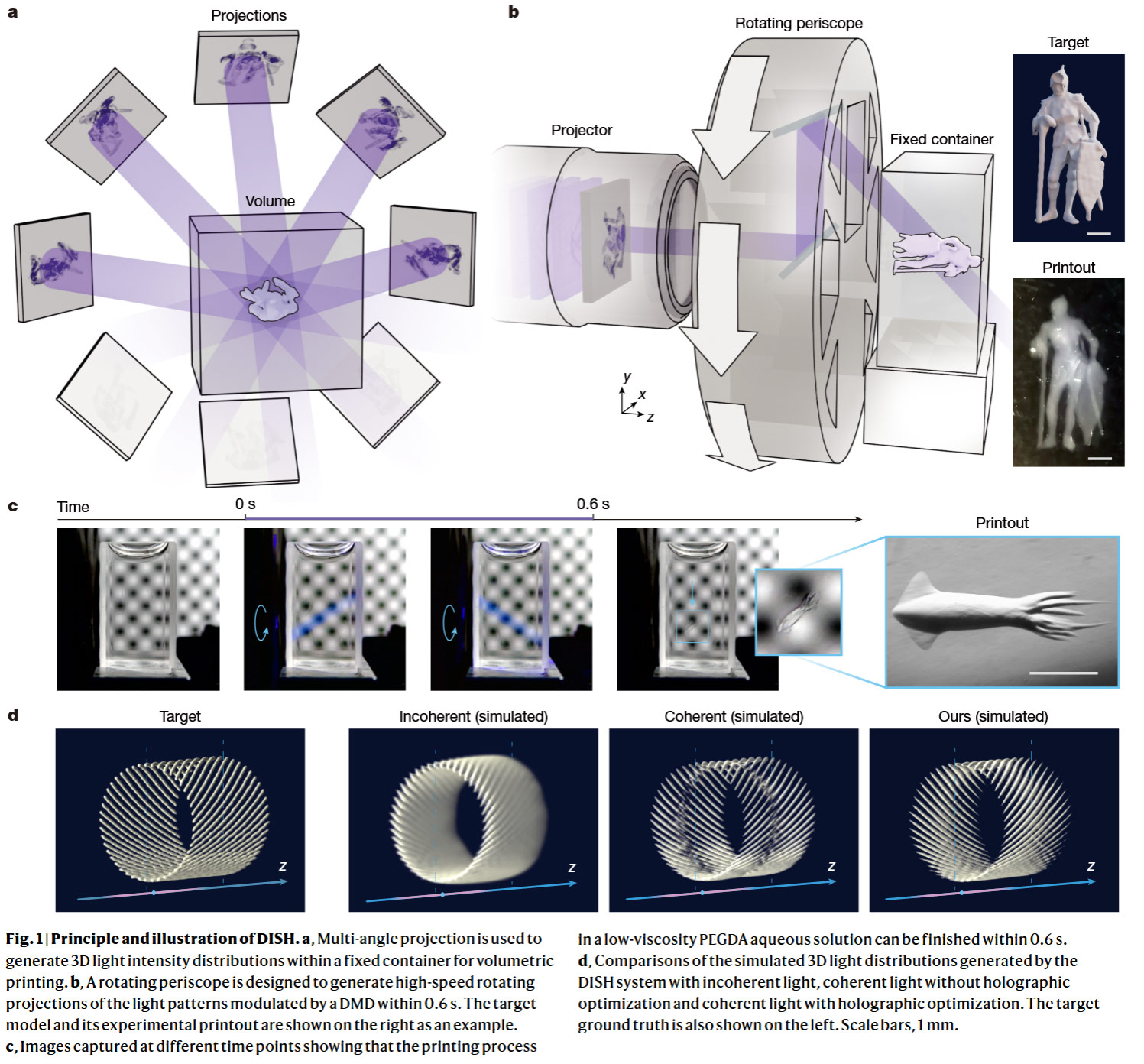
Image credit: Tsinghua University research paper on Nature
Potential Applications
The researchers suggest that DISH could be valuable for a range of precision‑sensitive fields, including:
- Micro‑components such as photonic computing devices and mobile‑phone camera modules.
- Flexible electronics where sharp angles and complex curved surfaces are required.
- Micro‑robotics components that benefit from rapid, high‑resolution fabrication.
- High‑resolution tissue engineering scaffolds and other biomedical structures.
These possibilities point toward DISH being a promising candidate for future mass‑production of intricate, small‑scale parts.