
China showcases new Moon ship and reusable rocket in one extraordinary test
Source: Ars Technica
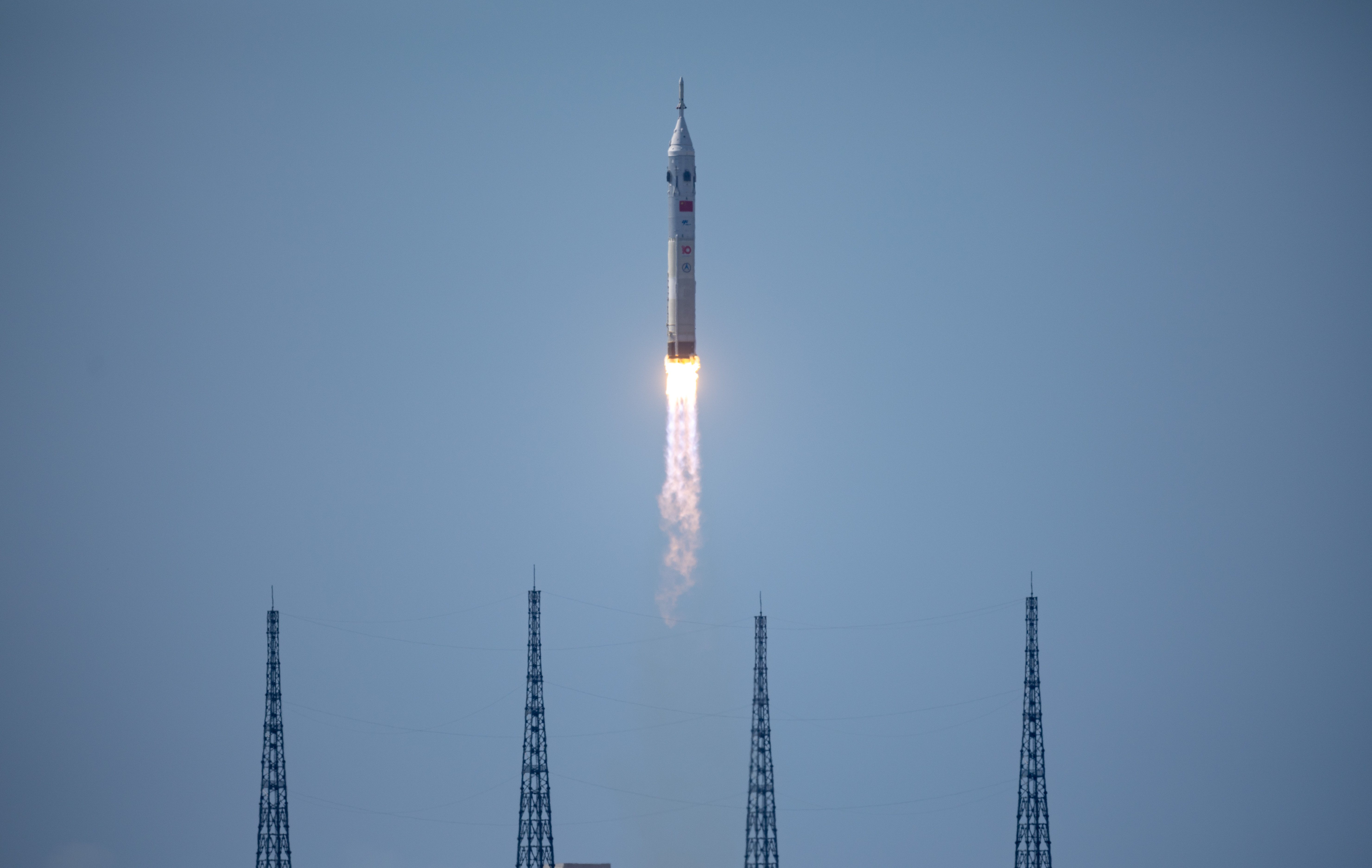
Credit: Liu Yang/VCG via Getty Images
The recent in‑flight abort test of China’s Long March 10 booster demonstrated a successful recovery of the reusable first stage and a splashdown of the Mengzhou “dream vessel” capsule. The test marks a major milestone for China’s efforts to develop both a reusable launch system and a lunar‑orbit mission capability.
Mengzhou spacecraft and Long March 10A
Mengzhou (梦舟, “dream vessel”) is slated for its first orbital test flight later this year. The capsule will launch aboard a Long March 10A rocket and rendezvous with the Tiangong space station in low‑Earth orbit.
- Long March 10A: A single‑stage reusable booster paired with an upper stage, optimized for LEO missions.
- Long March 10 (full‑size): Features three boosters with a total of 21 YF‑100K kerosene engines, capable of delivering up to 70 t to LEO and propelling the 26‑t Mengzhou spacecraft toward the Moon.
Long March 10 booster recovery test
The test evaluated several critical technologies:
- Multiple engine restarts and high‑altitude ignition during re‑entry.
- Resistance to complex force and thermal environments.
- High‑precision navigation and control throughout the re‑entry phase.
The booster performed a controlled descent and was recovered intact, laying the groundwork for “subsequent full‑profile flight tests,” according to the China Aerospace Science and Technology Corporation (CASC).

The Mengzhou capsule splashes down in the South China Sea after the in‑flight abort test. Credit: China Manned Space Agency
China’s reusable‑rocket landscape
At least ten Chinese companies are actively developing reusable launch vehicles, aiming to emulate the success of SpaceX’s reusable rocket program. Recent milestones include:
- Zhuque‑3 and Long March 12A (December 2025): Both rockets reached orbit with recoverable boosters, though the boosters missed their downrange landing zones.
- Multiple “hop tests” by various firms to validate vertical take‑off and vertical landing (VTVL) technologies ahead of orbital missions.
International context
These advancements occur as NASA prepares for a crewed mission that will loop around the far side of the Moon, potentially launching as early as next month. While a U.S.‑built lunar lander is still years from operational status, China’s parallel progress in reusable rockets and lunar exploration positions it as a significant competitor in the emerging era of sustainable spaceflight.