
Cave-inspired 3D printed Japanese home touted as earthquake resistant — two-story house first of its kind to be granted seismic compliance certificate
Source: Tom’s Hardware
Overview
Construction of Japan’s first government‑approved two‑story 3D‑printed home has been completed. The project demonstrates that 3D construction printing (3DCP) can meet the country’s stringent seismic compliance regulations, marking a significant milestone for the 3DCP industry and the housing market.
Project Details
- Technology provider: COBOD, described as a “world leader in 3D construction printing solutions.”
- On‑site fabrication: Executed by Kizuki Co., Ltd in Kurihara City, Miyagi Prefecture, Japan.
- Architectural design: Developed by Onocom, an architectural services firm.
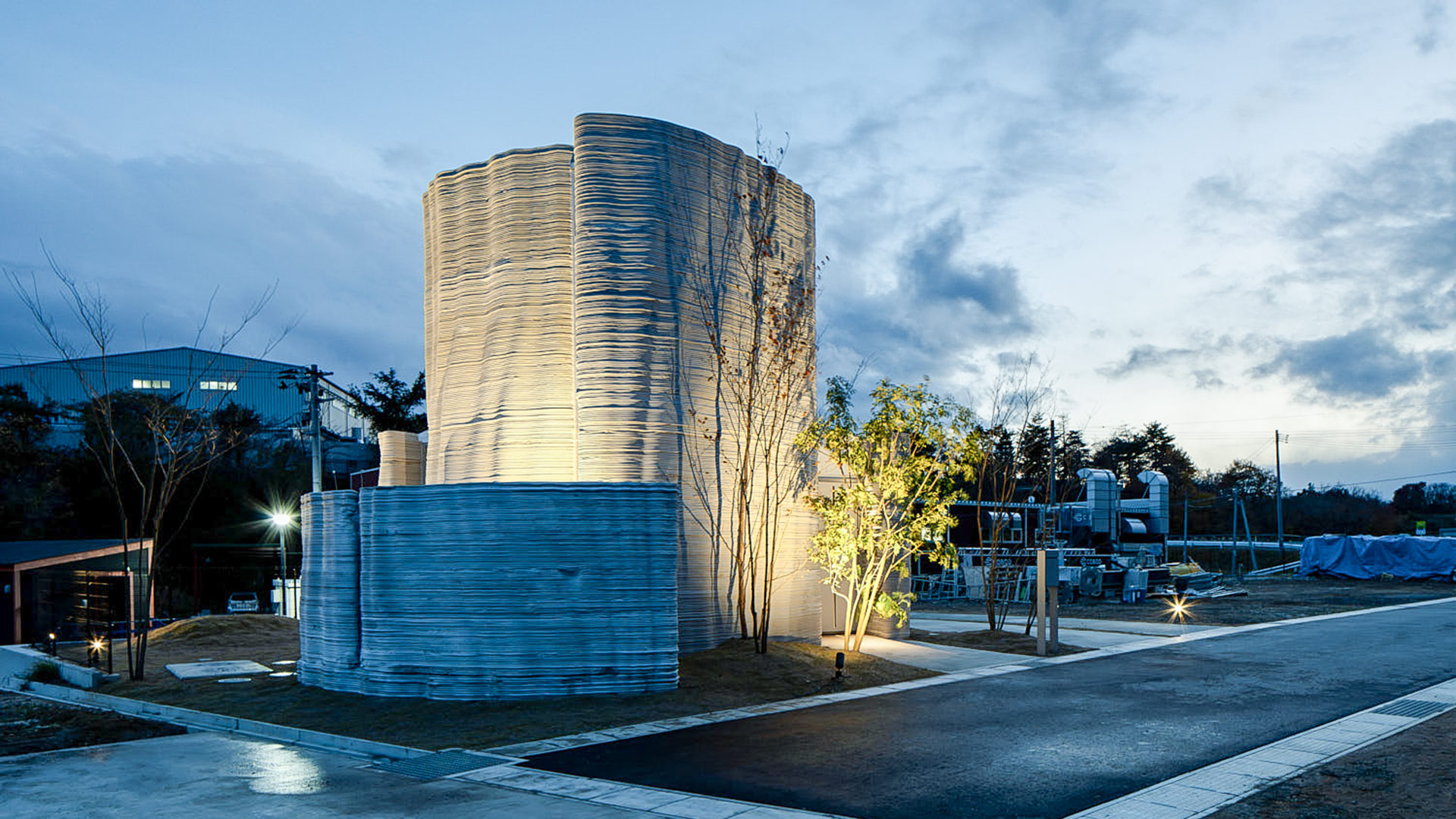
Image credit: Onocom
Henrik Lund‑Nielsen, Founder and General Manager of COBOD International, noted:
“Japan has some of the most demanding seismic requirements in the world. Seeing a government‑approved two‑story 3D‑printed reinforced concrete house completed here confirms that 3D construction printing is ready for projects that rely on structural precision and consistent quality, also in seismic areas.”
Design and Construction Benefits
- Multifunctional wall segments: Molded in a single step to create a three‑layer structure that integrates design, structural frame, and facility space, dramatically reducing on‑site post‑processing.
- Elimination of traditional formwork.
- Reduced cost and CO₂ emissions from transporting prefabricated parts.
- Design freedom with complex geometry.
- Stable quality control across the build.
- Continuous printed foundations for enhanced structural strength.
- Accelerated construction speed compared with conventional methods.
Environmental Conditions and Testing
The project proved the tolerance of 3DCP to varying weather and temperature conditions:
- Cold‑weather printing: Initial formwork was printed at temperatures below 10 °C (50 °F), requiring heated mixing water to maintain printability.
- Hot‑weather printing: The main house structure was completed in summer at 30–35 °C (86–95 °F). Higher temperatures shortened the concrete bucket life and demanded careful process control, but did not interrupt the printer‑driven building process.
These results highlight the robustness of the 3D printing technology in diverse climatic environments while still achieving full seismic compliance.