
Buyer beware: ChatGPT’s new affordable Go plan is a bad deal compared to Gemini
Source: Android Authority
Source: Android Authority
Dhruv Bhutani / Android Authority
If you’ve followed business news over the past few weeks, you may know that AI companies are financially suffering in spite of the investor euphoria and optimism. Companies with deep pockets like Google and Meta have been spared the worst, but startups like OpenAI are banking on a continuous stream of funding from those very tech giants to stay afloat.
In response, OpenAI appears to be turning to a familiar solution from the tech playbook: advertising in ChatGPT.
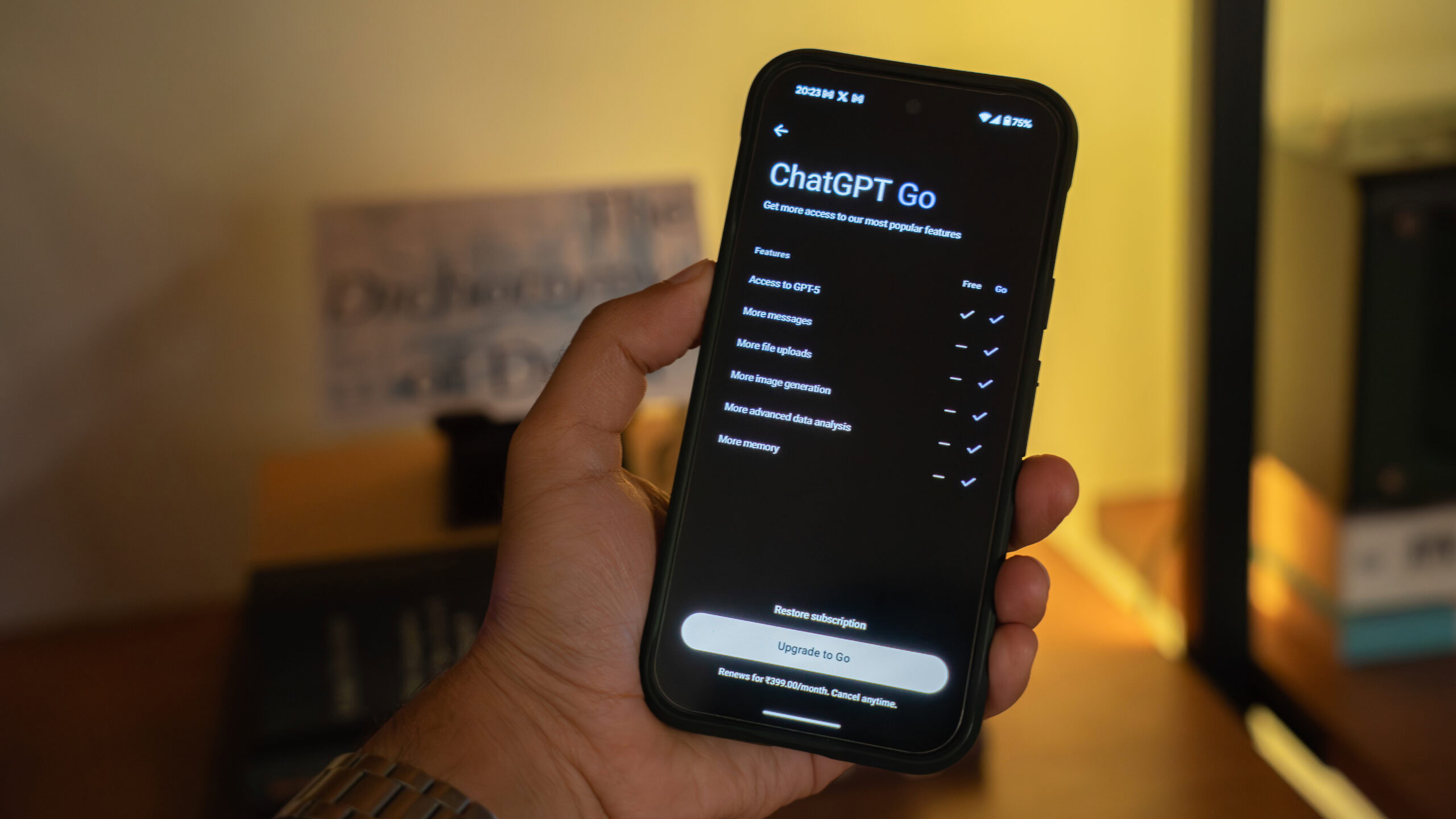
That’s right—your ChatGPT chats will soon display ads along the bottom of the screen. Most users, including myself, are understandably upset by this news. What makes it worse is that OpenAI isn’t stopping at the free tier; it is also alienating the people who are willing to pay for the new $8‑per‑month “Go” tier.
So while we were initially quite optimistic about the new affordable ChatGPT Go subscription, I’m not thrilled about keeping the subscription—especially as Google’s new AI Plus tier might undercut it in terms of both features and price.
Ads in ChatGPT – Why They’re Problematic
OpenAI has announced that ads will soon appear beside ChatGPT’s responses. The company says the ads won’t influence the actual answers you receive—for example, a question about smartphones won’t be answered with a recommendation to buy a Samsung device just because Samsung paid for the placement.
While that sounds reassuring, several concerns remain.
1. Targeted Advertising Is Inevitable
- Relevance is the goal – Like any modern ad platform, OpenAI will aim to serve ads that match the user’s query.
- High‑value niches – If you ask for personal‑finance advice, you could be flooded with sponsored credit‑card offers, investment‑app promotions, or loan services.
- Self‑regulation limits – OpenAI could ban certain categories (e.g., health), but history shows that industry self‑regulation is often ineffective.
2. Trust Erosion
- Conversational format – ChatGPT is designed to feel friendly and empathetic. An ad placed next to a response can look like an endorsement from a trusted “assistant.”
- Comparison to search engines – In Google Search, sponsored links appear in a list of results, clearly separated from organic results. ChatGPT’s chat‑style interface blurs that line, making users more likely to accept the ad as a genuine recommendation.
3. Monetisation vs. User Experience
- Low conversion to paid plans – Fewer than 5 % of users are willing to pay for ChatGPT.
- Pricing pressure – The $20‑per‑month ChatGPT Plus tier is considered expensive for casual users.
- Cheaper tier with ads – OpenAI introduced the lower‑cost “ChatGPT Go” tier, but it also includes ads, putting it in direct competition with ad‑free alternatives like Google’s Gemini.
Bottom Line
- Ads will be present and likely targeted, which could feel intrusive even if they aren’t embedded directly within responses.
- The conversational nature of ChatGPT amplifies trust, making any adjacent ad appear more like a personal recommendation than a typical banner.
- Balancing revenue needs with user trust will be a critical challenge for OpenAI moving forward.
ChatGPT Go vs. Google AI Plus: The Choice Is Clear
Ryan Haines / Android Authority
Both ChatGPT Go and Google AI Plus debuted outside the U.S., targeting developing economies with lower monthly price tags. On paper, each subscription promised decent value for the money. Now that they’re available globally—including the U.S.—the value proposition has shifted considerably.
What you get with ChatGPT Go
- Larger context window and 10× the message & file‑upload limit compared with the free tier.
- Access only to GPT‑5.2 Instant; the more powerful Thinking model remains locked behind the full ChatGPT Plus subscription.
- When the Go tier launched, it offered the same model as Plus users, but that’s no longer the case.
Bottom line: The best ChatGPT features are still behind the $20 / month Plus plan, making the $8 / month Go tier a poor value.
What you get with Google AI Plus
- Same price point as ChatGPT Go ($8 / month).
- Higher usage limits for Gemini 3 Pro plus access to Gemini 3 Flash.
- Additional tools: Veo 3.1 (AI video generation) and Nano Banana (image generation).
- 200 GB of Google‑account cloud storage, shareable with up to five family members.
Ads: The biggest divergence
| Service | Ads in free tier | Ads in paid tier |
|---|---|---|
| ChatGPT Go | Yes (coming) | Yes (coming) |
| Google AI Plus | No (no in‑app ads planned) | No (no in‑app ads planned) |
Google has publicly stated it won’t insert ads into Gemini, even on the free tier. This aligns with its core business model, which already generates massive revenue from ads across Search and the broader ecosystem.
OpenAI, by contrast, appears increasingly isolated. Anthropic’s Claude even ran a Super Bowl ad mocking the idea of ads inside a chatbot. OpenAI’s Sam Altman called the ad “misleading,” but the perception damage is already done. Competitors now use ChatGPT ads as a punchline and pledge to stay ad‑free.
Verdict
- Google AI Plus delivers a better overall package at the same price: superior model access, extra creative tools, and 200 GB of cloud storage—all without ads.
- ChatGPT Go feels like a downgrade from the original offering and offers limited long‑term value.
I’ll continue to use ChatGPT occasionally, but I can’t recommend paying for the Go tier while Google’s AI Plus provides more bang for the buck. If ads become intrusive, I may switch to Gemini wholesale.
Follow us for more updates.
Thank you for being part of our community. Please read our Comment Policy before posting.