
Android security gets aggressive as Google bans thousands of developers and millions of sketchy apps
Source: Android Authority
Android security gets aggressive as Google bans thousands of developers and millions of sketchy apps
Published: 19 February 2026 | Author: Jay Bonggolto | Source: Android Authority
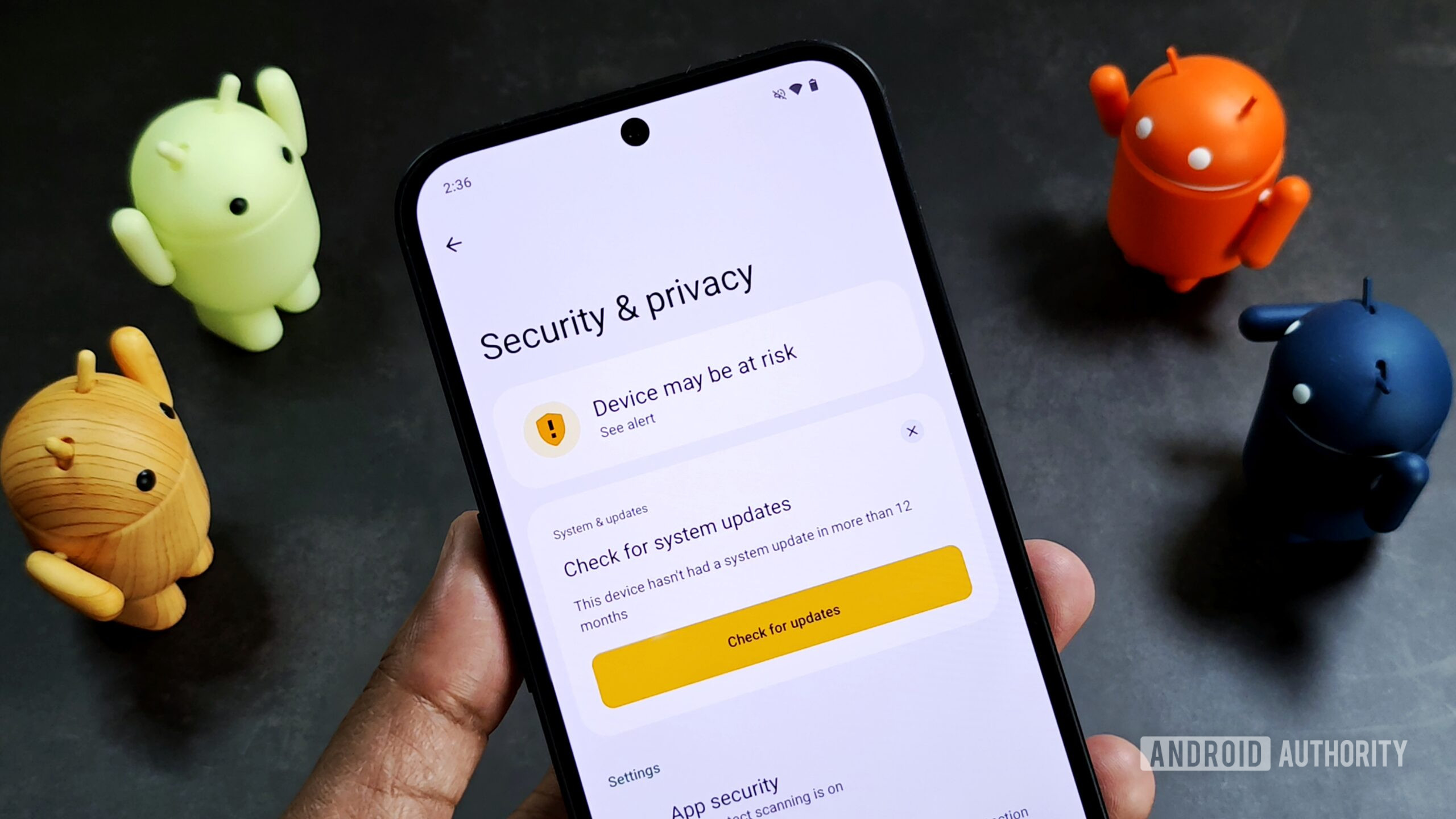
Photo credit: Android Authority
Summary
Google is leveraging artificial intelligence to block millions of harmful Android apps, crush scam tactics, and strengthen Play Protect—making the Android ecosystem safer for users. The crackdown has resulted in the removal of nearly 2 million malicious apps and the banning of thousands of developers who repeatedly violate Google’s policies.
Key points:
- AI‑driven detection: New machine‑learning models scan apps for malicious behavior, deceptive ads, and privacy‑invasive permissions.
- Massive takedown: Approximately 2 million sketchy apps have been removed from the Play Store in the latest sweep.
- Developer bans: Hundreds of repeat offenders have been permanently barred from publishing on Google Play.
- Play Protect upgrades: Enhanced real‑time scanning on devices and tighter vetting for new submissions.
- Impact on users: Fewer phishing attempts, reduced ad‑fraud, and a cleaner app marketplace overall.
“Our goal is to protect users while still fostering innovation,” said a Google spokesperson. “By using AI at scale, we can act faster and more accurately than ever before.”
Article Details
- Headline: Android security gets aggressive as Google bans thousands of developers and millions of sketchy apps
- Author: Jay Bonggolto – freelance Android writer (also contributes to Android Central, Neowin, Android Police)
- Word count: 560
- Categories: News → Android Security
- Keywords: Android Security, Google
Navigation
- Home: https://www.androidauthority.com/
- Mobile section: https://www.androidauthority.com/mobile/
Affiliate Disclosure
Affiliate links on Android Authority may earn us a commission. Learn more.
Android security gets aggressive as Google bans thousands of developers and millions of sketchy apps
By Jay Bonggolto – 1 hour ago
TL;DR
- Google is relying more on AI to fight AI‑powered malware and strengthen Android defenses before threats reach users.
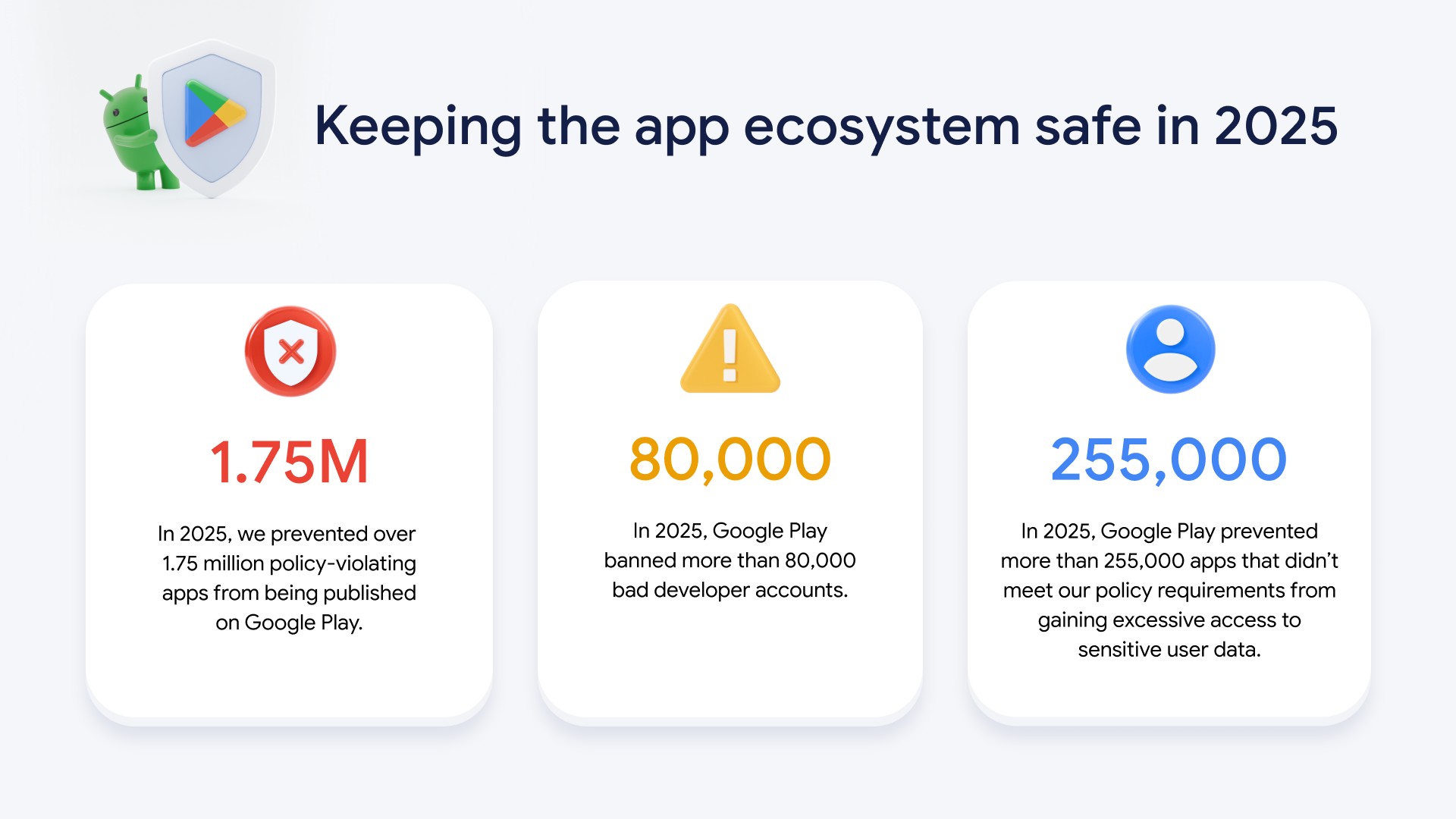
- 1.75 M+ harmful apps were blocked from the Play Store in 2025, along with 80 K malicious developer accounts.
- Privacy protections were tightened: 255 K apps were stopped from requesting unnecessary sensitive data (e.g., location, photos).
AI‑driven app review
A new report from Vijaya Kaza, Google’s Vice President of App & Ecosystem Trust, reveals that AI models are now embedded directly into the Play Store review pipeline. Human reviewers still play a role, but AI speeds up detection of complex malicious patterns that would be hard to spot manually.
“Artificial intelligence is helping hackers find new ways to sneak malware onto your phone, so Google is fighting fire with fire.” – Android Authority
Privacy & data‑use enforcement
- 255 K apps were blocked from requesting unnecessary sensitive data such as location or photo access.
- Developers receive real‑time guidance via Play Policy Insights in Android Studio, which flags potential policy violations while code is being written.
Spam and review‑bombing mitigation
- 160 M spam ratings and fake reviews were removed in 2025, including coordinated five‑star campaigns and review‑bombing attacks.
- Google’s systems now prevent an average 0.5‑star drop for apps targeted by such attacks.
Play Protect enhancements
- Scans 350 B apps daily, detecting 27 M new malicious apps from outside Google Play.
- New fraud‑protection blocks installations from browsers or messaging apps that request sensitive permissions.
- In 2025, Play Protect operated in 185 markets, covering 2.8 B devices and stopping 266 M risky installation attempts.
- The “turn off protection” option is now disabled during phone calls to thwart social‑engineering attempts.
Looking ahead
- Google will open developer verification to all creators (including students and hobbyists) with a simplified process.
- In Android 16, a single line of code can protect sensitive information (e.g., banking logins) from “tapjacking” attacks.
Stay updated with Android Authority
- Add Android Authority as a favorite source in Google Discover:
- Set us as a preferred source in Google Search:


Tags: News • Android Security • Google
Thank you for being part of our community. Please read our Comment Policy before posting.