
A Practical Performance Comparison of Top Internal Tool Builders
Source: Dev.to
Intro + Setup
A Solutions Architect with experience building (and breaking) enterprise systems eventually wants an answer to one simple question:
“Can this thing actually handle load without melting?”
That’s the real litmus test for any platform that claims it can handle complex, data‑intensive internal tools.
Instead of another “Top 10 Low‑Code Platforms of 2025” list, I narrowed it down to the ones that consistently feel fast:
DronaHQ appears later in this article, but there’s a reason it didn’t make the main list (you’ll see).
Legacy platforms like Appian and Mendix were intentionally left out—they serve a purpose, but performance comparisons against modern, developer‑first tools would be apples vs. office furniture.
Now, let’s actually test them.
Disclaimer: Performance may vary based on your device, browser, and environment. These results reflect tests on a specific setup and should be treated as indicative, not absolute.
Test 1: The Raw JS Execution Benchmark (200,000 rows)
The idea was simple
- Create a JavaScript query on all three platforms.
- Generate 200,000 rows of dummy “product data” (large enough to expose browser bottlenecks).
- Measure how long the platform takes to return the data.
Results
| Platform | Approx. Time |
|---|---|
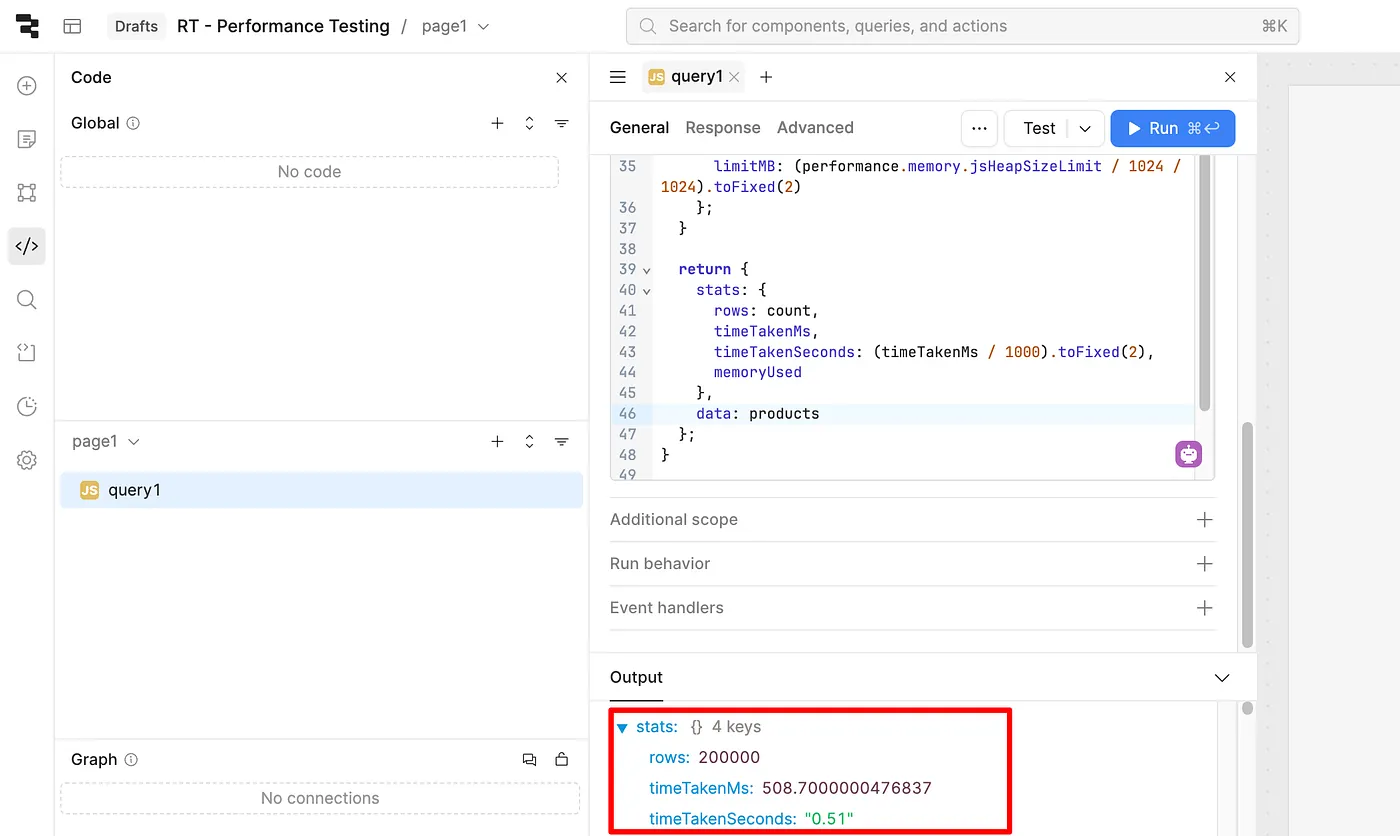
| Retool | ~508 ms |
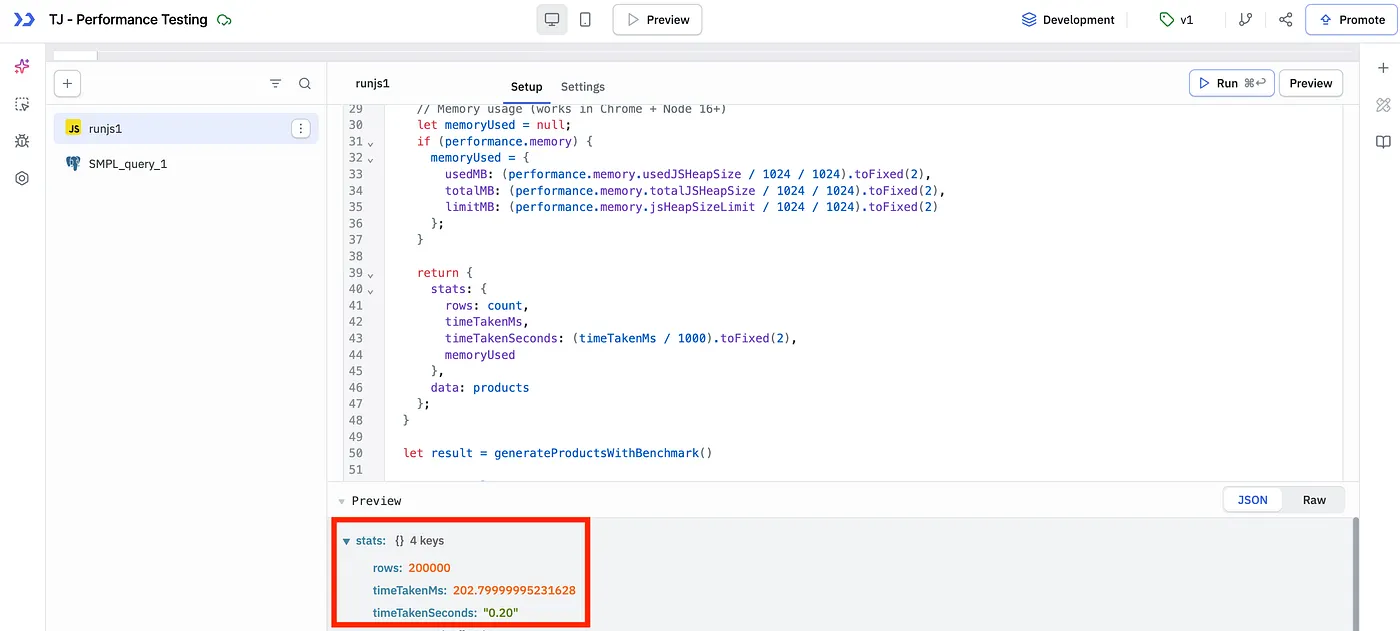
| ToolJet | ~202 ms |
| Appsmith | Crashes instantly 😞 |
Retool
ToolJet
Appsmith
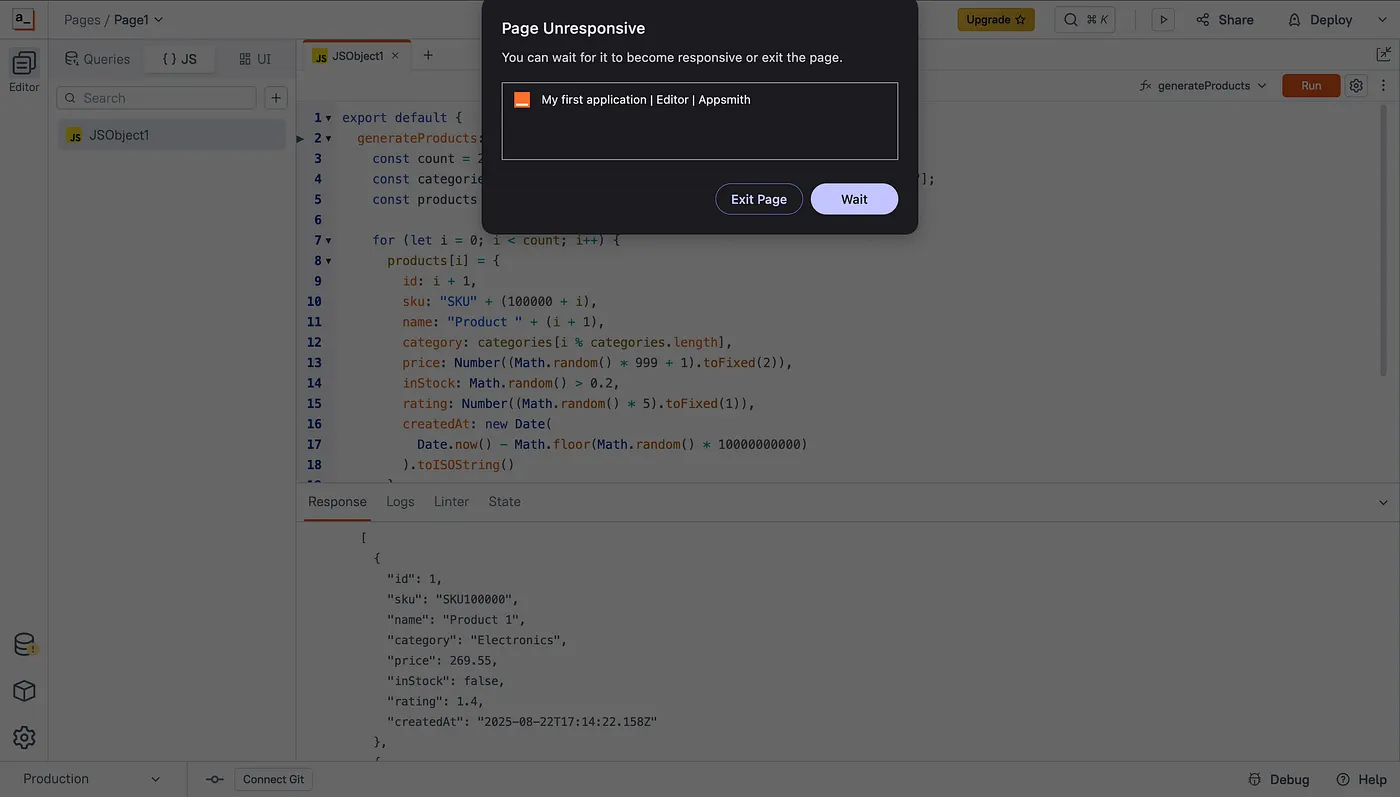
ToolJet had the fastest execution by a comfortable margin. Retool’s 500 + ms is not bad for that volume, just not best‑in‑class. Appsmith, unfortunately, didn’t survive the test at all—it froze before the table even had a chance to render.
If your use case includes dashboards with real‑world API calls and moderately large data sets, the difference between 200 ms and 500 ms is not life‑changing. But for complex applications with heavy client‑side computation, it does add up.
Test 2: “Real App” Stress Test (50,000 rows + 10‑page application)
Synthetic benchmarks are useful, but they don’t reflect the complexity of real internal tools.
Test plan
- Build a complex app using each platform’s AI builder, then add more components.
- Add a JS query returning 50,000 rows into a table.
- Duplicate the initially created page repeatedly to see how far the platform can take it.
- Observe what breaks first.
We’re not checking how they handle complexity per se; we’re checking how they behave when things get absurdly complex. 🙂
Retool
I’ll say this upfront: Retool performs well for complex apps.
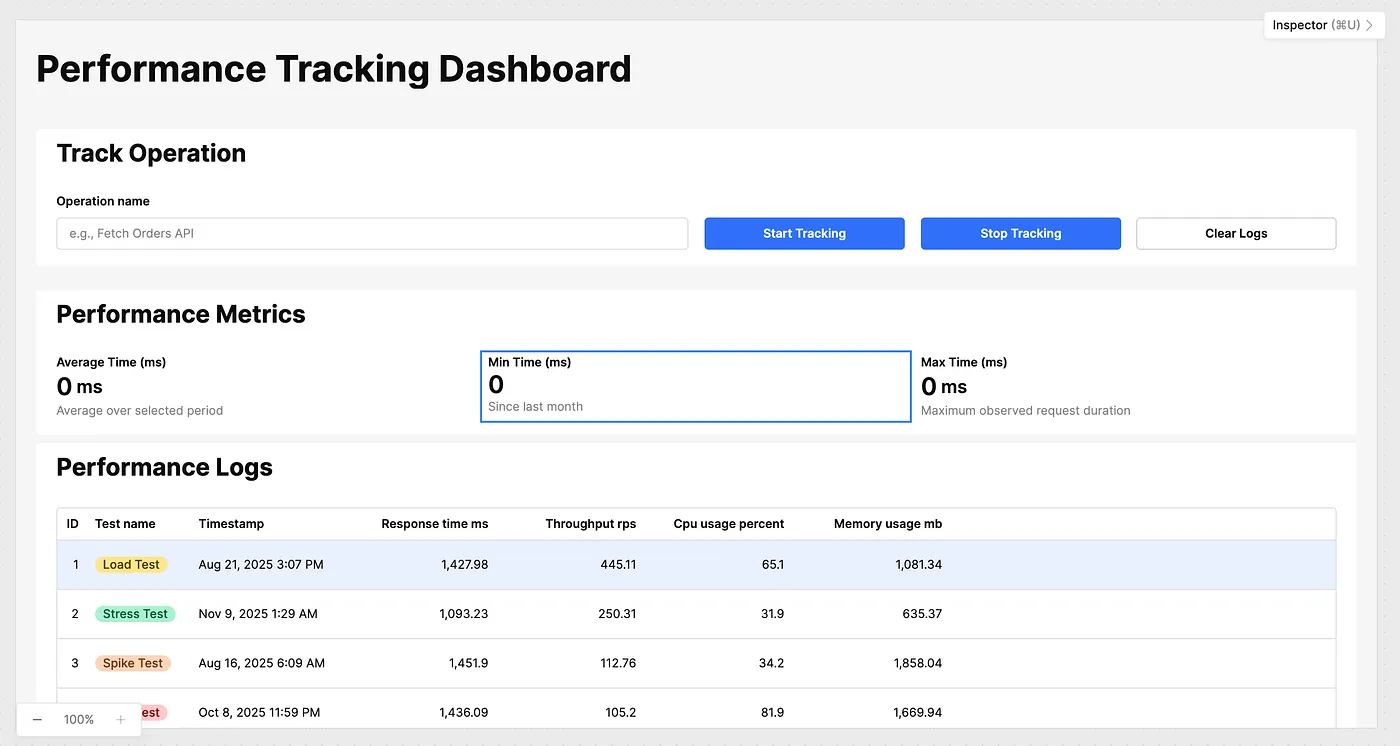
The first few pages with the 50 k‑row table behaved smoothly. Around 10 pages, each with its own query‑trigger confirmation, Retool finally froze.
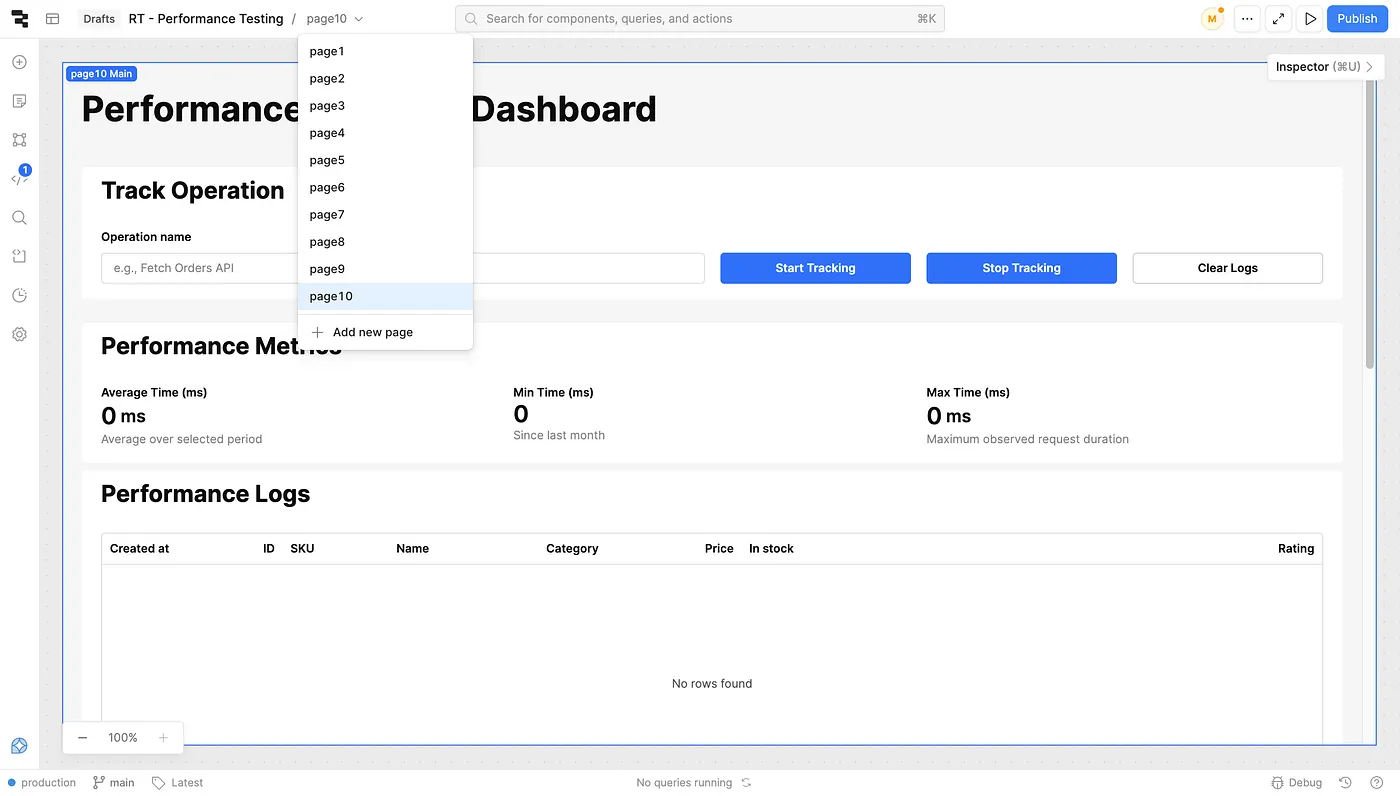

To be fair, this is well beyond what a normal enterprise app should do. No one builds 10 pages filled with 50 k rows each. But the key question remains:
“Can this thing actually handle load without melting?”
A side note: after pushing Retool beyond the AI‑generated base app, it became clear that having 150+ components in the library is not always an advantage. Many are minor variations of a main component. Consolidating, for example, a container and a collapsible container into a single component with a toggle reduces noise and improves usability.
Performance: Good.
Developer experience: Requires a map and a cup of tea.
ToolJet
We followed the same process with ToolJet’s AI builder, adding components and a 50,000‑row table.
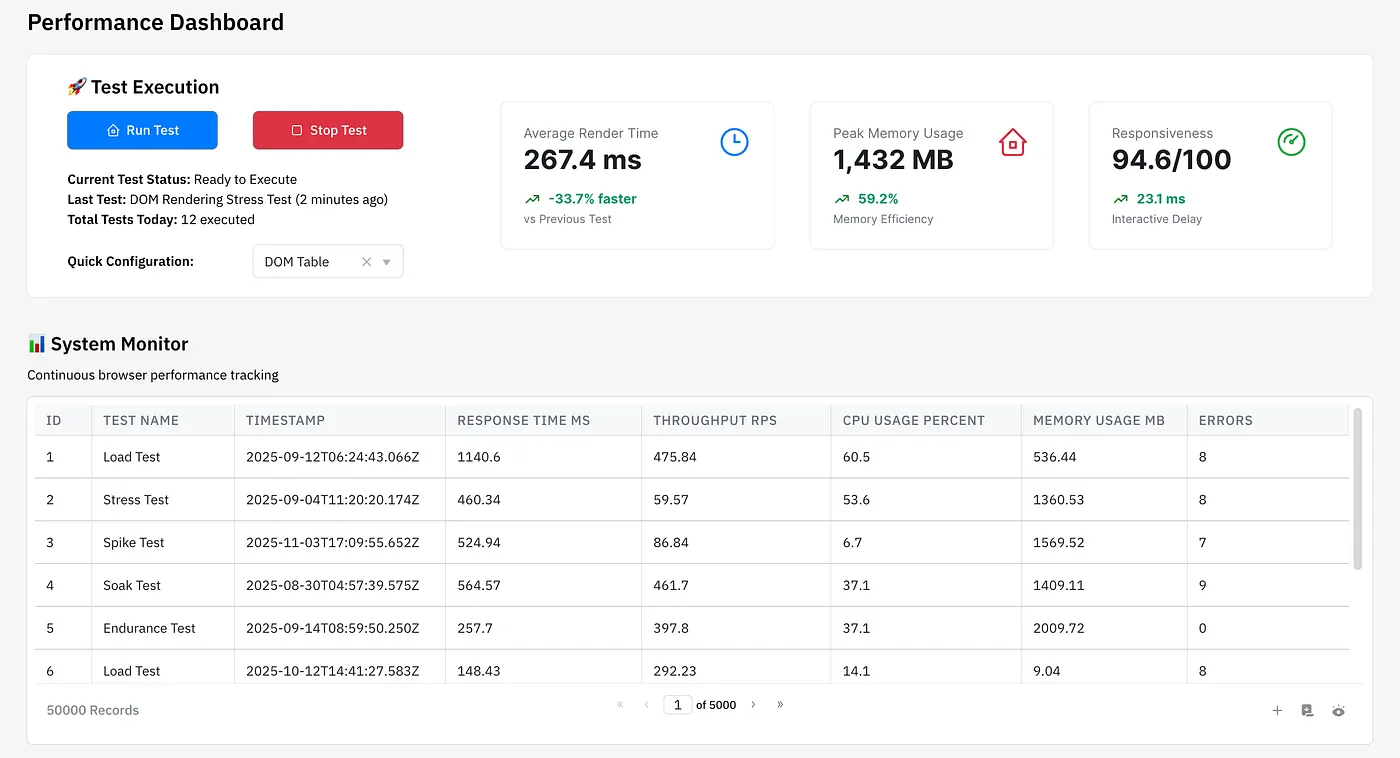
ToolJet stayed as smooth as Retool and felt slightly more forgiving after the 10‑page mark. The rendering pipeline and table handling seem a bit more tolerant under load.
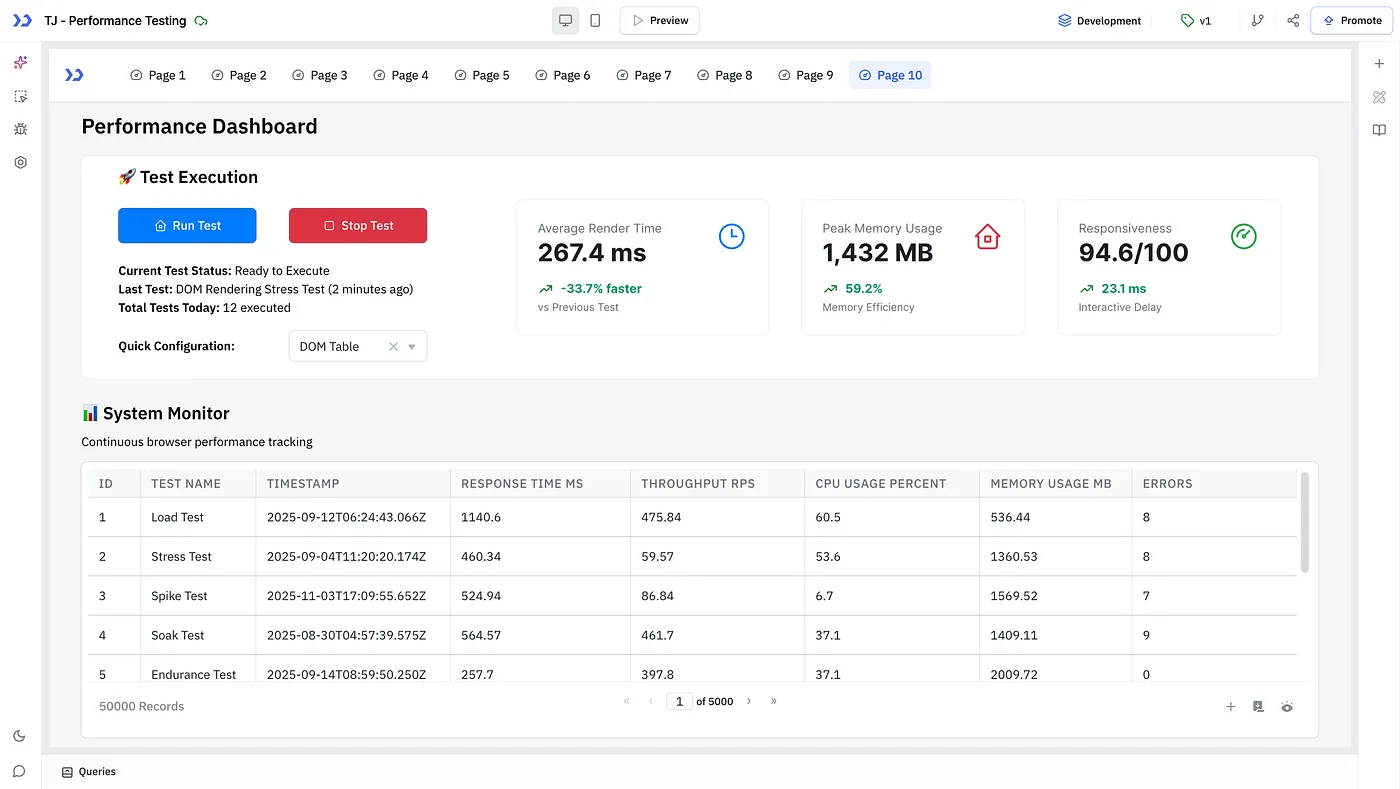
Again, nobody builds a monster app with 50k‑row tables everywhere, so this is academic. But if you are dealing with long, multi‑page workflows or heavy dashboards, that extra headroom helps.
Performance: Slightly better than Retool under extreme conditions.
Appsmith
Appsmith remained frozen on the initial screen.
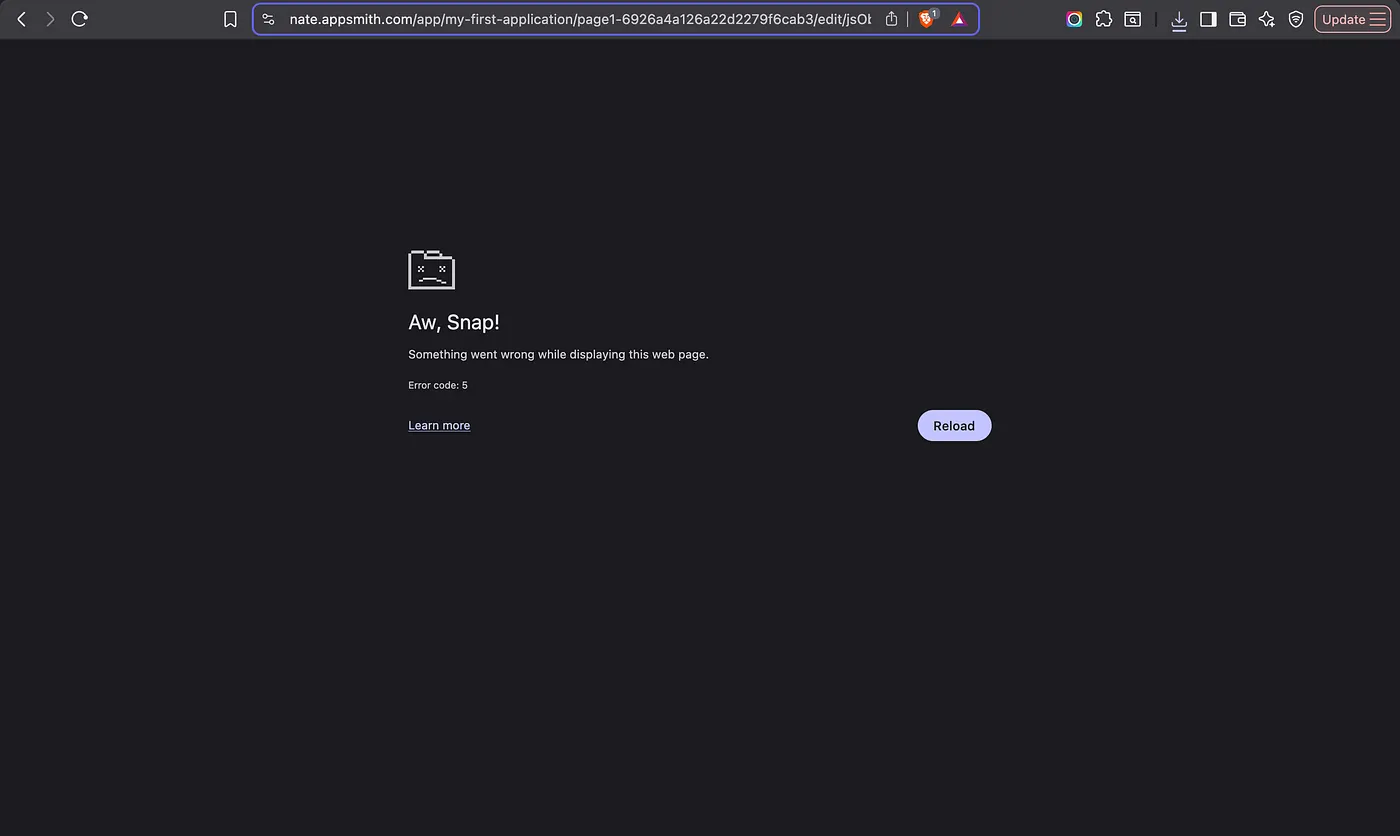
That’s the whole update.
Bonus Test: DronaHQ
I didn’t plan to test DronaHQ. Its dated UI gave me little confidence, though I like some parts of the platform. Curiosity won, though.
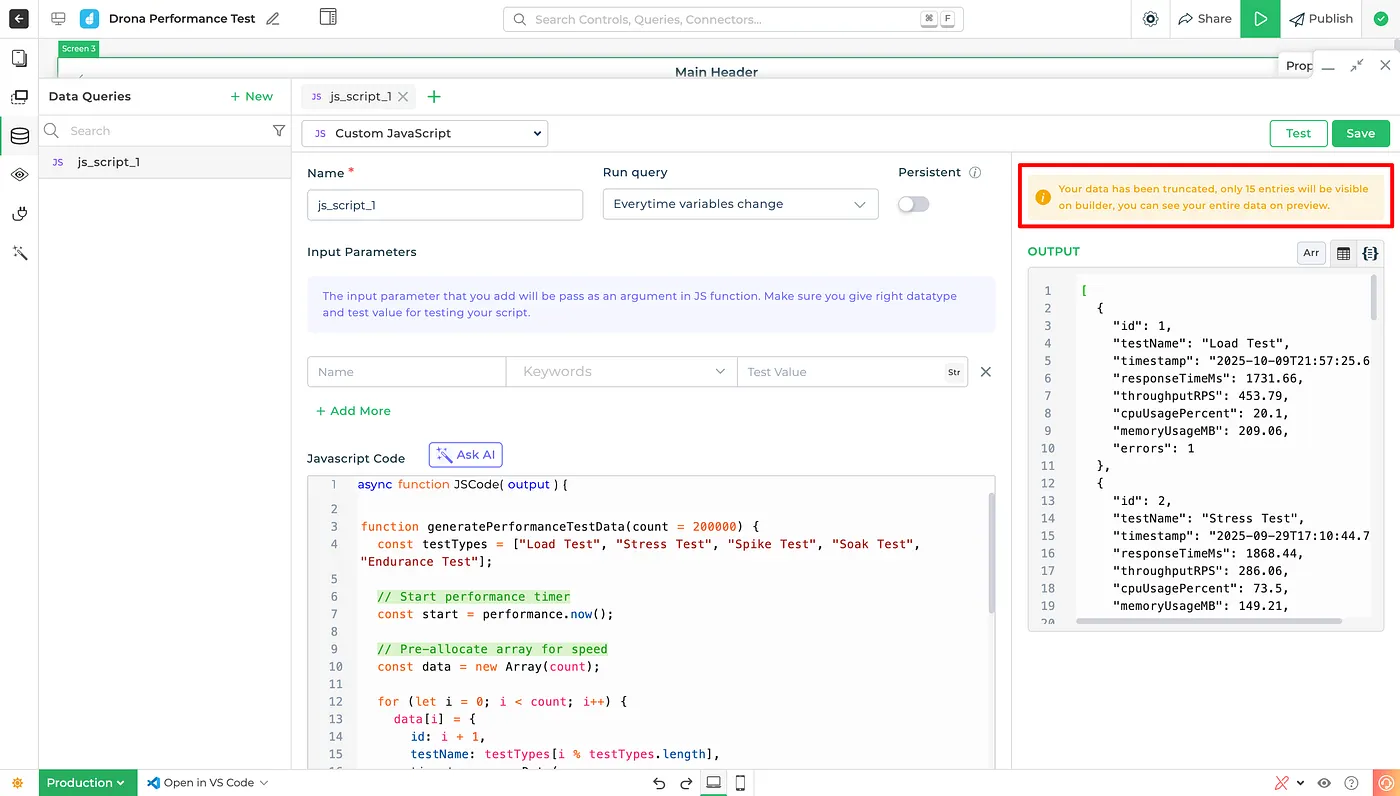
Running the same 200,000‑row JS query returned only 15 rows, clearly truncated—a red flag.
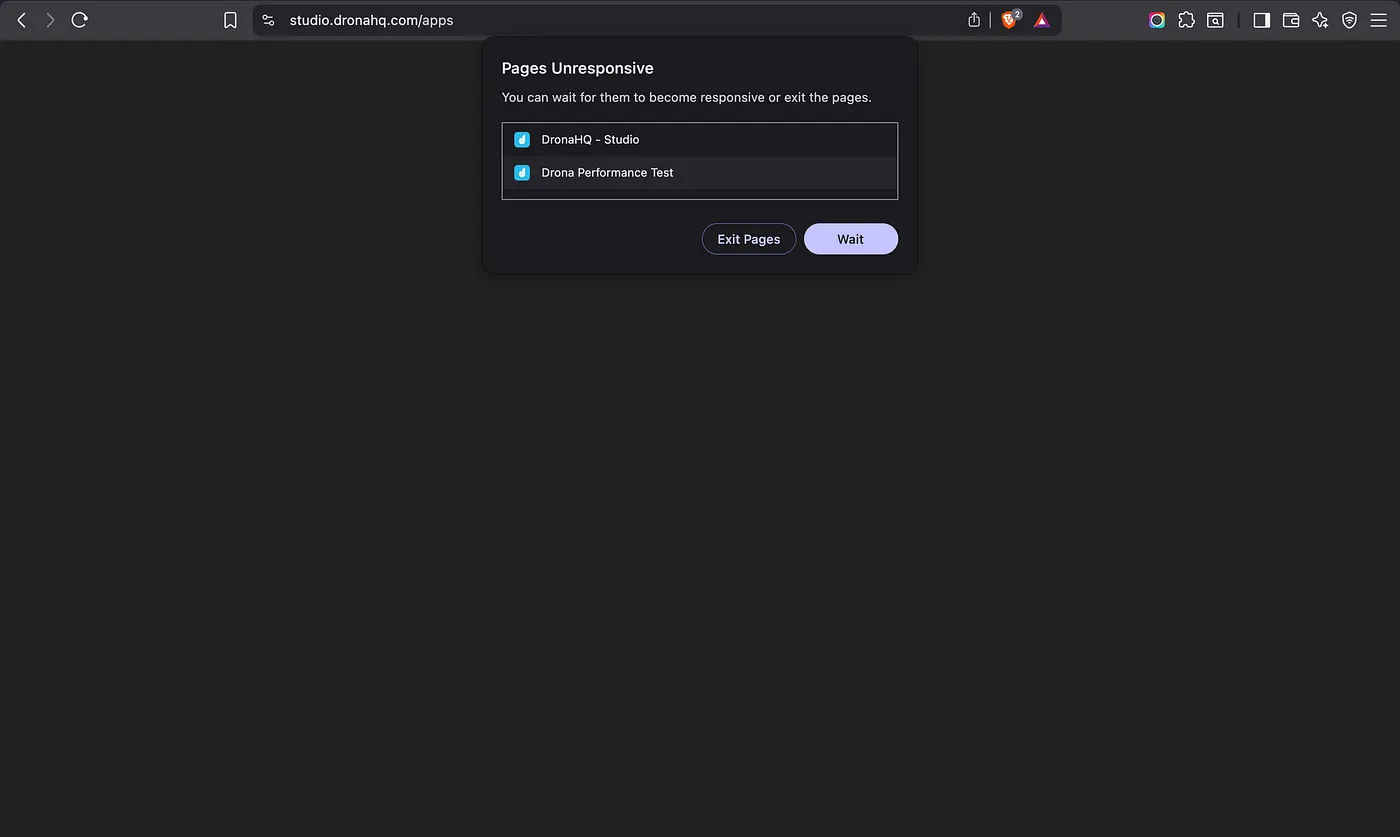
Adding a table and trying to preview the full data in a new tab caused the platform to crash instantly.
Performance: Disappointing.
I expected more. Hopefully DronaHQ shows meaningful improvement in future tests on other aspects of enterprise app building.
Final Verdict
Both Retool and ToolJet are fast and can handle very complex apps. Both passed every realistic benchmark.
Appsmith crashed at the very first step, and DronaHQ returned truncated data (and then crashed), which didn’t inspire confidence.
If you’re choosing between Retool and ToolJet, performance should not be a deciding factor—they’re both enterprise‑grade and speedy. ToolJet’s slight edge on query execution can be beneficial in extreme cases. Overall, either platform will serve you well for complex internal tools.