
A Framework for System Design Interviews
Source: Dev.to
System Design Interviews – A Practical 4‑Step Template
System‑design interviews feel vague at a high level. You may be asked to design a large‑scale system—one that took years to build—in under an hour. Clearly, it’s impossible to flesh out every detail in that time. So what’s the real purpose of a system‑design interview?
The goal isn’t to build a production‑ready system.
It’s an exercise to evaluate how you reason about complex problems, structure a solution, and explain design decisions and trade‑offs. Interviewers care far more about how you think than about the final architecture you propose.
Every problem is different, and there’s no one‑size‑fits‑all solution. Below is a simple, practical template you can follow to navigate most system‑design interviews effectively.
1️⃣ Understand the Problem & Establish Design Scope
Don’t rush into design before you fully understand the problem. Start by clarifying requirements and constraints.
Key questions to ask
- What does the system do?
- How many users will it support?
- What guarantees must it provide?
- Availability?
- Consistency?
- Scalability?
- What is the expected growth pattern?
- Are there existing services or components we can leverage?
These questions help define the scope and guide your design decisions and trade‑offs.
Tip: Document all requirements and assumptions as you go. This prevents missed details and gives you a solid reference point.
Example – Designing a News‑Feed System
| Interviewer | Candidate |
|---|---|
| Design a news feed system. | Before I start designing, I’d like to clarify the core requirements. What are the main features we want to support? |
| Users should be able to see a personalized feed of posts from accounts they follow. | Understood. To size the system properly, how many users do we expect to support? |
| Around 100 million monthly active users, with about 20 percent daily active users. | So roughly 20 million daily active users. How frequently do users create posts? |
| Each active user creates about one post per day. | How often do users read or refresh their feed compared to posting? |
| Users read their feed much more frequently, about 50 feed reads per post. | What are the latency and freshness requirements? |
| Feed loads should be under 200 ms, and new posts should appear in followers’ feeds within a few seconds. |
2️⃣ Propose a High‑Level Design & Get Buy‑In
Once the problem and scope are clear, sketch a high‑level architecture. Treat the interviewer as a teammate—align on the overall approach before diving deeper.
Typical high‑level components for a news‑feed system
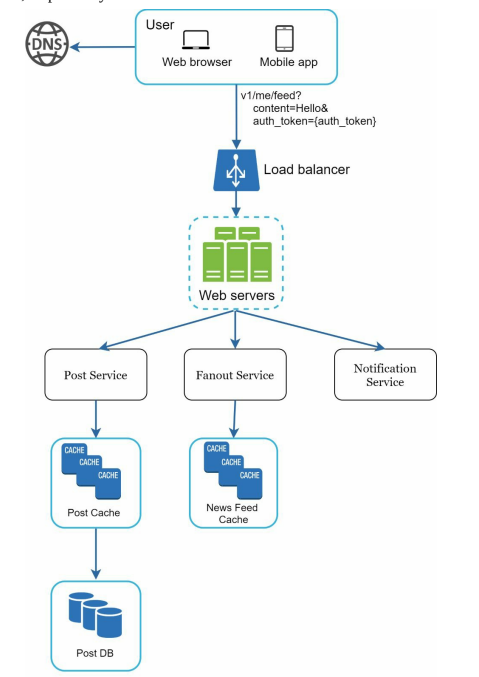
- Feed Publishing – A user creates a post, which is validated and persisted.
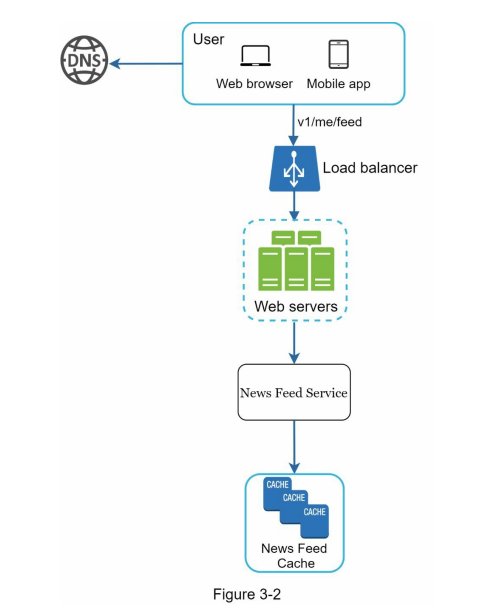
- Feed Building – A user’s feed is generated by aggregating posts from followed accounts (usually in reverse‑chronological order).
This abstraction ensures you and the interviewer agree on the system’s structure before you explore details.
3️⃣ Deep‑Dive into Key Components
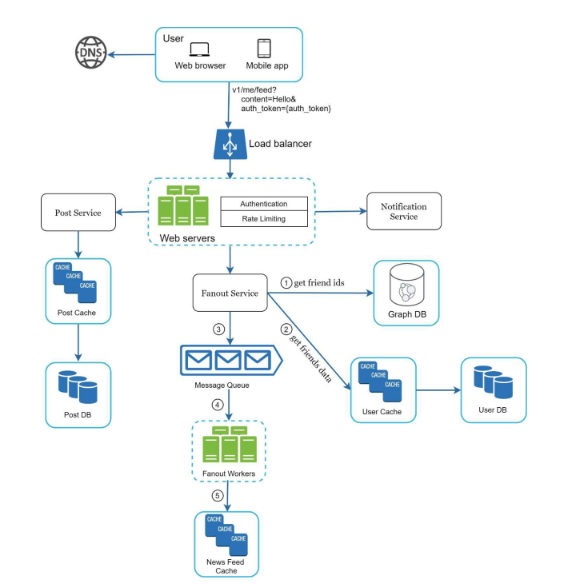
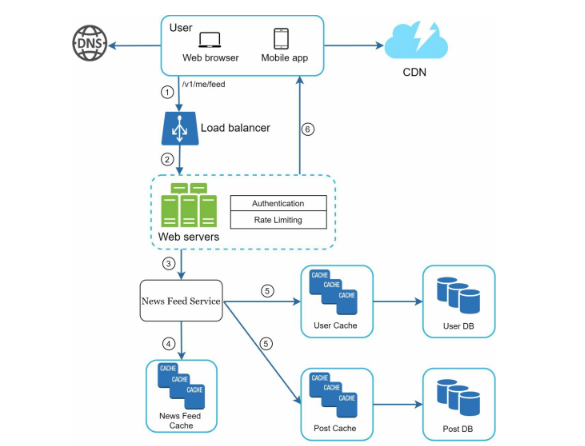
After the high‑level design is approved, focus on the most critical components. Discuss:
- Data models
- Read vs. write trade‑offs
- Scalability strategies (sharding, partitioning, etc.)
- Caching layers
- Bottlenecks & failure modes
Explain why you choose a particular approach and what trade‑offs it introduces. This is often the core of the interview.
4️⃣ Discuss Operational Concerns & Wrap‑Up
Finish by covering the “non‑functional” side of the system:
- Monitoring & alerting – What metrics will you track?
- Logging & tracing – How will you debug issues in production?
- Capacity planning – How will you handle traffic spikes?
- Backup & disaster recovery – What is the RPO/RTO?
- Security – Authentication, authorization, data encryption, etc.
Summarize the design, reiterate the key trade‑offs you made, and ask the interviewer if they’d like to explore any other aspects (e.g., alternative architectures, cost analysis, etc.).
Quick Recap of the 4‑Step Process
| Step | Goal |
|---|---|
| 1️⃣ Understand & Scope | Clarify requirements, constraints, and assumptions. |
| 2️⃣ High‑Level Design | Sketch the main components and get interview‑er alignment. |
| 3️⃣ Deep Dive | Explore critical pieces (data model, scaling, caching, failure handling). |
| 4️⃣ Ops & Wrap‑Up | Cover monitoring, reliability, security, and summarize trade‑offs. |
Use this template as a mental checklist during your next system‑design interview. It keeps the conversation structured, demonstrates clear thinking, and shows you can balance functional and non‑functional requirements—exactly what interviewers are looking for.
[Image: System diagram]

## Step 4: Wrap up and discuss improvements

In the final stage, the interviewer may ask follow‑up questions such as:

- How would you improve the system?
- What happens if the user base grows by 100 times?
- What are the main bottlenecks?
- Where does the system fall short?

No system is perfect. Being open about limitations and discussing how you would address them leaves a strong impression and demonstrates maturity in system‑design thinking.