
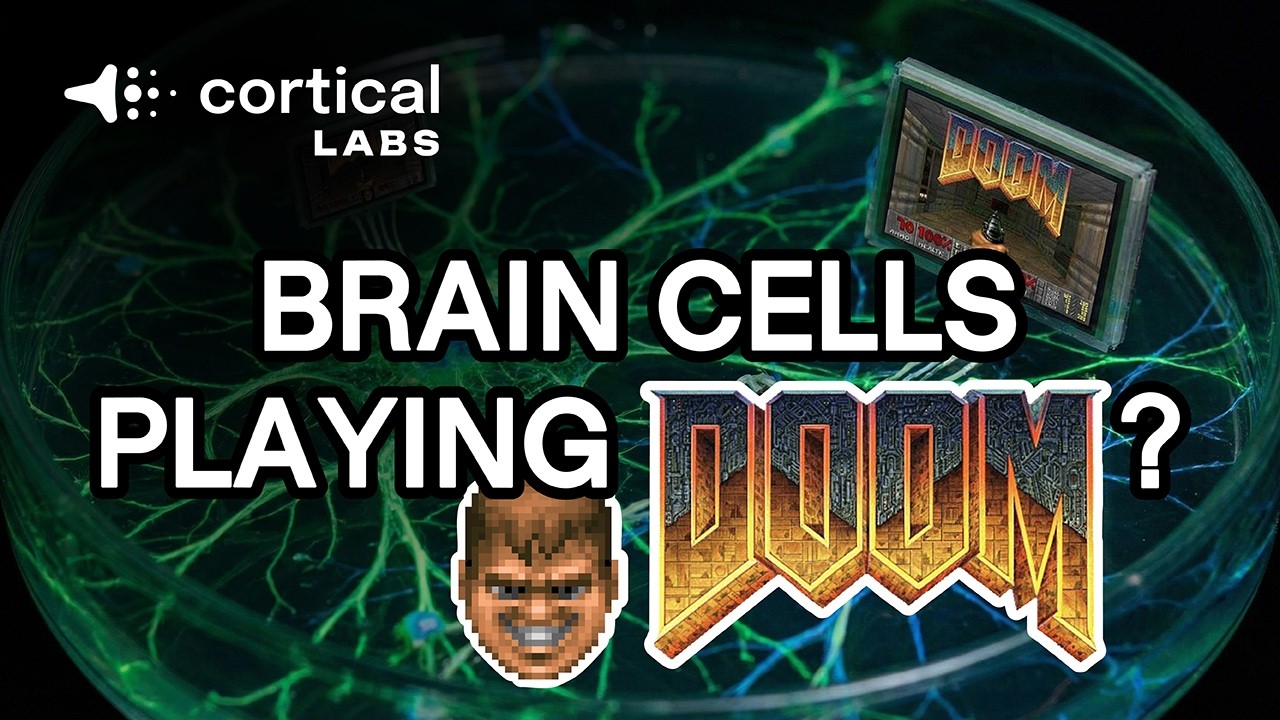
‘200,000 living human neurons’ on a microchip demonstrated playing Doom — Cortical Labs CL1 video shows the gameplay and explains how the neurons learn the game
Source: Tom’s Hardware
Australia’s Cortical Labs has demonstrated its “body‑in‑a‑box” CL1 biological computer playing the classic first‑person shooter Doom. In a video released by the research and development team, the gameplay is shown alongside an explanation of how roughly 200,000 living human neurons on a microchip learned to control the game.
Background
Last year we reported on the Cortical Labs CL1 launch, which introduced the world’s first code‑deployable biological computer that combines human brain cells with traditional silicon circuitry. The company had previously shown the neurons playing the pioneering arcade game Pong, which sparked a flood of requests from the community to see the system tackle a more demanding title—Doom.
From Pong to Doom
“Doom was much more complex,” explains Dr. Brett Kagan in the video. Its 3‑D labyrinths, enemies, and weapons make it several degrees more advanced than Pong, prompting the development of a “Cortical Cloud” for training on more sophisticated tasks.
“Together with one of our collaborators, an independent researcher named Sean Cole, we coded the first working version of Doom using the Cortical Labs API, and running on a CL1,” says Dr. Alon Loeffler, who presented the demo. Kagan adds that the demonstration showcases adaptive real‑time goal‑directed learning in action.
Company CTO David Hogan explains that Sean Cole “piped the video feed from the game into patterns of electrical stimulation,” allowing the neurons to feel the game. Specific learned firing patterns trigger in‑game actions—for example, one pattern makes the Doom player shoot, while another causes movement. In this way, the brain cells can locate enemies, fire, and progress through the level.
Not an eSports champion – yet
The system is impressive, but as Kagan notes, “Is it an eSports champion? Absolutely not.” The neurons are still learning, and the feedback mechanisms for right and wrong actions need refinement. Nonetheless, Cortical Labs considers the interface problem solved: they can now interact with the brain cells in real time, train them, and shape their behavior. The hope is that the CL1 will soon excel at Doom and eventually tackle increasingly complex tasks.
The video concludes with an invitation to developers and researchers to explore the open Cortical Labs CL1 API and build their own applications. The neurons are ready.