
30일 파이썬 프로젝트 Day 8: 사전(Dictionaries)으로 나이지리아 중소기업 대출 및 상환 트래커 만들기 🐍
발행: (2026년 1월 15일 오후 03:50 GMT+9)
2 분 소요
원문: Dev.to
Source: Dev.to
🚀 Day 8 – Python Dictionaries in Action
Welcome to Day 8 of my 30 Days of Python Projects challenge!
Today’s project focuses on Python dictionaries while solving a real‑world problem common to Nigerian and African SMEs: loan tracking and repayment management.
🌍 The Real Problem (African Context)
Across Nigeria, many small businesses collect loans from:
- Cooperative societies
- Micro‑finance banks
- Thrift groups (ajo / esusu)
Unfortunately, loan records are often kept using:
- Paper notebooks
- WhatsApp chats
- Human memory 😬
This leads to:
- Forgotten repayments
- Disputes between partners
- Financial losses
- Business failure
❗ Why This Matters
- SMEs are the backbone of African economies.
- Poor record‑keeping increases loan defaults.
- Transparency builds trust.
- Simple Python tools can make a big difference.
🧠 Python Concepts Practiced (Day 8 Focus)
This beginner‑friendly project reinforces:
- Dictionaries (
dict) - Key‑value pairs
- Nested dictionaries
- Looping through dictionaries
- Updating values
- Clean, readable output formatting
🛠️ Project Overview
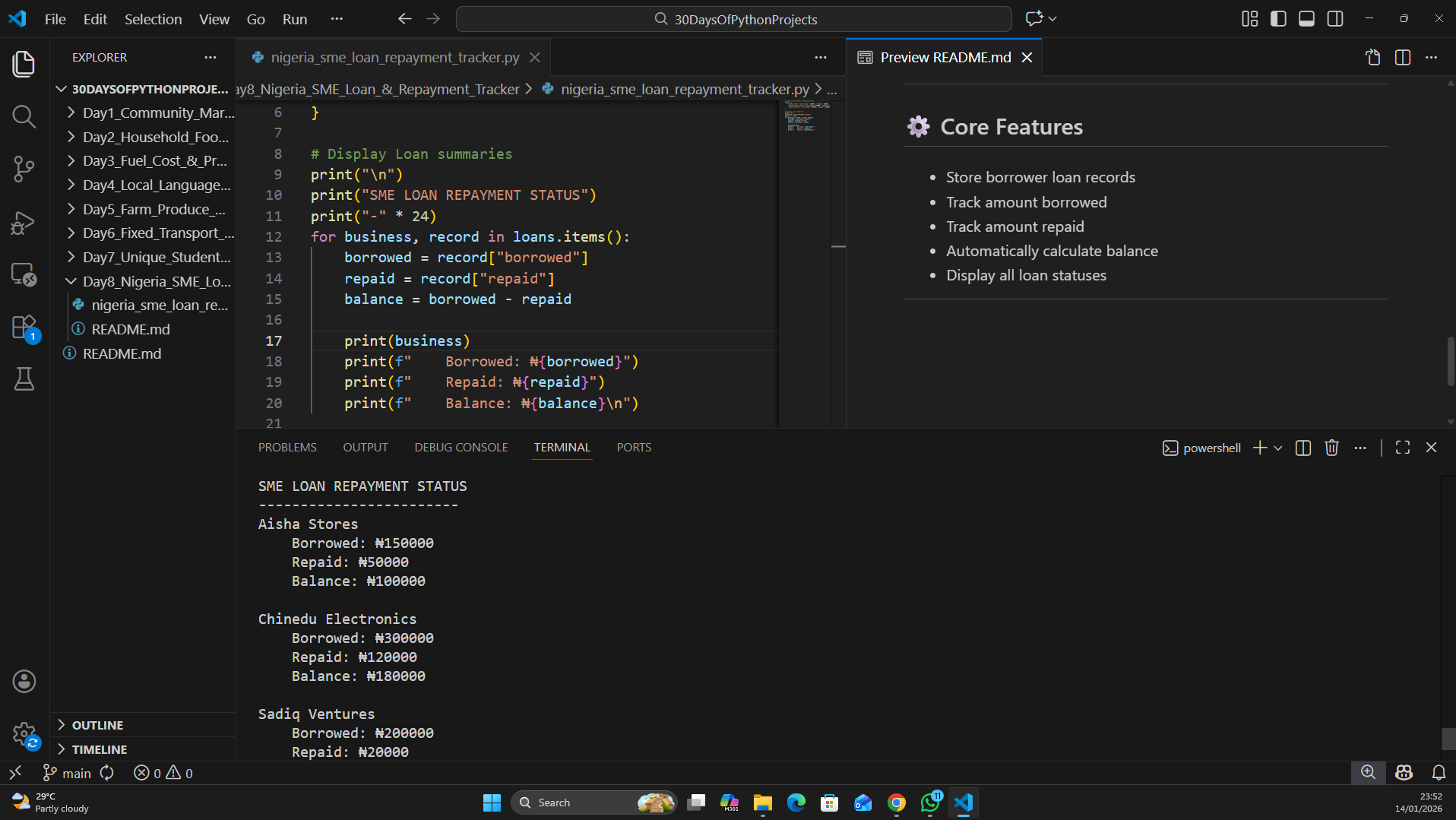
Nigerian SME Loan & Repayment Tracker
The program:
- Stores loan records for SMEs.
- Tracks how much was borrowed.
- Tracks how much has been repaid.
- Automatically calculates outstanding balances.
- Displays loan status clearly.