
US gov't warned Nvidia CEO Jensen Huang, Tim Cook, and Lisa Su that China could invade Taiwan by 2027 — Apple CEO reportedly said he sleeps 'with one eye open'
Source: Tom’s Hardware

Image credit: Getty Images
A new investigative report from The New York Times reveals that, in July 2023, senior U.S. intelligence officials privately briefed some of the tech industry’s most powerful executives on classified assessments regarding China and Taiwan. Among those in attendance were reportedly Apple CEO Tim Cook, Nvidia CEO Jensen Huang, AMD CEO Lisa Su, and Qualcomm CEO Cristiano Amon.
Go deeper with TH Premium: Chipmaking
The expectation that China may be ready to invade or blockade Taiwan within the decade is not new in policy circles. What is news is the degree to which the U.S. government explicitly framed that risk for the companies most exposed to it. Taiwan produces roughly 90 percent of the world’s most advanced semiconductors, primarily through Taiwan Semiconductor Manufacturing Company (TSMC). A blockade or invasion would immediately disrupt global chip supply chains, with cascading effects across consumer electronics, AI infrastructure, automotive manufacturing, and defense systems (see the Tom’s Hardware analysis).
The backdrop to these briefings was the Biden administration’s push to reshore semiconductor manufacturing through the CHIPS Act, followed by the Trump administration’s more aggressive use of tariffs (or attempted use, anyway – see the court ruling). Intelligence warnings were part of a broader effort to convince companies that geopolitical risk was no longer theoretical.
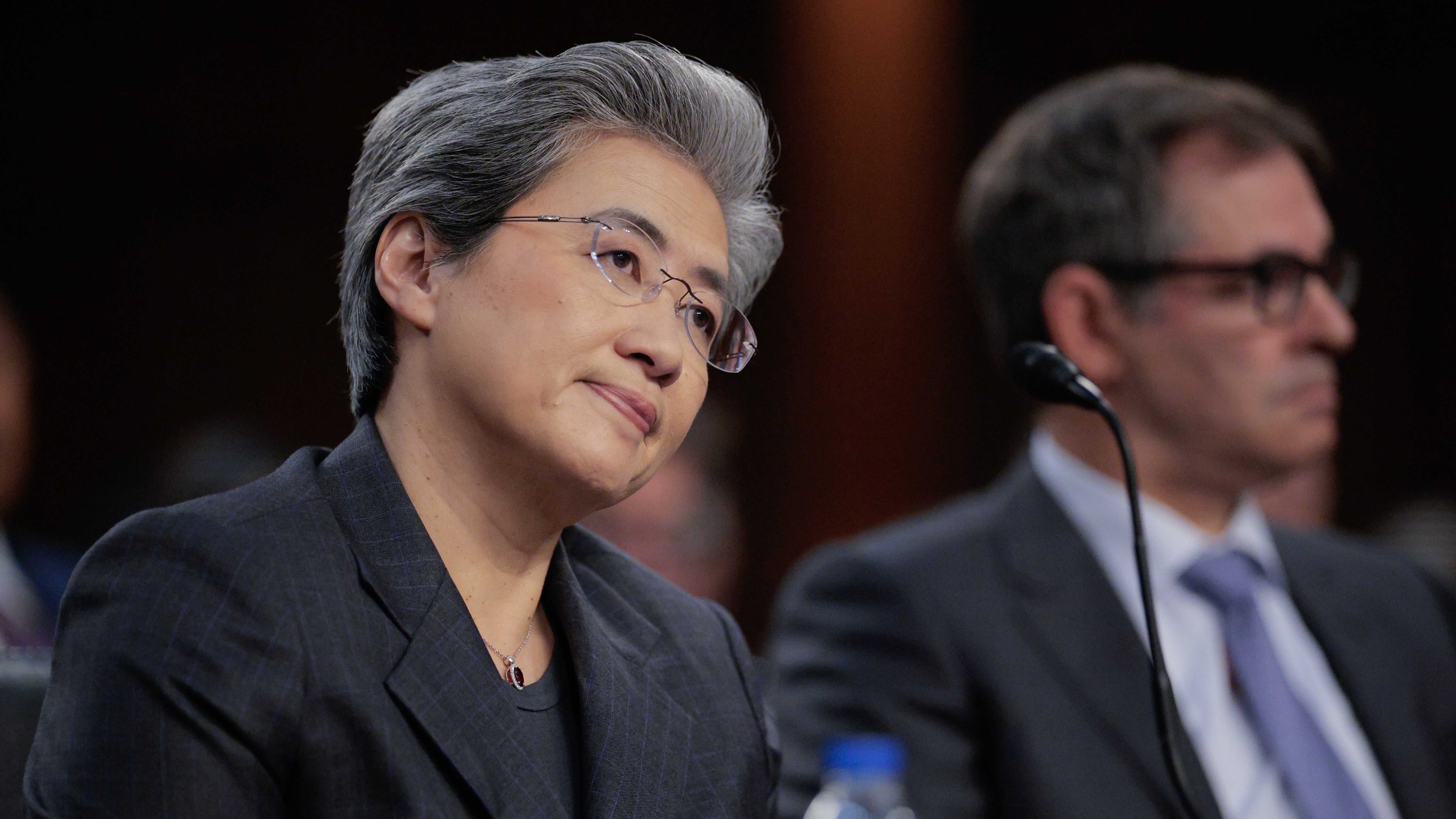
AMD’s Lisa Su was also reportedly briefed by U.S. intelligence officials. (Image credit: Getty Images)
The investigation highlights internal government frustration that market incentives alone have not been enough to significantly reduce reliance on Taiwan. Building leading‑edge capacity in the U.S. has proved expensive and slow (see the Tom’s Hardware piece on Arizona fabs). Even where new fabrication plants are coming online in Arizona and Texas, advanced packaging capabilities remain concentrated in Taiwan, meaning some U.S.-made chips still require critical finishing steps overseas.
The report states that after the July 2023 briefing, Cook told officials he sleeps “with one eye open.” Despite that sentiment, Apple and other major U.S. tech firms did not substantially accelerate new domestic chip purchase commitments in the immediate aftermath, according to people familiar with the matter. In fact, both Intel and Samsung lost out on CHIPS grants because they were unable to secure customers for domestic chip fabrication (see the grant controversy).
For the tech sector, the core issue is simple but stark: if Beijing moves on Taiwan and successfully interrupts semiconductor exports, the immediate economic impact would likely dwarf the 2008 financial crisis. A 2022 industry‑commissioned study cited in the report projected an 11 percent drop in U.S. GDP under a severe Taiwan disruption scenario. That number has only risen in the interim, as AI spending—largely speculative—has propped up U.S. GDP considerably in the last four years (see the AI spending critique).
Get Tom’s Hardware’s best news and in‑depth reviews, straight to your inbox.
The broader geopolitical tension has been well understood for years; what this reporting adds is confirmation that U.S. intelligence agencies have privately communicated a concrete planning window to the executives who run the companies most exposed to that risk. Despite this, the gap between awareness and structural supply‑chain change remains significant, and the seemingly cavalier attitude of U.S. tech firms toward the risk could have major consequences in the tragic event of war in the Taiwan Strait (see the Tom’s Hardware analysis of corporate attitudes).

Follow Tom’s Hardware on Google News or add us as a preferred source to get our latest news, analysis, & reviews in your feeds.
Zak is a freelance contributor to Tom’s Hardware with decades of PC‑benchmarking experience who has also written for HotHardware and The Tech Report. A modern‑day Renaissance man, he may not be an expert on anything, but he knows just a little about everything.
Sure thing! Could you please paste the markdown segment you’d like cleaned up? Once I have the content, I’ll tidy it up while preserving its structure and meaning.