
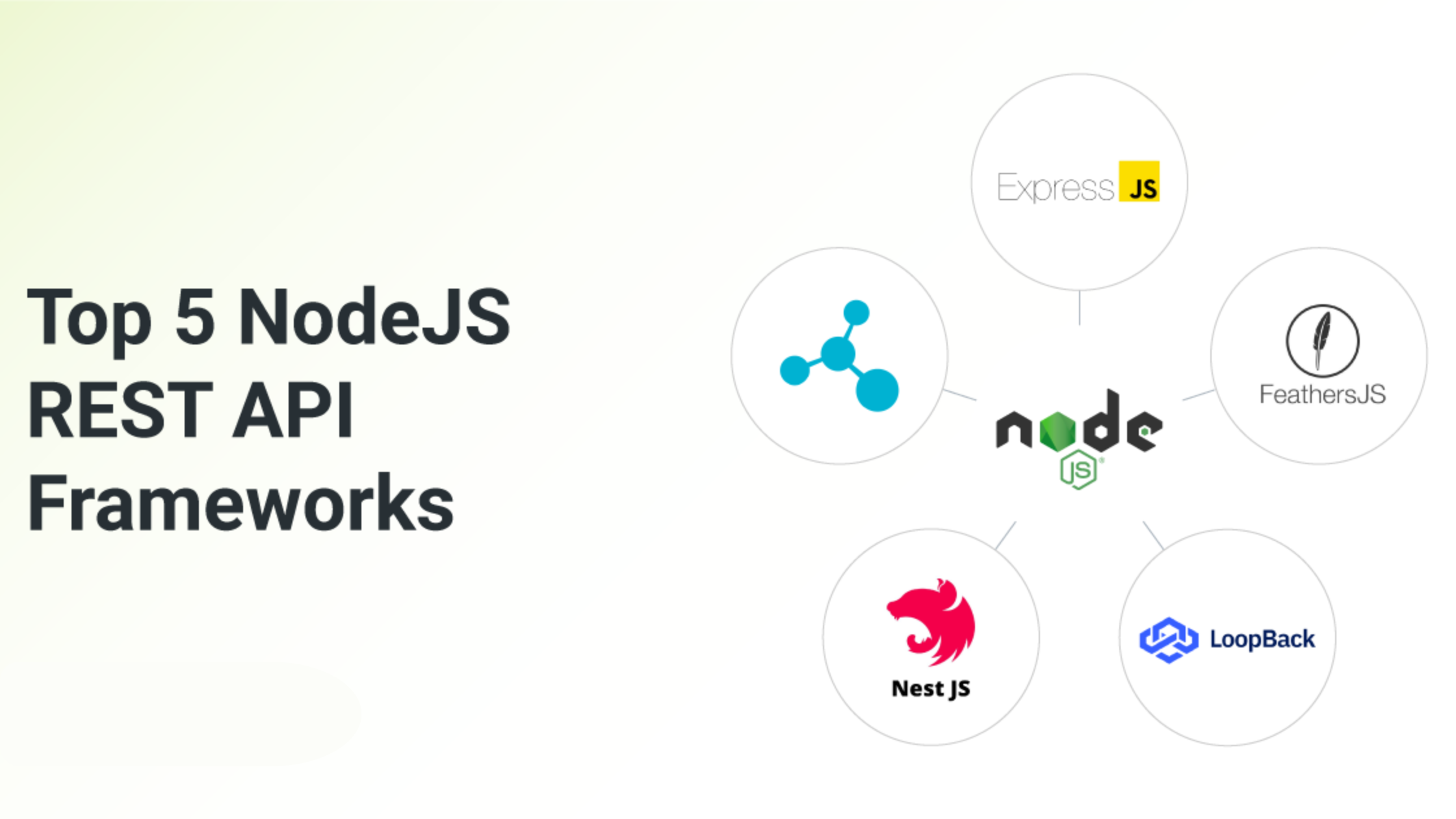
Top 5 Node.js REST API Frameworks
Source: Dev.to
Overview
Have you wondered why everyone in the tech industry is going gaga over Node? From Netflix to Uber and LinkedIn, companies are striving to succeed using the same technology. The open‑source Chrome JavaScript runtime environment has earned the trust of countless startups and growing firms by enabling the creation of highly robust, scalable web applications in an effortless manner.
Technically speaking, the Node environment is built on top of Google Chrome’s JavaScript engine V8 and features a non‑blocking I/O model and an event‑driven architecture, making it a perfect choice for lightweight, data‑intensive real‑time applications.
What is Node?
- Node is not a programming language or a framework; it is a solid runtime environment.
- Developed by Ryan Dahl in 2009, Node runs on the V8 engine, which translates JavaScript into machine code.
- Node itself is a C++ application that takes JavaScript as input and executes it.
- It allows developers to use a single language (JavaScript) for both client‑side and server‑side code, simplifying the development of real‑time, event‑based applications.
- Node works across operating systems: Linux, macOS, and Windows.
Why Choose Node?
Node offers a wide range of benefits, such as:
- High flexibility and ease of use
- Ability to handle real‑time apps
- Cross‑platform development support
- Backed by a large, active community
- Strong support for developing REST APIs (thanks to an ever‑growing ecosystem of libraries and frameworks)
What Is a REST API?
A REST (REpresentational State Transfer) API is a web service that follows the principles of the REST architecture. It enables seamless interaction between clients and servers over HTTP.
Standard HTTP methods—GET, POST, PUT, and DELETE—are used to perform CRUD (Create, Read, Update, Delete) operations on resources, with data typically transferred in JSON or XML format.
Six Fundamental REST Principles
- Statelessness – Each request from client to server must contain all the information needed to understand and process the request; no session data is stored on the server.
- Client‑Server Architecture – The client and server are separate entities, allowing independent development and greater scalability.
- Uniform Interface – Resources are accessed using standardized HTTP methods (GET, POST, PUT, DELETE).
- Cacheability – Responses must define themselves as cacheable or non‑cacheable to improve performance.
- Layered System – The architecture can include multiple layers (load balancers, authentication servers, data storage, etc.) without affecting the client‑side interaction.
- Code on Demand (Optional) – Servers may send executable code (e.g., JavaScript) to extend client functionality.
Why Consider Node.js for a REST API?
- Single Language – Use JavaScript for both client‑side and server‑side development.
- High Performance – Handles many concurrent requests in parallel.
- Middleware & Routing – Simplifies and speeds up API development.
- Vibrant Community – A large, active community contributes libraries, tools, and support.
How to Pick an Ideal Node.js REST API Framework
First, learn about the top frameworks available. Below is a brief overview of the most popular options.
Top Node.js REST API Frameworks
Express.js
Express.js is one of the most popular and widely used frameworks for developing REST APIs with Node.js. It offers a simple, minimal interface that makes getting started easy.
- Modular – Add features and functionality via middleware and plugins.
- Scalable – Suitable for small projects, prototypes, and large‑scale enterprise applications.
Top Benefits of Express
- Open‑source framework
- Simple and easy to use
- Dynamic rendering of HTML pages
- Integration with databases (MySQL, MongoDB, etc.)
- Asynchronous by design
- Widely adopted and well‑supported
import express from 'express';

const app = express();
const PORT = 3000;

app.get('/', (req, res) => res.send('Hello World!'));

app.listen(PORT, () => console.log(`Server is running on port ${PORT}`));
Potential Drawbacks
- Can become complex for large projects
- Minimalist approach may feel limiting for some developers
FeatherJS
FeatherJS is a great choice if you want to develop highly responsive real‑time apps. It simplifies development by giving you absolute control over data through RESTful resources, eliminating the need for an external data store.
Developers can create REST APIs with Feather commands, making it easy for the web application to communicate with third‑party services such as Twilio or Stripe. The framework can also be integrated into various JavaScript front‑end frameworks.
Top Benefits of FeatherJS
- Real‑time API support
- Well‑written and accurate documentation
- Supports both JavaScript and TypeScript
- CLI scaffolding tool
- Works with relational and non‑relational databases
Potential Drawbacks
- Uses PassportJS, so SAML authentication isn’t supported out of the box
- Large‑scale, real‑time applications may encounter WebSocket issues
Koa.js
Koa, created by the same team behind Express, takes a modern approach to middleware handling by using async/await instead of callbacks. Its smaller footprint allows it to handle more requests per second, making it ideal for fast, highly scalable RESTful APIs.
import Koa from 'koa';

const app = new Koa();
const PORT = 3000;

app.use(async ctx => {
  ctx.body = 'Hello, World!';
});

app.listen(PORT, () => console.log(`Server running on port ${PORT}`));
Top Benefits of Koa
- Lightweight framework with a strong foundation
- Leverages modern ES6+ features like
async/await - Enhanced error handling via middleware
- Enables creation of reusable, modular functions
- Uses a
ctx(context) object for request/response handling - Performance‑optimized
- Improves developer workflow
Potential Drawbacks
- Smaller community compared to Express
- No built‑in middleware for common tasks (routing, body parsing, etc.)
Nest.js
Nest is a modern Node framework that combines progressive JavaScript (TypeScript), functional programming principles, and reactive programming. It supports both object‑oriented and functional reactive programming approaches, giving developers flexibility in how they structure their applications.
Top Benefits of Nest.js
- Built‑in Dependency Injection container for modular, readable code
- Encourages loosely coupled architecture
- Simplifies use of external libraries through modular structure
- Easy to write simple API endpoints
Potential Drawbacks
- Steeper learning curve; debugging can be more complex and time‑consuming
- May lack some features compared to mature frameworks in other languages (e.g., Spring for Java, .NET for C#)
Hapi.js
Hapi is known for its powerful plugin system, making it easy to extend functionality. It provides built‑in support for authentication, input validation, and caching, which saves time and effort when building APIs. Hapi also places a strong emphasis on security, making it a solid choice for handling sensitive data.
import Hapi from '@hapi/hapi';

const PORT = 3000;

const init = async () => {
  const server = Hapi.server({
    port: PORT,
    host: 'localhost',
  });

  server.route({
    method: 'GET',
    path: '/',
    handler: () => 'Hello, World!',
  });

  await server.start();
  console.log(`Server running on port ${PORT}`);
};

init();
Top Benefits of Hapi
- Robust plugin system for easy extensibility
- Built‑in support for authentication, validation, and caching
- Strong focus on security, ideal for sensitive data handling
Potential Drawbacks
- Slightly larger learning curve due to its extensive configuration options
Conclusion
Node has experienced meteoric growth over just a few years, becoming one of the most prominent technologies on the web. JavaScript offers a rich ecosystem of frameworks, each with its own strengths and weaknesses. Whether you choose Express, FeatherJS, Koa, Nest, or Hapi, consider your project’s specific needs, scalability requirements, and team expertise. Choose wisely, and you’ll be well‑positioned to build high‑performance, maintainable REST APIs.