
Tinkerer builds VR headset with CRTs repurposed from Sony Watchman — makeshift VR rig isn't the sharpest, but eliminates screen-door effect
Source: Tom’s Hardware
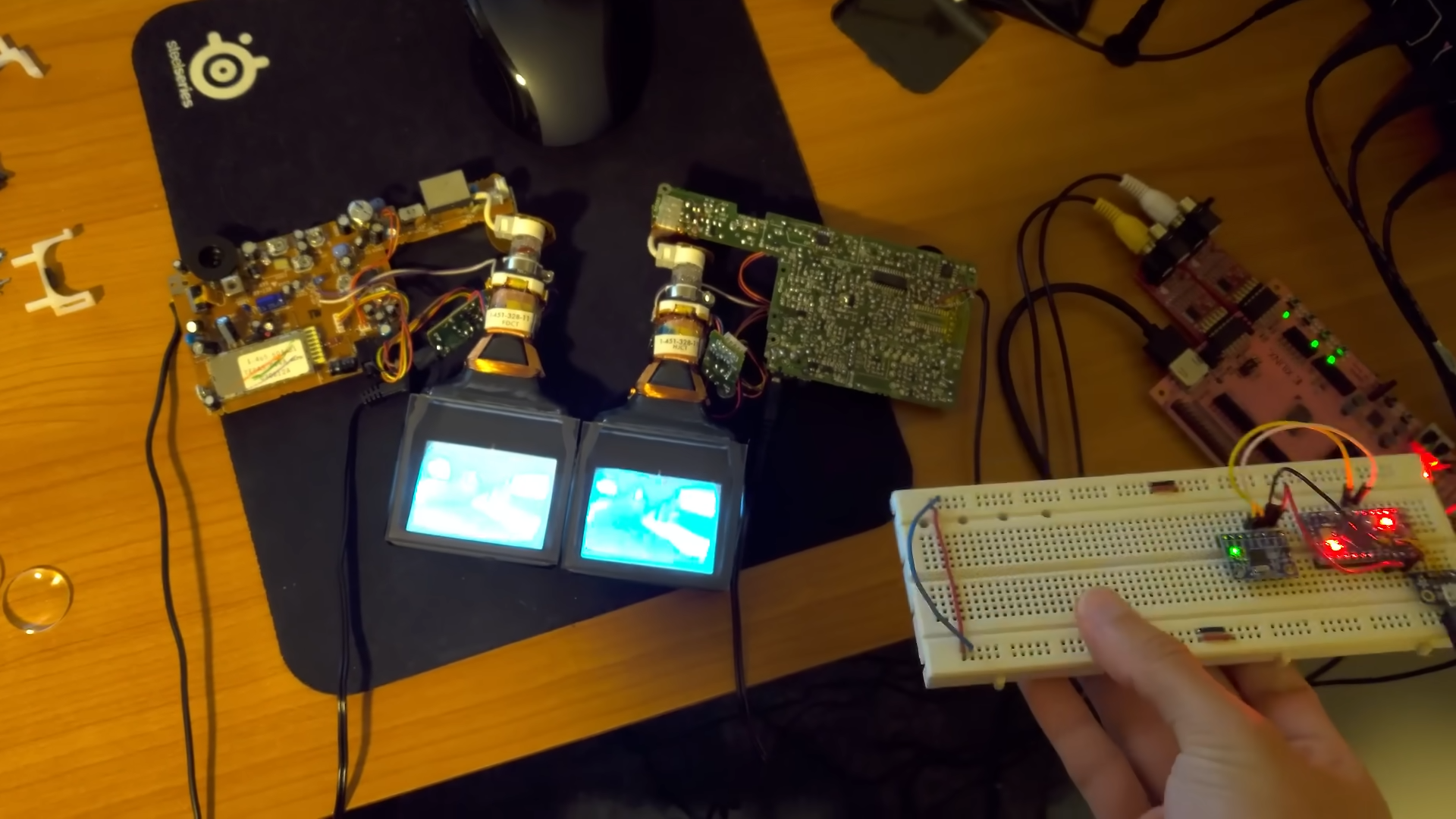
Image credit: dooglekey on YouTube
Overview
YouTuber dooglehead set out to create a one‑of‑a‑kind VR headset using the black‑and‑white CRT displays from a Sony Watchman. While the result isn’t the sharpest VR rig, the CRTs eliminate the dreaded screen‑door effect (SDE) thanks to their natural anti‑aliased look.
Hardware Build
- Displays – Two Sony Watchman CRTs, repurposed for left and right eyes. The shadow‑mask design limits them to monochrome output.
- Video Input – Because the Watchman lacks a composite input, dooglehead used an FPGA development board to implement a custom HDMI‑to‑CRT converter, allowing the CRTs to appear as external monitors in Windows.
- Tracking PCB – A custom printed circuit board houses an IMU for rotational tracking, the HDMI interface, and two USB‑C ports (one for powering the CRTs, one for connecting an HTC Vive tracker).
- Positional Tracking – Lighthouse base stations (the same used by HTC Vive/Valve Index) were positioned in the room’s corners. An HTC Vive tracker attached to the headset provides the necessary photodiode signals for precise 6‑DOF tracking.
- Enclosure – All components are mounted on a modified Google Cardboard chassis, resulting in a total weight of 544 g, lighter than many commercial headsets.
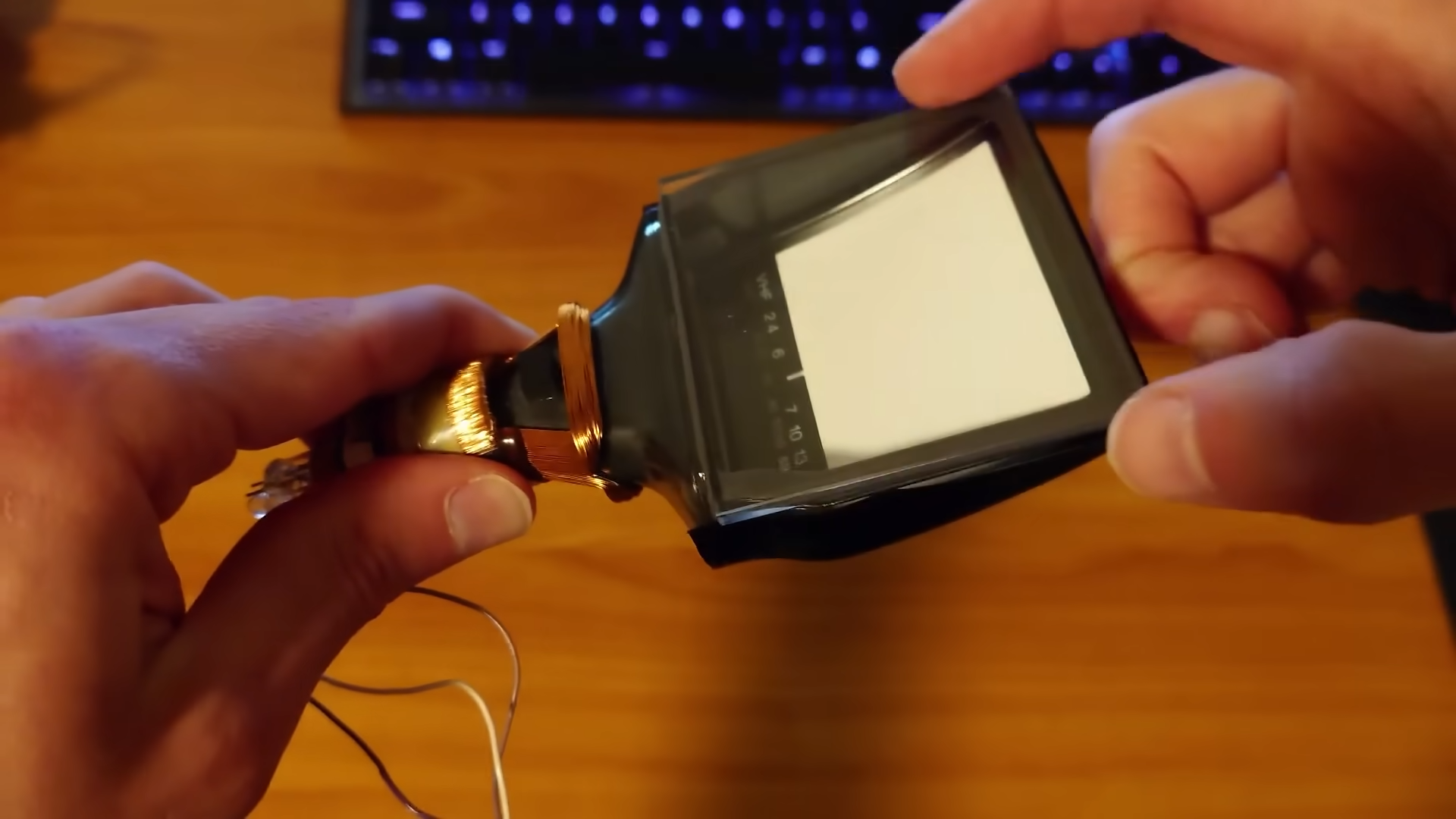
Image credit: dooglehead on YouTube
Software & Video Demonstration
The FPGA firmware converts the incoming HDMI signal to the CRT’s native format, while the IMU data is fed to SteamVR for head orientation. A short video showcases the headset in action:
I Made a Terrible VR Headset – YouTube
Image Quality & Performance
- Resolution – 640 × 480 px per eye.
- Color – Monochrome only; the lack of color made it difficult to distinguish some game elements.
- Sharpness – The electron beam focus was not perfect, and the perpendicular angle of incidence added blur.
- Screen‑Door Effect – Virtually nonexistent; the CRT’s phosphor display naturally blends pixels, providing a smoother image compared to modern LCD/OLED panels.
Conclusion
The CRT‑based headset demonstrates a creative blend of retro hardware and modern VR tracking. While the monochrome display and focus issues limit its practicality, the project highlights how CRTs can inherently avoid the screen‑door effect that plagues many contemporary headsets. For most users, high‑resolution OLED/LED displays remain the better choice, but dooglehead’s experiment is a commendable proof‑of‑concept for DIY enthusiasts.