
This is my favorite new Android phone trend, and I only hope it gets better in 2026
Source: Android Authority
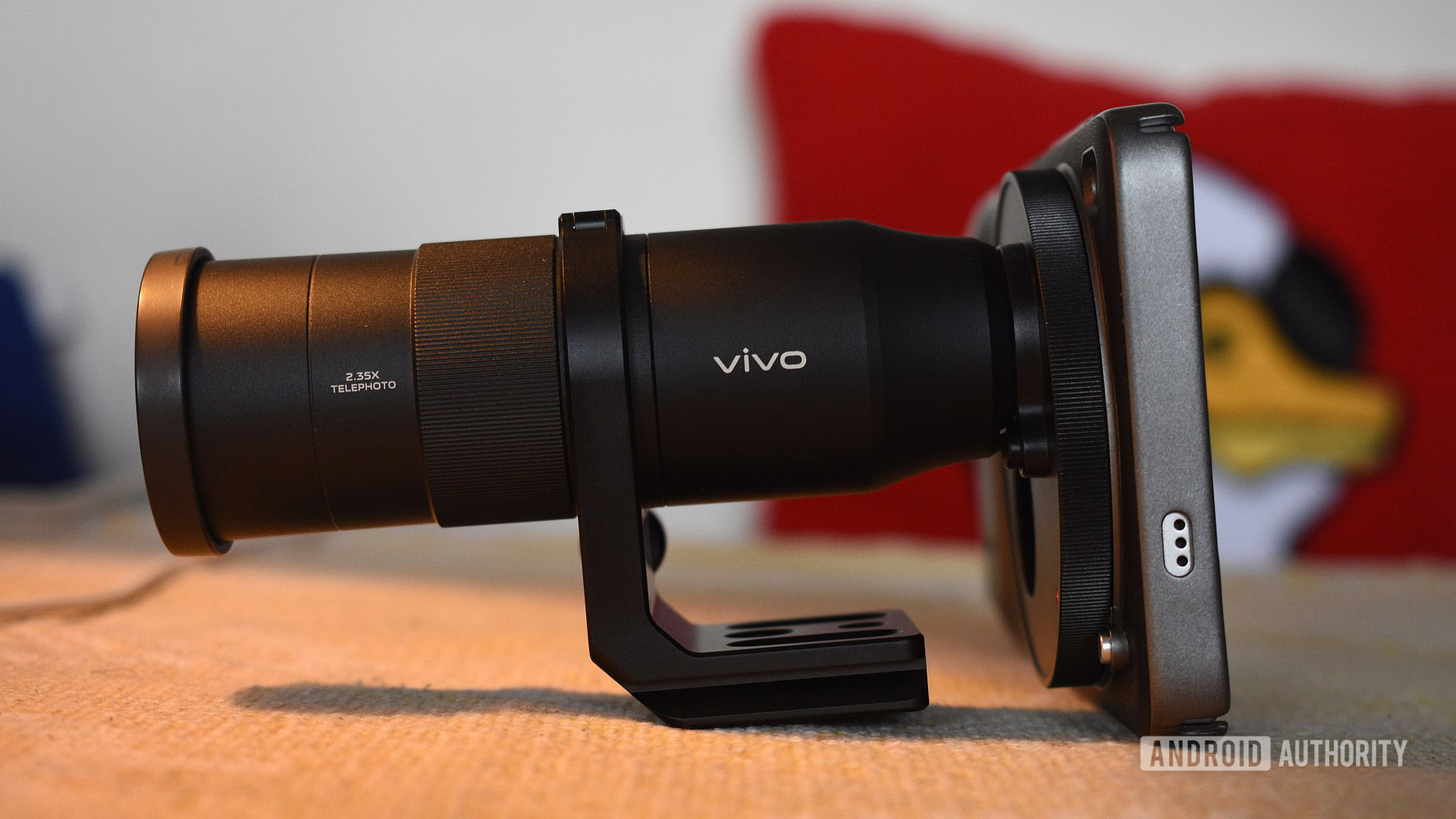
Andy Walker / Android Authority
One of the first things I would pack for road trips was my trusty Nikon DSLR. I’ve captured some truly memorable moments with the kit lens and a 70‑300 mm zoom lens, but I always lamented how much space the latter required.
You can imagine my excitement when pioneering Chinese firms started rolling out telephoto extenders that work with their camera phones. The concept certainly seemed ridiculous, but after using one for several months, it’s become the most exciting Android‑phone trend of the future.
Telephoto Extender Lens Trend
What is your opinion on the telephoto extender lens trend?
30 votes
Telephoto Extenders Aren’t New, but They’re More Polished Than Ever

Paul Jones / Android Authority
For the uninitiated, a telephoto extender (also called a zoom lens, telephoto converter, or teleconverter) is an attachable lens that extends a phone’s effective zoom range. It lets a device reach farther than its built‑in camera kit would allow.
The phone I’ve been using for a few months—the vivo X200 Ultra—mounts its external lens onto a 200 MP periscope sensor, delivering an effective 200 mm of native optical zoom. No digital tricks are involved (at least not initially).
Why Extenders Matter
- True optical zoom – preserves detail and reduces noise compared with digital zoom.
- Modular flexibility – users can add or remove the lens as needed, keeping the phone thin when the extra reach isn’t required.
- Cost‑effective upgrades – manufacturers can offer high‑zoom capability without redesigning the entire camera stack.
A Brief History
The idea isn’t new. One of my favorite early attempts was the 2014 Samsung Galaxy K Zoom, which featured a retractable telephoto lens. While the concept was bold, the hardware of the time couldn’t fully deliver, resulting in a bulky, awkward device.
Fast forward a decade, and sensor technology has caught up. In 2025, vivo launched the X200 Ultra, one of the first commercial smartphones with a purpose‑built external teleconverter. Its success sparked a mini‑boom:
| Device | Year | Extender Type | Effective Zoom |
|---|---|---|---|
| vivo X200 Ultra | 2025 | Dedicated external teleconverter | 200 mm (native) |
| OPPO Find X9 Pro | 2025 | Attach‑on lens (farther‑reaching) | 250 mm (native) |
| vivo X300 Pro | 2025 | Updated external lens | 300 mm (native) |
| Rumored iPhone 18 Pro | 2026* | Potential Apple‑branded accessory | TBD |
*Rumor reported by Android Authority.
Where the Trend Is Heading
- More manufacturers are experimenting with modular optics, turning high‑zoom capability into an optional accessory rather than a built‑in compromise.
- Third‑party lenses are emerging, offering a range of focal lengths and apertures for enthusiasts.
- Software integration (e.g., AI‑enhanced stabilization and edge‑aware processing) is getting tighter, making the transition between native and extended optics seamless.
Bottom Line
Telephoto extenders are no longer a niche gimmick. They’re a practical, feasible solution that delivers genuine optical zoom—something that pure digital zoom simply can’t match. As sensor quality continues to improve and manufacturers refine the modular approach, we can expect even longer focal lengths and smarter integration in the years to come.
Phone Photography Is Exciting Again!
For the New Year break I visited an apple farm. The cottage was surrounded by orchards, the scent of fallen pine needles lingered in the air, and a particularly noisy common buzzard kept me company. Normally I’d have my camera slung over my shoulder, but I left it at home—this time I was determined to use the X200 Ultra for my weekend photography.
First Shots
I mounted the lens, aimed at the raptor, and the results speak for themselves:
[Insert detailed image of the buzzard taken from 20 m away]
I was able to capture a crisp, detailed picture of the bird at a distance that would be impossible—at least with this level of clarity—on any other phone I’ve used before. Below are a few more avian friends I captured with this system.
Why the X200 Ultra Works So Well
- Impressive zoom – effective up to ~400 mm (in my opinion).
- Re‑engaged framing – the extra reach forces me to think more about composition, especially with distant subjects.
- Creative lighting – I enjoyed experimenting with light on far‑away subjects I’d normally ignore.
Practical Benefits Over My DSLR
| Feature | X200 Ultra | DSLR (Nikon) |
|---|---|---|
| Portability | Fits in a pocket; no bulky bag needed | Requires a camera bag and a sizable boot space |
| Dust protection | Lens is sealed, sensor inside the phone | Dust, sand, and grit can infiltrate the housing |
| Multi‑camera flexibility | Switch instantly between teleconverter, ultrawide, and main lens | Requires swapping lenses or carrying multiple lenses |
| Weight | Light enough for a free pants pocket | Heavier, adds load to the kit |
Versatility on the Fly
Because it’s a phone, I can twist off the teleconverter and flip to the ultrawide lens in seconds. One moment I’m capturing a bird perched on a distant branch; the next, I’m shooting a sweeping valley view. That kind of flexibility would normally demand a large camera bag and extra space in my hatchback’s relatively small boot.
Bottom line: the vivo X200 Ultra gives me DSLR‑level reach and image quality while staying compact, protected, and ready for any spontaneous shot. 📸✨
A Snags List as Long as Its Zoom Range
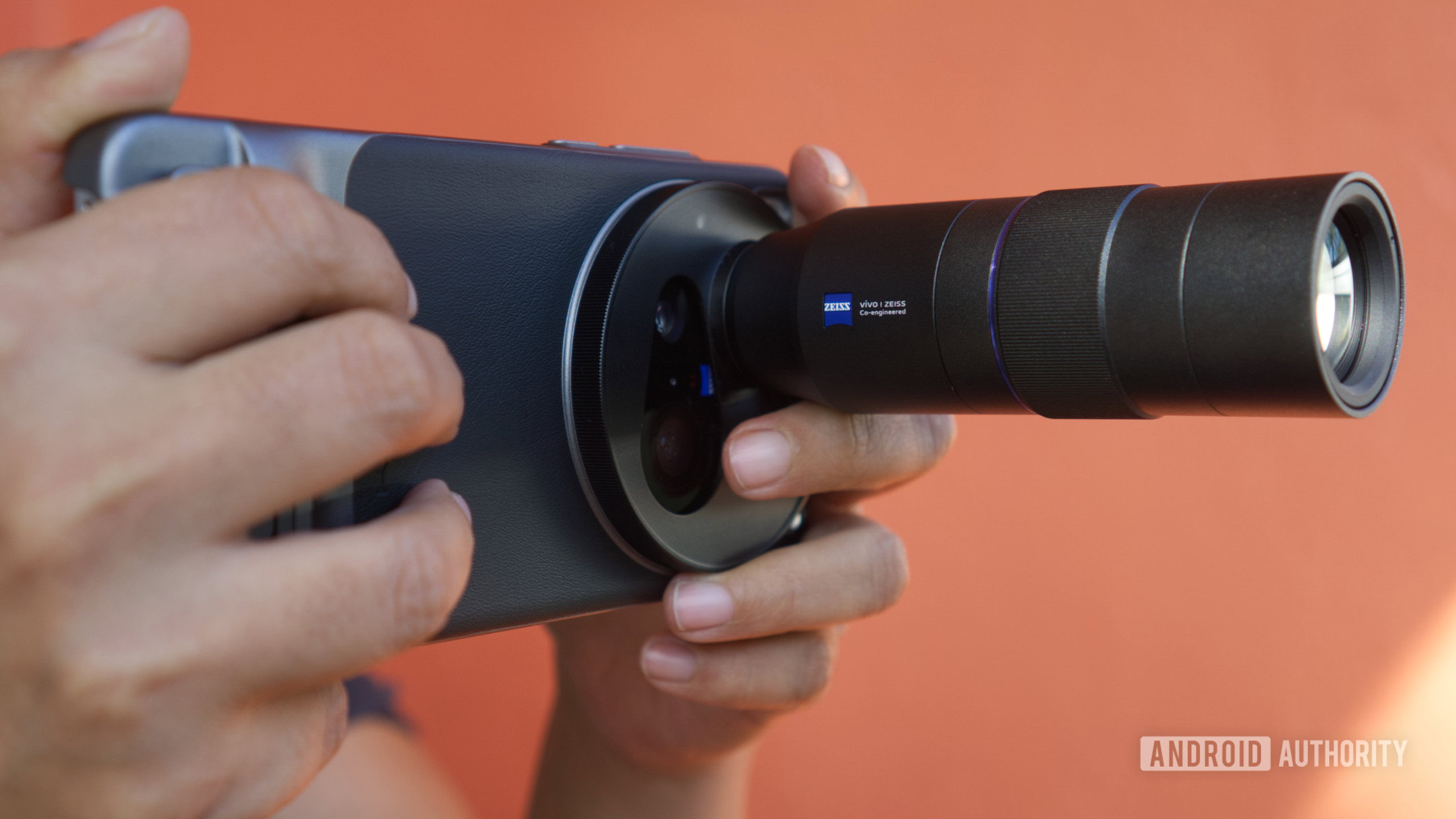
Hadlee Simons / Android Authority
As smitten as I am by the telephoto‑extender trend, I have to admit that it comes with a long, long list of snags and shortcomings that manufacturers must contend with. The biggest issue is usability, which directly affects the quality of the shots.
Main Issues
| Issue | Details |
|---|---|
| Bulk & Weight | The lens is bulky and heavy. When attached to a relatively balanced smartphone, the whole system becomes lopsided. This makes it hard to keep the camera locked on a subject at high zoom; even a slight twitch can pull the subject out of the frame or smear the foreground. |
| Stability | A phone with an external lens lacks the steadiness of a DSLR held against the eye. The kit does include a grip and a tripod‑style hand‑hold, but that adds two extra pieces of gear you have to carry. |
| Mounting System | The X300 Pro’s case improves rigidity, but mounting the lens is still time‑consuming and fiddly—problematic when you need to shoot quickly. The lens also wiggles a bit once attached; it doesn’t affect image quality, but it feels insecure in the hand. |
| Software & Controls | Vivo’s processing is overly aggressive, and the lens offers very few shooting modes and no manual controls. |
| Optical Performance | The glass is relatively slow, overly sensitive to the smallest movements, and may not reach the focal length it could. A starting point of ~400 mm (instead of the current spec) would likely be more useful—something OPPO appears to be heading toward. |
Bottom Line
Telephoto extenders have their problems, but none are insurmountable. I’m confident that these issues will be ironed out over time, especially as manufacturers refine both the hardware (lighter, more stable mounts) and the software (more nuanced processing and manual options).
The Smartphone Innovation to Watch in 2026
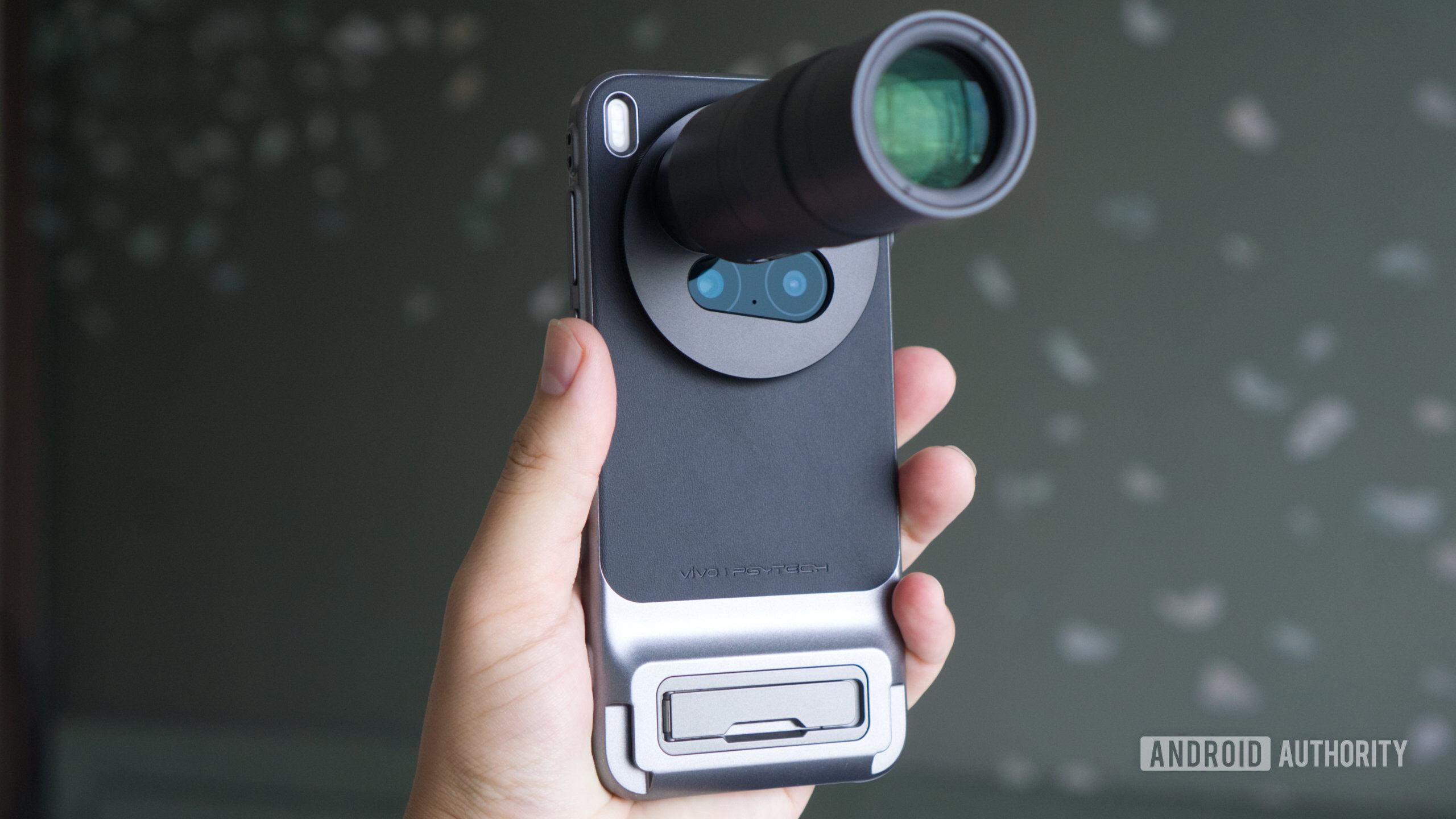
Hadlee Simons / Android Authority
Telephoto extenders are inherently fascinating. After we’ve seemingly maximized the space available for zoom within a phone’s body, the next logical step in the zoom race is a more powerful external lens that isn’t limited by internal constraints. It may look like a gimmick to some, but the casual photographer in me can’t help getting excited about this technology.
Using the Vivo X200 Ultra—no longer the best example of this solution—I experienced the tangible benefits a reaching lens can bring to smartphone photography.
With device prices set to rise this year, it’s the perfect moment for manufacturers to innovate. Yes, there are still kinks to iron out and the solution is pricey, but I hope Apple, Samsung, and Google will consider introducing their own telephoto extenders in the coming years. Because the underlying hardware across flagship phones is so similar, standout developments like telephoto extenders could become real difference‑makers.
Follow
Thank you for being part of our community. Please read our Comment Policy before posting.