
The era of 1,000 Hz gaming monitors has arrived, but why?
Source: Ars Technica
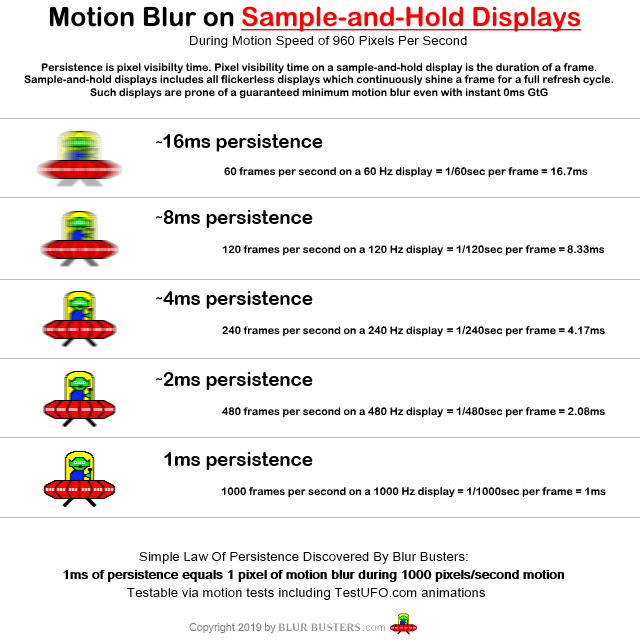
Fast‑moving objects appear decidedly less blurry as you climb the frame‑rate curve.
Credit: Blur Busters
Blur Busters Research
The folks over at Blur Busters have extensively documented research showing that refresh rates of 1,000 Hz (and up) can reduce human perception of motion blur and flickering. While the site notes that you eventually hit “diminishing returns” from all those extra frames—especially on smaller screens—there’s some evidence that you would need a 40,000 Hz monitor (video) to totally eliminate perceived motion blur on a sufficiently large, high‑resolution display.
Cost and Market Considerations
Perception research aside, it’s unclear how many gamers are interested in spending extra money on a display that breaks the four‑digit refresh‑rate barrier. While LG hasn’t announced pricing details for the UltraGear 25G590B yet, other 1,000 Hz monitors tend to run hundreds of dollars more than comparable models with lower (but still more than adequate) maximum refresh rates in the 240 – 360 Hz range. At the same time, monitors with Nvidia’s G‑Sync Pulsar and similar technologies use “rolling‑scan” pulsing backlights to reduce apparent motion blur, even on “slower” 360 Hz panels.
LG UltraGear 25G590B
LG says the 25G590B is “engineered specifically for first‑person shooters” and mentions an “esports‑optimized design” in its marketing materials, suggesting the display is targeting the small subset of gamers who play twitch‑based reflex games for a living. For everyone else, we recommend ignoring the “larger number is better” impulse and saving your hardware budget for those increasingly expensive sticks of RAM.