The Air Force's new ICBM is nearly ready to fly, but there’s nowhere to put it
Source: Ars Technica
Behind the MIRV
“There were assumptions that were made in the strategy that obviously didn’t come to fruition.”
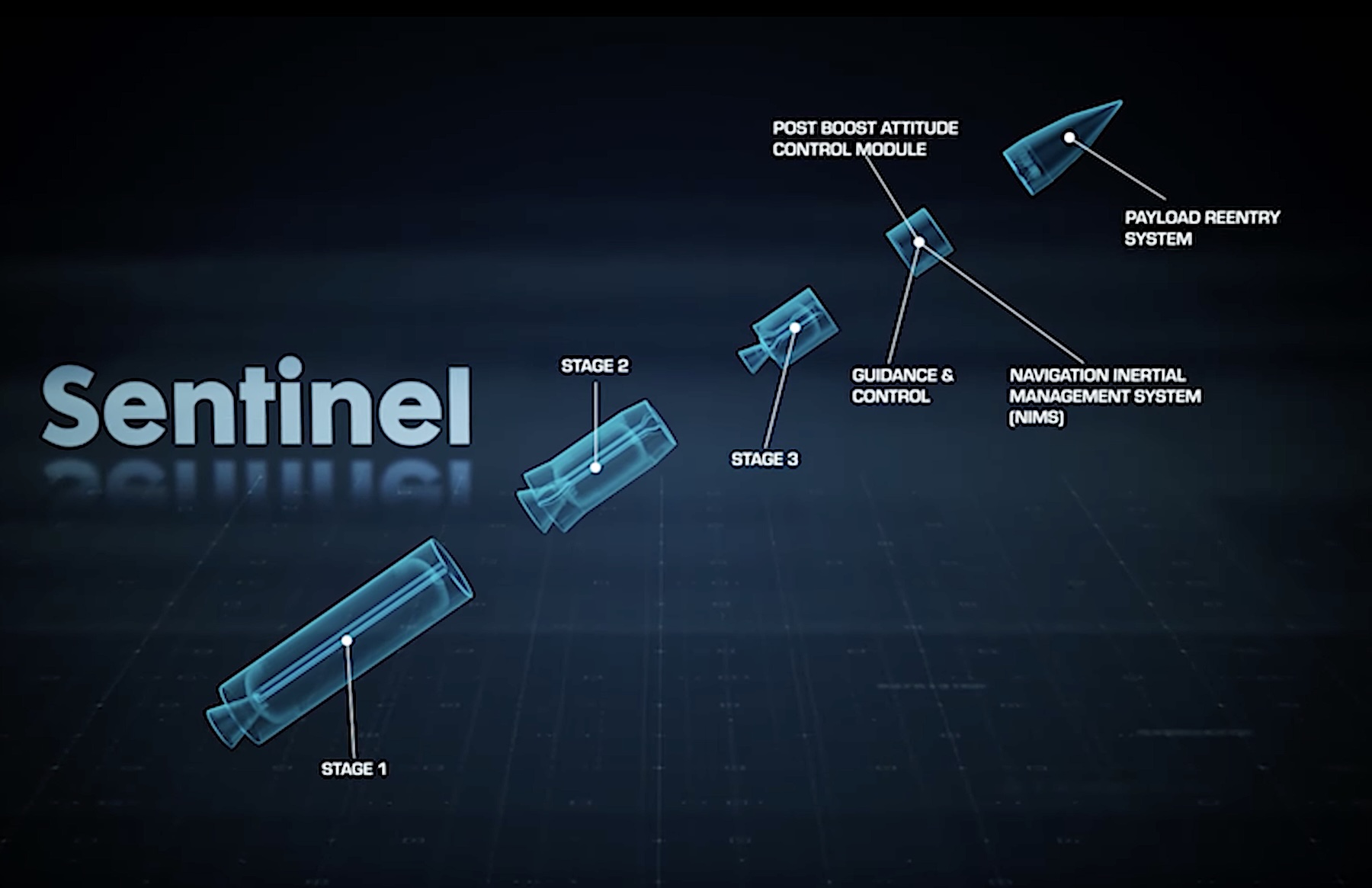
Credit: US Air Force
Sentinel ICBM Program
DENVER—The U.S. Air Force’s new Sentinel intercontinental ballistic missile is on track for its first test flight next year, military officials reaffirmed this week.
But no one is ready to say when hundreds of new missile silos—dug from the windswept Great Plains—will be finished, how much they will cost, or, for that matter, how many nuclear warheads each Sentinel missile could actually carry.
The LGM‑35A Sentinel will replace the Air Force’s Minuteman III fleet, which has been in service since 1970. The first of the new missiles is due to become operational in the early 2030s, but it will take longer to build and activate the full complement of Sentinel missiles and the 450 hardened underground silos that will house them.
Amid the massive undertaking of developing a new ICBM, defense officials are keeping their options open for the missile’s payload unit. Until February 5, the Air Force was barred from fitting ballistic missiles with Multiple Independently targetable Reentry Vehicles (MIRVs) under the constraints of the New START nuclear arms‑control treaty signed by the U.S. and Russia in 2010. The treaty expired three weeks ago, opening up the possibility of packaging each Sentinel missile with multiple warheads, not just one.
Senior U.S. military officials briefed reporters on the Sentinel program this week at the Air and Space Forces Association’s annual Warfare Symposium near Denver. There was a lot to unpack.
Credit: Northrop Grumman
Into the Breach
Two years ago, the Air Force announced that the Sentinel program’s budget had grown from $77.7 billion to nearly $141 billion. The increase followed a Nunn‑McCurdy breach—named for the two lawmakers who mandated reviews of severely over‑budget defense programs. In 2024, the Pentagon determined that the Sentinel program was too essential to national security to cancel.
“We’ve gotten all the capability that we can out of the Minuteman,” said Gen. Stephen “S.L.” Davis, commander of Air Force Global Strike Command. Potential enemy threats to the Minuteman ICBM have evolved significantly since its initial deployment in the Cold War, Davis added.
The $141 billion figure is already out of date. Last year the Air Force announced that it would need to construct new silos for the Sentinel missile. The original plan—to adapt existing Minuteman III silos—proved too slow and costly given the aging infrastructure.
New Construction Plan
- In partnership with contractors and the U.S. Army Corps of Engineers, the Air Force will dig hundreds of new holes across Colorado, Montana, Nebraska, North Dakota, and Wyoming.
- The new complex will include:
- 24 forward launch centers
- Three centralized wing command centers
- >5,000 mi of fiber‑optic connections linking the sites
Sen. Roger Wicker (R‑MS) and Sen. Deb Fischer (R‑NE) wrote in a 2024 Wall Street Journal op‑ed that Sentinel, which officially started in 2016, will be the largest U.S. civil‑works project since the Interstate Highway System and the most complex acquisition program the Air Force has ever undertaken.
Gen. Dale White, the Pentagon’s director of critical major weapons systems, said on Wednesday that the Defense Department plans to complete a “restructuring” of the Sentinel program by the end of the year, after which an updated budget will be released.
“It’s been a very, very long time since we’ve done this,” White noted. “At the very core, there were assumptions that were made in the strategy that obviously didn’t come to fruition.”
Maintaining Minuteman III
Military planners also concluded that keeping the existing Minuteman III missiles on alert while converting their silos would be more difficult than anticipated. Building new silos will allow the Minuteman III fleet to remain online—potentially until as late as 2050—as Sentinel emplacements come on line. (The Minuteman III was originally slated to retire around 2036; see the GAO report.)
“We’re not reusing the Minuteman III silos, but that gives much greater operational flexibility to the combatant commander,” White explained. “We had to take a step back and have a more enduring look at what we were trying to do, what capability is needed, making sure we do not have a gap in capability.”
Visual
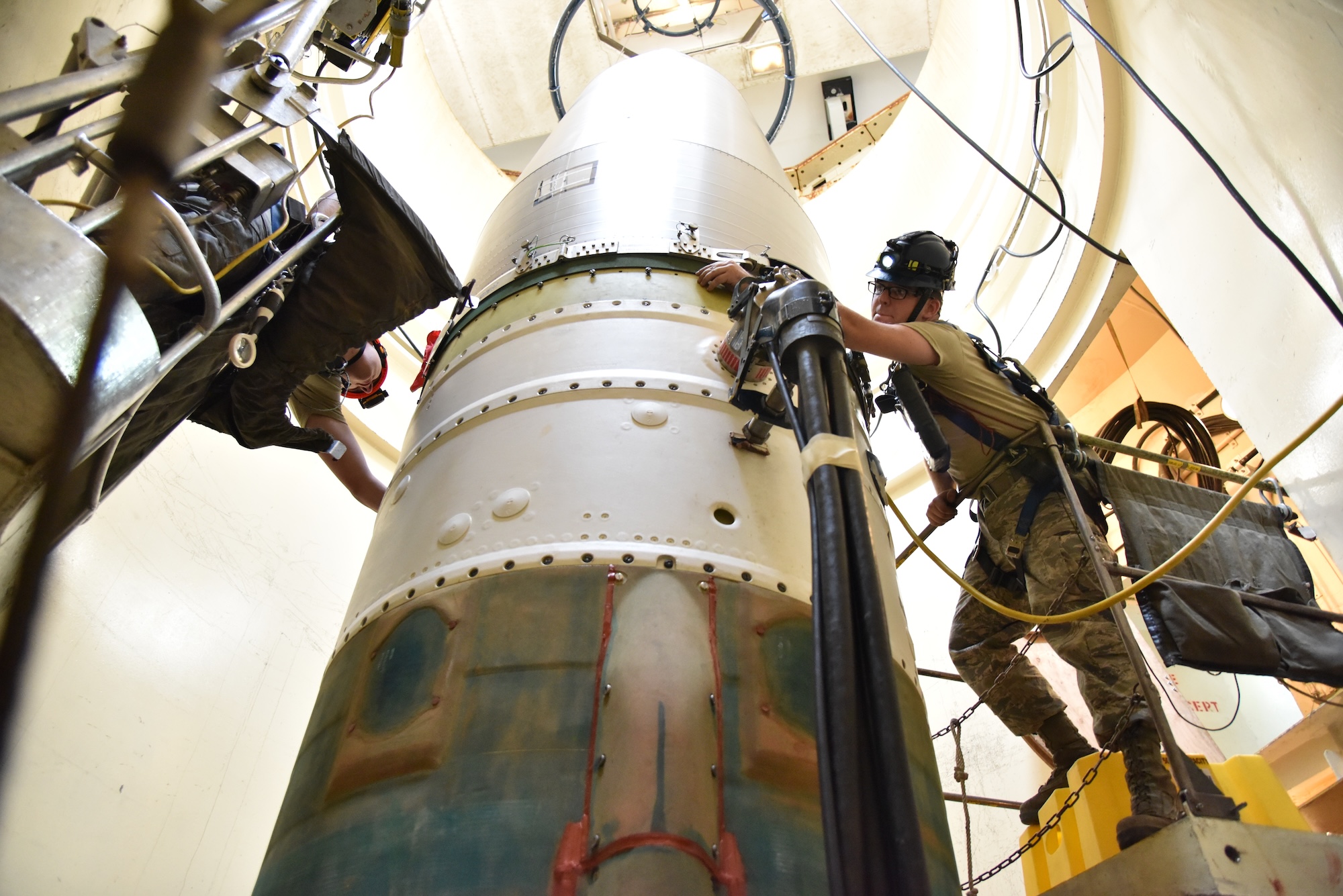
Credit: U.S. Air Force photo by Senior Airman Daniel Brosam.
Decommissioning Minuteman III Silos
Decommissioning the old silos presents its own challenges. An Air Force official (on background) said commanders recently took one Minuteman silo off alert to gauge the time required for decommissioning each location. Meanwhile, Northrop Grumman, Sentinel’s prime contractor, broke ground on the first “prototype” Sentinel silo in Promontory, Utah, earlier this month.
The Air Force has ordered 659 Sentinel missiles from Northrop Grumman, including more than 400 to go on alert, plus spares and developmental missiles for flight testing. The first Sentinel test launch from a surface pad at Vandenberg Space Force Base, California, is scheduled for 2027.
Sources
- U.S. Army Corps of Engineers – ICBM Silos History
- GAO Report on Minuteman III
- Wall Street Journal op‑ed by Sen. Wicker & Sen. Fischer (2024)
- Various statements from Gen. Stephen Davis and Gen. Dale White
To ReMIRV or not to ReMIRV
For the first time in more than 50 years, the world’s two largest nuclear forces have been unshackled from any arms‑control agreements. New START was the latest in a series of accords between the United States and Russia, and with it came the ban on MIRVs aboard land‑based ICBMs. The Air Force removed the final MIRV units from Minuteman III missiles in 2014.
The Trump administration wants a new agreement that includes Russia as well as China, which was not part of New START. US officials were expected to meet with Russian and Chinese diplomats this week to discuss the topic. There’s no guarantee of any agreement between the three powers, and even if there is one, it may take the form of an informal personal accord among leaders, rather than a ratified treaty.
“The strategic environment hasn’t changed overnight, from before New START was in effect, until it has lapsed, and within our nation’s nuclear deterrent,” said Adm. Rich Correll, head of US Strategic Command. “We have the flexibility to address any adjustments to the security environment as a result of that treaty lapsing.”
This flexibility includes the option to re‑MIRV missiles to accommodate more than one nuclear warhead, Correll said. “We have the ability to do that. That’s obviously a national‑level decision that would go up to the president, and those policy levers, if needed, provide additional resiliency within the capabilities that we have.”
MIRVs are more difficult for missile‑defense systems to counter, and they allow offensive missile forces to package more ordnance in a single shot. With New START gone, there’s no longer any mechanism for international arms inspections. Russia may now also stack more nukes on its ICBMs. Gone, too, is the limitation for the United States and Russia to deploy no more than 1,550 nuclear warheads at one time.
“The expiration of this treaty is going to lead us into a world for the first time since 1972 where there are no limits on the sizes of those arsenals,” said Ankit Panda of the Carnegie Endowment for International Peace.
“I think this opens up the question of whether we’re going to be heading into a world that’s just going to be a lot more unpredictable and dangerous when you have countries like the United States and Russia that have a lot less transparency into each other’s nuclear arsenals, and fundamentally, as a result, a lot less predictability about the world that they’re operating in,” Panda continued.
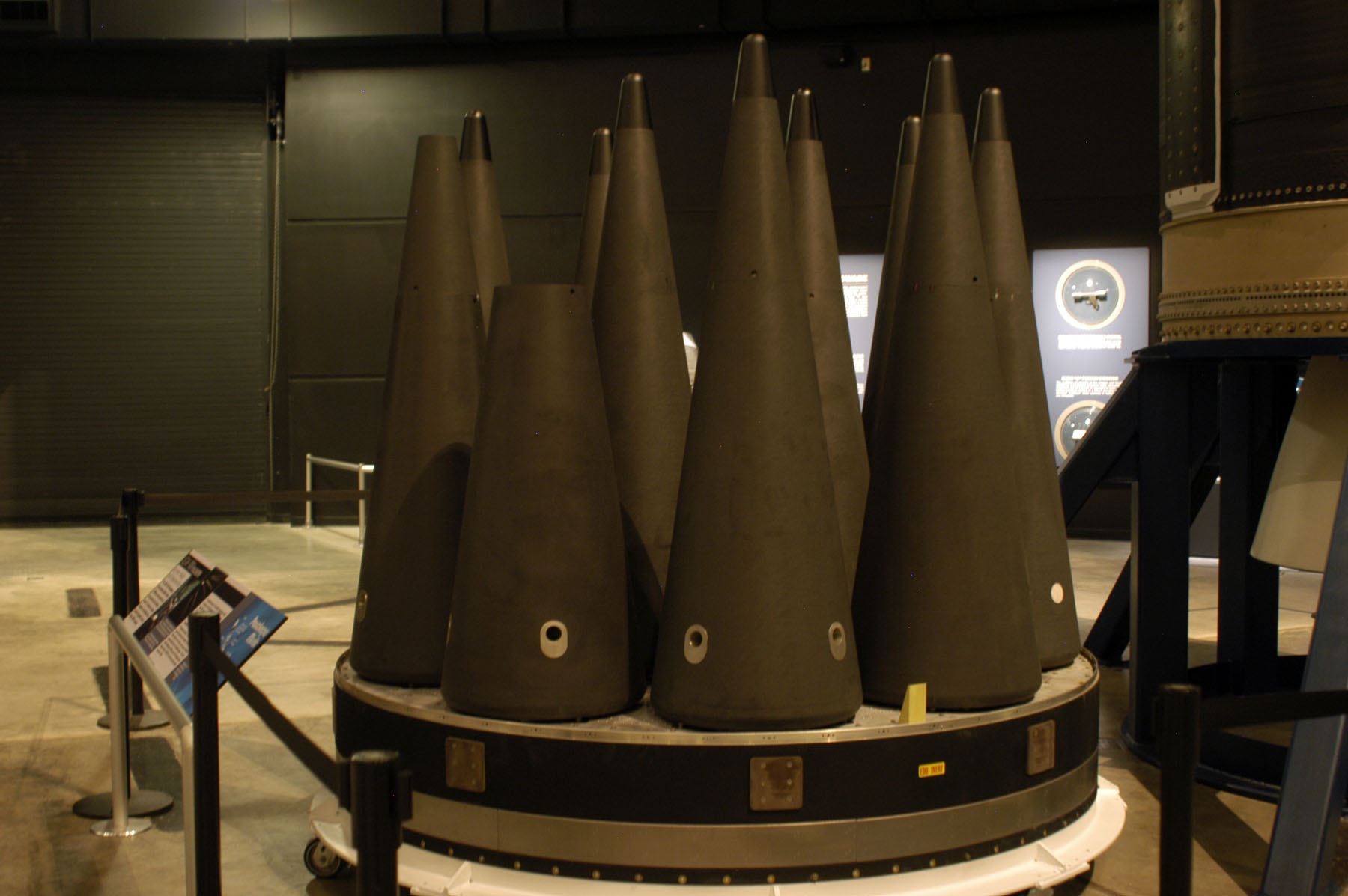
Mk21 reentry vehicles on display in the Missile and Space Gallery at the National Museum of the US Air Force in Dayton, Ohio.
Credit: US Air Force
Some strategists have questioned the need for land‑based ICBMs in the modern era. The locations of the Air Force’s missile fields are well known, making them juicy targets for an adversary seeking to take out a leg of the military’s nuclear triad. The stationary nature of the land‑based missile component contrasts with the mobility and stealth of the nation’s bomber and submarine fleets. Also, bombers and subs can already deliver multiple nukes, something land‑based missiles couldn’t do under New START.
Proponents of maintaining the triad say the ICBM missile fields serve an important, if not macabre, function in the event of the unimaginable. They would soak up the brunt of any large‑scale nuclear attack. Hundreds of miles of the Great Plains would be incinerated.
“The main rationale for maintaining silo‑based ICBMs is to complicate an adversary’s nuclear strategy by forcing them to target 400 missile silos dispersed throughout the United States to limit a retaliatory nuclear strike, which is why ICBMs are often referred to as the ‘nuclear sponge,’” the Center for Arms Control and Non‑Proliferation wrote in 2021. “However, with the development of sea‑based nuclear weapons, which are essentially undetectable, and air‑based nuclear weapons, which provide greater flexibility, ground‑based ICBMs have become increasingly technologically redundant.”
Policymakers in power do not agree. The ICBM program has powerful backers in Congress, and Sentinel has enjoyed support from the Obama, Biden, and both Trump administrations. The Pentagon is also developing the B‑21 Raider strategic bomber and a new generation of “Columbia‑class” nuclear‑armed subs.

Stephen Clark is a space reporter at Ars Technica, covering private space companies and the world’s space agencies. Stephen writes about the nexus of technology, science, policy, and business on and off the planet.
95 Comments