
The 2026 Mazda CX-5, driven: It got bigger; plus, radical tech upgrade
Source: Ars Technica
Starting at $29,990, there’s a lot to like about the all‑new Mazda CX‑5, but it’s not perfect.
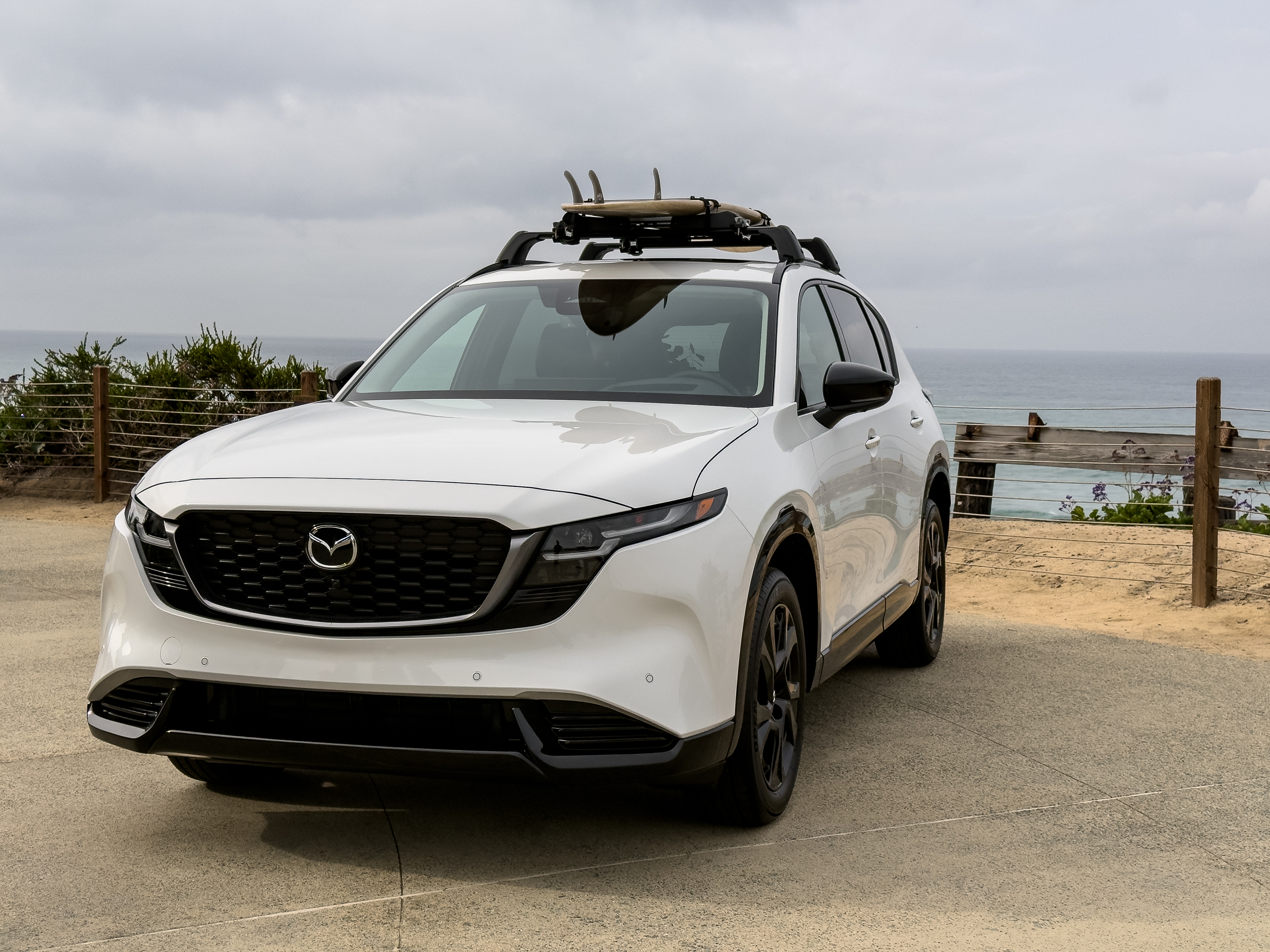
Credit: Jonathan Gitlin
Overview
ENCINITAS, Calif. — Its sales may have been buoyed of late by the big CX‑90 and CX‑70 SUVs, but for Mazda, the CX‑5 is still where most of the action is.
Unlike the similar‑sized, similar‑priced CX‑50, which was designed just for North America, the all‑new CX‑5 is a global car and serves as Mazda’s standard‑bearer for a range of new technologies:
- An all‑new Google‑based infotainment system, marking Mazda’s first steps toward software‑defined vehicles.
- An in‑house hybrid powertrain slated for release next year.
- A competitive starting price of $29,990.
Dimensions & Design
- Length: 184.6 in (4,689 mm) – 4.5 in (114.5 mm) longer than the previous model.
- Width: 73.2 in (1,859 mm) – 0.5 in (13 mm) wider.
- Height: 66.7 in (1,694 mm).
- Wheelbase: 110 in (2,794 mm), providing more interior space.
The exterior features a new light signature and bodywork that curves around the front and wraps down the fenders, evoking subtle Range Rover vibes. As always, Mazda’s signature Soul Red Crystal metallic paint (a $595 option) sparkles even on overcast days.
Interior & Trim Levels
The last major redesign of this compact crossover introduced an up‑market interior. Since then, Mazda has consistently delivered cabins that punch well above their price tags. The new CX‑5 continues this tradition with a restrained yet refined design across five trim levels, each stepping up by roughly $2,000.
If you’re a current CX‑5 owner, you’ll notice many changes—some improvements, some compromises.
It’s a little bigger than before, but it’s still not a huge vehicle. – Mazda
What’s New?
Mazda has introduced a brand‑new multifunction steering wheel. The rim is thicker and padded for a softer feel—something BMW‑enthusiasts might appreciate. The controls are now touch‑sensitive with haptic feedback, replacing the old discrete buttons.
A digital instrument cluster replaces the analog gauge cluster. The UI is restrained and not particularly customizable (you can’t display a map, for example).
To the right of the driver sits a touchscreen:
- 12.9‑in on most trims
- 15.6‑in on the $38,990 Premium Plus
Both run a new Android Automotive OS‑based infotainment system that eliminates the rotary controller from the center console. The rotary knob was a “love‑it‑or‑hate‑it” device; once you built muscle memory it was very handy, but Mazda felt the new UI would be harder to navigate with it, and removing it also prevents accidental touches when a driver’s wrist rests on the console.
Infotainment Highlights
- Over‑the‑air updates for the lifetime of the vehicle.
- AAOS ecosystem brings a growing selection of apps, including most major audio‑streaming services and an expanding library of console‑style games that can be controlled via your phone.
- Google Automotive Services are built in. After the first year a subscription is required, but you can also use your own data connection (e.g., a smartphone hotspot) to keep Google Maps and other connected services active.
Mazda confirmed that the system will continue to receive upgrades, and the ability to tether to a personal hotspot is a welcome fallback for owners who prefer not to pay for a separate data plan.
Premium Plus interior – note the new steering wheel.
Jonathan Gitlin
During our test drive, Mazda’s US servers weren’t yet configured for the new CX‑5, so every test vehicle was equipped with an Internet hotspot. In the more remote parts of San Diego’s North County the signal was occasionally weak, but overall the connection performed well. It’s encouraging to see at least one OEM offering a simple tether‑to‑your‑phone solution rather than forcing a proprietary data subscription.
How Does It Drive?
As mentioned, next year we’ll see a hybrid CX‑5, but for now the crossover launches in the US with Mazda’s venerable Skyactiv‑G four‑cylinder. It generates 187 hp (140 kW) and 186 lb‑ft (252 Nm), which go to all four wheels via a six‑speed automatic transmission.
Given the CX‑5’s 3,856 lb (1,749 kg) curb weight, it isn’t particularly fast, and the engine becomes loud and intrusive if you keep it in the upper reaches of its 6,500 rpm range. The ride isn’t the softest, but it won’t shake loose a filling. There’s a fair amount of body roll in the corners and under‑steer as you approach the limit of the tires.
Sadly, Mazda has yet to make another car that steers as well as the smaller CX‑30, but the CX‑5 is still pleasant to drive, even if it won’t reward an enthusiast.
It probably will make you drive slowly, though. Frequently on the twisty part of the road I noticed I was about 5 mph below the speed limit, so you won’t set any point‑to‑point records, but I can’t say I particularly minded.
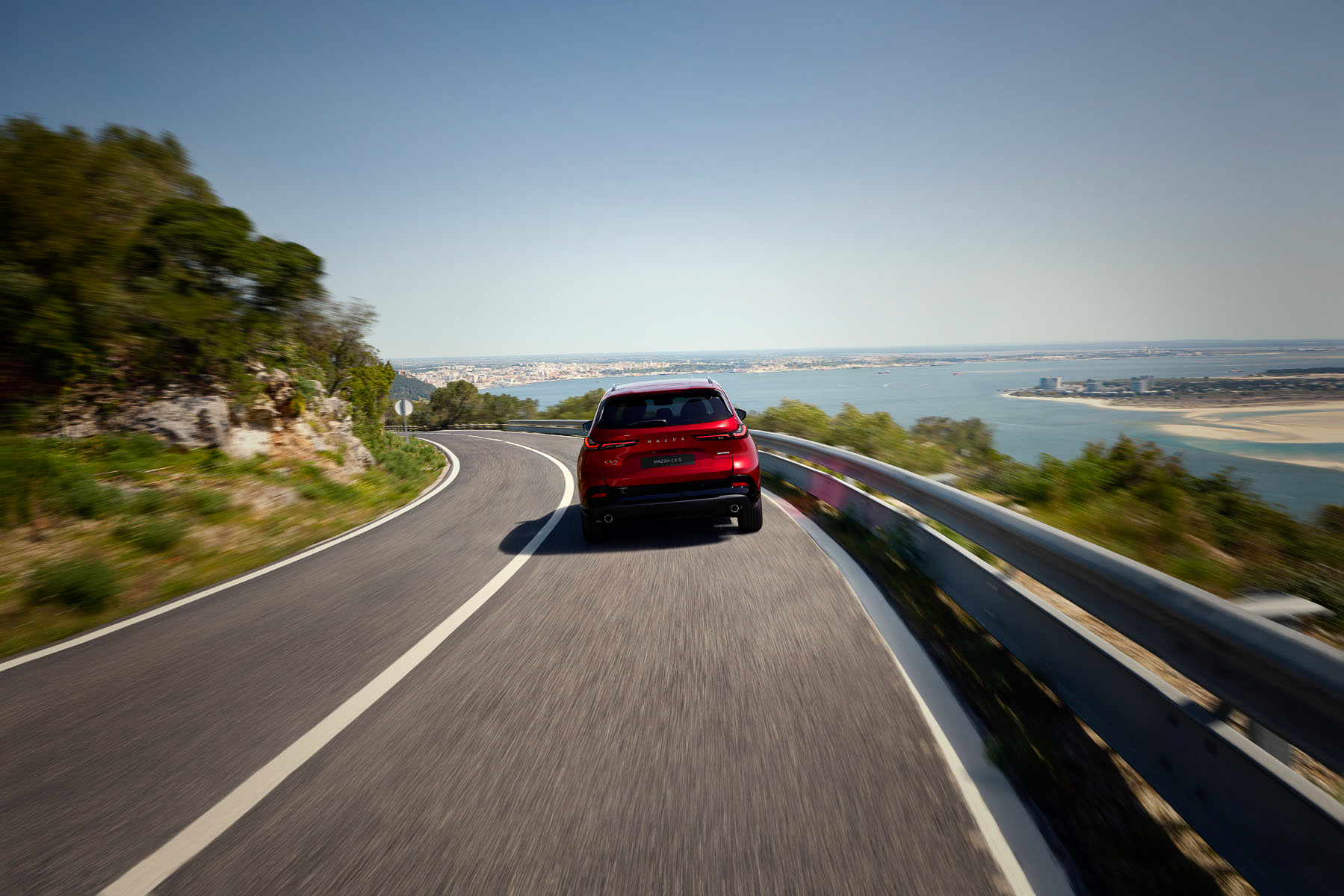
Zoom‑zoom, but slowly.
Credit: Mazda
Being a bit slow helps with the CX‑5’s biggest weakness: its fuel economy. This has never been a Mazda strength, so it’s fortunate for the automaker that the US has now essentially abandoned regulating such things. Officially, the EPA rates the CX‑5 at 24 mpg (9.8 L/100 km) city, 30 mpg (7.8 L/100 km) highway, for a combined 26 mpg (9 L/100 km).
My particular test car had averaged 22.3 mpg (10.5 L/100 km) over a few hundred miles before I got my hands on it, and I ended the day having eked this up to 23 mpg (10.2 L/100 km) over the course of a hundred miles or so. That Skyactiv‑Z hybrid can’t come soon enough, although there is always the option of the CX‑50 hybrid (which borrows Toyota’s hybrid powertrain from the RAV4).
About the Author

Jonathan M. Gitlin – Automotive Editor at Ars Technica. He holds a BSc and PhD in Pharmacology. In 2014 he left the National Human Genome Research Institute to pursue his lifelong passion for cars and launched Ars Technica’s automotive coverage. He lives in Washington, DC.