
Tech tinkerer gets Gemini to help him 'vibe code' an x86 motherboard design — bot help was impressive, but project still required human awareness and intervention
Source: Tom’s Hardware
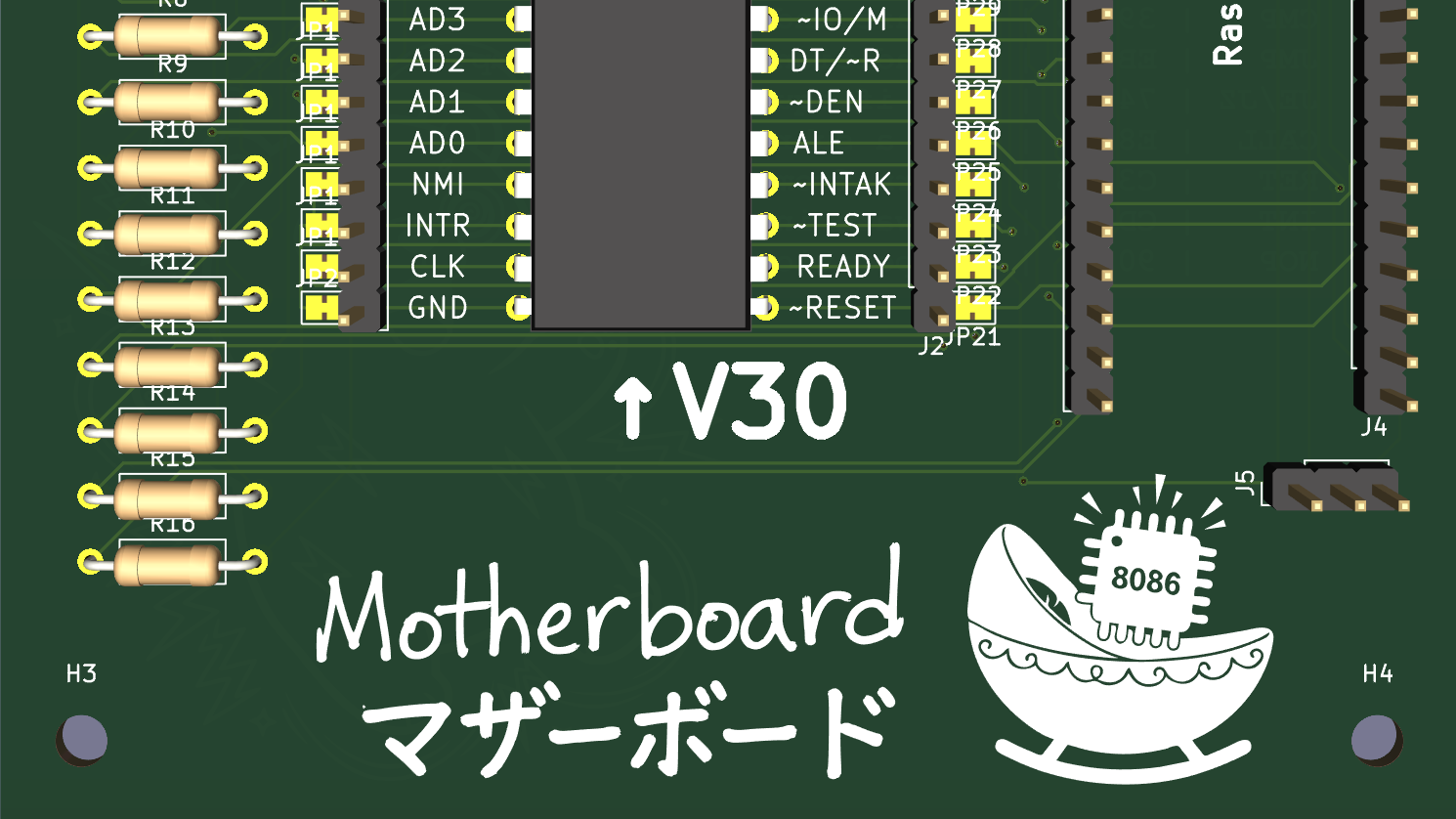
Image credit: Ikejima’s blog
Project Overview
Japanese tech blogger Ikejima decided to tackle a project few would attempt: designing a functional motherboard for an Intel 8086‑compatible CPU using generative AI. After an earlier, unsuccessful attempt with an 8088 clone, he turned to a NEC V30 (part μPD70116), an 8086‑compatible chip that can be sourced for a few dollars on AliExpress. Rather than building a full‑size board, he created a compact “cradle” using a Raspberry Pi Pico RP2040 microcontroller and minimal supporting circuitry.
Hardware Design
- CPU: NEC V30 (8086 clone)
- Microcontroller: Raspberry Pi Pico RP2040 – handles control logic and I/O.
- Power: Adjusted to meet the V30’s 5 V requirement.
- Memory: Separate RAM chips for even and odd bytes, as required by the 8086 bus architecture.
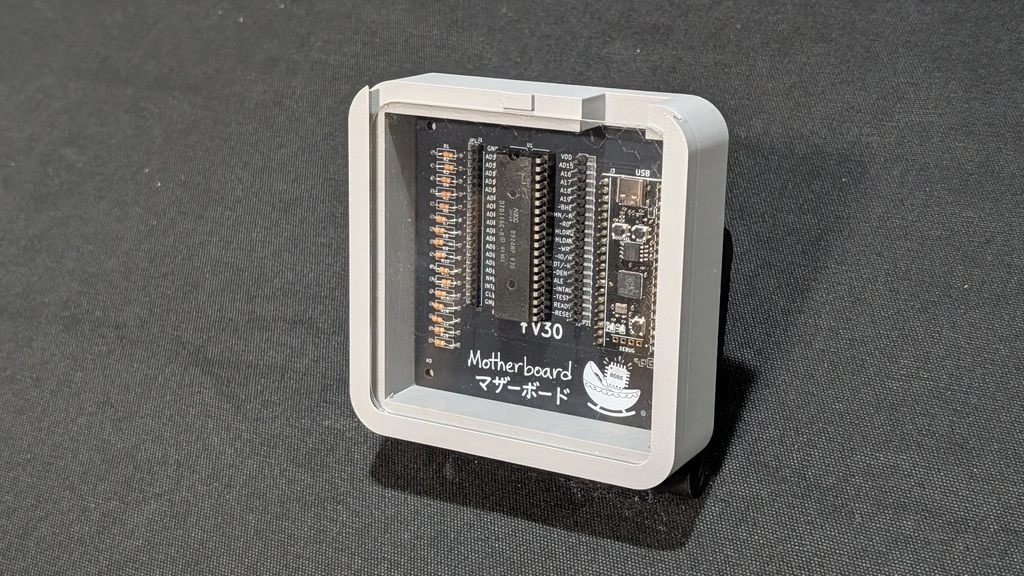
Image credit: Ikejima blog
AI Assistance
Ikejima enlisted Google Gemini to help with several tasks:
- Assembler & Disassembler Generation – Gemini produced tools for writing and extracting V30 assembly programs.
- Circuit Suggestions – The AI offered modifications to the schematic, though it initially missed practical constraints such as component costs and physical layout.
- Debugging Guidance – Gemini provided ideas for troubleshooting, but some critical hardware nuances escaped its analysis.
“Perhaps AI still struggles to read diagrams,” Ikejima noted after encountering a short‑circuit issue that Gemini didn’t anticipate.
Challenges and Fixes
Short‑Circuit Protection
- The initial design caused a literal short that tripped the USB port, preventing damage.
- Manual inspection and a logic analyzer revealed that the 8086 bus shares address and data lines, alternating each clock tick—a detail Gemini overlooked.
Memory Bus Configuration
- The V30 requires two RAM chips: one for even‑addressed bytes, another for odd‑addressed bytes.
- After correcting the RAM wiring, the CPU began executing instructions correctly.
BIOS & I/O
- Running MS‑DOS required a BIOS layer, which the bare‑bones cradle lacked.
- Ikejima integrated HI‑DOS on the Pico side to provide the necessary BIOS functions, enabling a limited MS‑DOS environment.
Running Software
With the BIOS in place, the system could boot HI‑DOS MS‑DOS, albeit with constraints:
- No writable storage (only volatile RAM).
- Limited memory capacity.
Despite these limits, simple programs executed successfully, demonstrating that a functional 8086‑compatible system could be assembled with modest hardware and AI assistance.
Conclusion
The project showcases the synergy between human expertise and AI tools. While Gemini accelerated routine tasks like generating assemblers, human insight remained essential for interpreting schematics, handling hardware quirks, and ensuring safety. The end result—a working V30‑based cradle capable of running basic DOS programs—highlights what can be achieved when AI augments, rather than replaces, the engineer’s judgment.
Read the full adventure on Ikejima’s blog:
https://blog.ikejima.org/make/8088/2026/02/11/cradle86-en.html