
Starmer pledges to close loopholes in social media crackdown
Source: BBC Technology
Key announcement
Prime Minister Sir Keir Starmer has pledged to respond more quickly to close loopholes in laws designed to protect children online. He warned that no online platform will get a “free pass” on children’s online safety and promised to “crack down on the addictive elements of social media”.
The government will launch a public consultation in March on restricting children’s access to AI chat‑bots and limiting infinite‑scrolling features (often called doomscrolling). The aim is to create new legal powers that allow “immediate action” after the consultation, enabling the government to act within months rather than waiting years for primary legislation each time technology evolves.
“The action we took on Grok sent a clear message that no platform gets a free pass.
Technology is moving really fast, and the law has got to keep up. With my government, Britain will be a leader, not a follower, when it comes to online safety.” – Sir Keir Starmer
Proposed changes to online safety legislation
- Online Safety Act (2023) – originally drafted before AI chat‑bots such as ChatGPT, will be amended to close loopholes and bring AI under its remit.
- Crime and Policing Bill – will be updated to require chat‑bots to protect users from illegal content and to tighten rules on how children’s social‑media data is stored.
- Additional measures under consideration
- Prevent children from using virtual private networks (VPNs) to illicitly access pornography.
- Give regulators powers to curb addictive design features such as auto‑play and never‑ending scrolling.
- Allow the government to intervene against platforms that fail to enforce age limits.
In a Substack article, Sir Keir wrote that, as a parent of two teenagers, he sees social media’s evolution as “something that is quietly harming our children.” He added that the government will “bring new powers that will give us the ability to crack down on the addictive elements of social media… and stop kids getting around age limits.” If this leads to a clash with big tech, “then bring it on,” he said.
Jools’ Law and data preservation
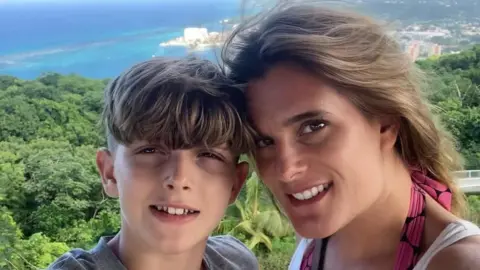
The government plans to amend the Crime and Policing Bill to change how children’s social‑media data is stored, following the “Jools’ Law” campaign.
- Current rule: A child’s data can be requested from tech companies within 12 months of death by a coroner or the police.
- Proposed rule: If the data might be relevant to the cause of death, it must be preserved within five days, giving families a better chance of obtaining evidence.
“This going forward will help other bereaved families,” said Ellen Roome, whose son Jools died in 2022 while attempting an internet challenge. “What we now need to do is stop the harm happening in the first place.”
Lord Nash, a former Conservative minister campaigning for tighter controls, welcomed the adoption of Jools’ Law but urged the government to raise the age limit to 16 for the most harmful platforms.
Political reactions
- Shadow Education Secretary Laura Trott (Labour): Called the consultation “inaction” and said Britain is “lagging behind.” She urged an immediate ban on under‑16s accessing these platforms.
- Liberal Democrat spokeswoman Munira Wilson: Accused the government of “kicking the can down the road” and demanded a clear, firm timeline for action.
- Technology Secretary Liz Kendall (Labour): Stated the government is “determined to give children the childhood they deserve” and will not wait to act amid rapid technological change.