
Samsung union suspends strike after reaching tentative deal on bonuses
Source: Engadget
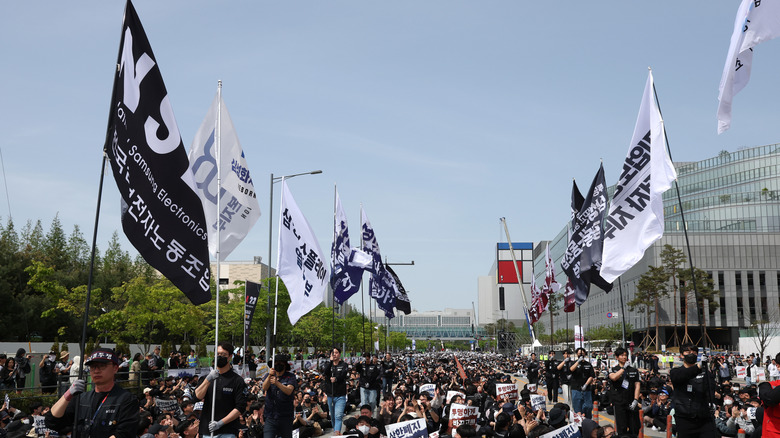
Chung Sung-jun / Getty Images
Union vote and next steps
Union leader Choi Seung‑ho announced that unionized workers will vote on the tentative agreement from May 22 to May 27. A final agreement will be confirmed after the vote. Samsung said in a statement, “With a humble attitude, we will build a more mature and constructive labour‑management relationship to ensure that such an incident never happens again.”
Issues that triggered the strike
The walkout was prompted by failed negotiations over bonuses:
- Workers demanded the removal of a cap on bonuses that limited them to 50 % of annual salaries—similar to the policy at rival SK Hynix.
- They sought to allocate 15 % of Samsung’s annual operating profit to the bonus pool.
- The union argued that SK Hynix paid bonuses three times higher than Samsung’s workers received last year, leading some Samsung staff to move to SK Hynix.
Terms of the tentative agreement
According to Reuters, Samsung has agreed to:
- Abolish the bonus cap.
- Set aside 10.5 % of its annual operating profit for employee bonuses.
Yonhap News reported that:
- 40 % of the bonus pool will go to memory‑chip division workers.
- The remaining 60 % will be divided among Samsung’s other units.
The agreed percentage is lower than the union’s demand of 15 % but higher than the 10 % profit share paid by SK Hynix. Bonuses are contingent on the memory division achieving at least KRW 200 trillion ($133 billion) in profit from 2026‑2028 and KRW 100 trillion ($66 billion) from 2029‑2035. Part of the bonuses will be paid in company stock for at least ten years.
Government involvement
The South Korean government intervened quickly after the union announced the planned walkout. Talks resumed within hours, with Labor Minister Kim Young‑hoon acting as mediator. Samsung accounts for 12.5 % of South Korea’s GDP and is the world’s largest memory‑chip maker, posting KRW 53.7 trillion ($35.63 billion) in operating profit for Q1 2026 alone.
Prime Minister Kim Min‑seok warned that direct losses from an 18‑day strike could reach KRW 1 trillion ($669 million). The broader economic impact could soar to KRW 100 trillion ($66 billion) if Samsung were forced to scrap semiconductors already in production during the protest.