Pentagon buyer: We're happy with our launch industry, but payloads are lagging
Source: Ars Technica
Positive Returns
“The point is to get missions out the door as fast as possible. Two to three years is too slow.”
— Maj. Gen. Stephen Purdy, Space Force acquisition deputy
Maj. Gen. Stephen Purdy oversees the Space Force’s acquisition programs at the Pentagon.
Credit: Jonathan Newton / The Washington Post via Getty Images
Space‑Force Focus Shifts Toward Start‑ups and Payloads
DALLAS — At a space‑finance conference in Dallas last week, the Space Force officer responsible for more than $24 billion in research and development spending emphasized that the Pentagon is more interested in supporting startups that build new space sensors and payloads than in adding another rocket company to its portfolio.
Purdy’s key messages to the room of investors and commercial‑space executives were:
- High‑volume production is a higher priority than pouring money into the latest technologies.
- The military has, at least for now, lost one of its most important tools for supporting and diversifying the space industrial base.
The emphasis on payloads over launchers aligns with the Space Force’s recent track record of backing small startups. Since 2020, SpaceWERX—the service’s commercial‑innovation program—has awarded 23 Strategic Funding Increases (STRATFIs) to companies developing new sensors, software, satellite components, spacecraft buses, and orbital‑transfer vehicles. Only one STRATFI went to a launch company, ABL Space Systems, which has since exited the launch market.
“We’re on path for mass‑produced launch,” Purdy said. “We have our ranges situated so we can do mass‑produced launch. We’ve got our data centers and our data structure for mass‑production. We have AI pieces that are mass‑produced, satellite buses are nearly there, and our payloads are the last element. Payloads at mass‑produced affordability, at scale, is the key element.”
K2’s Gravitas Satellite
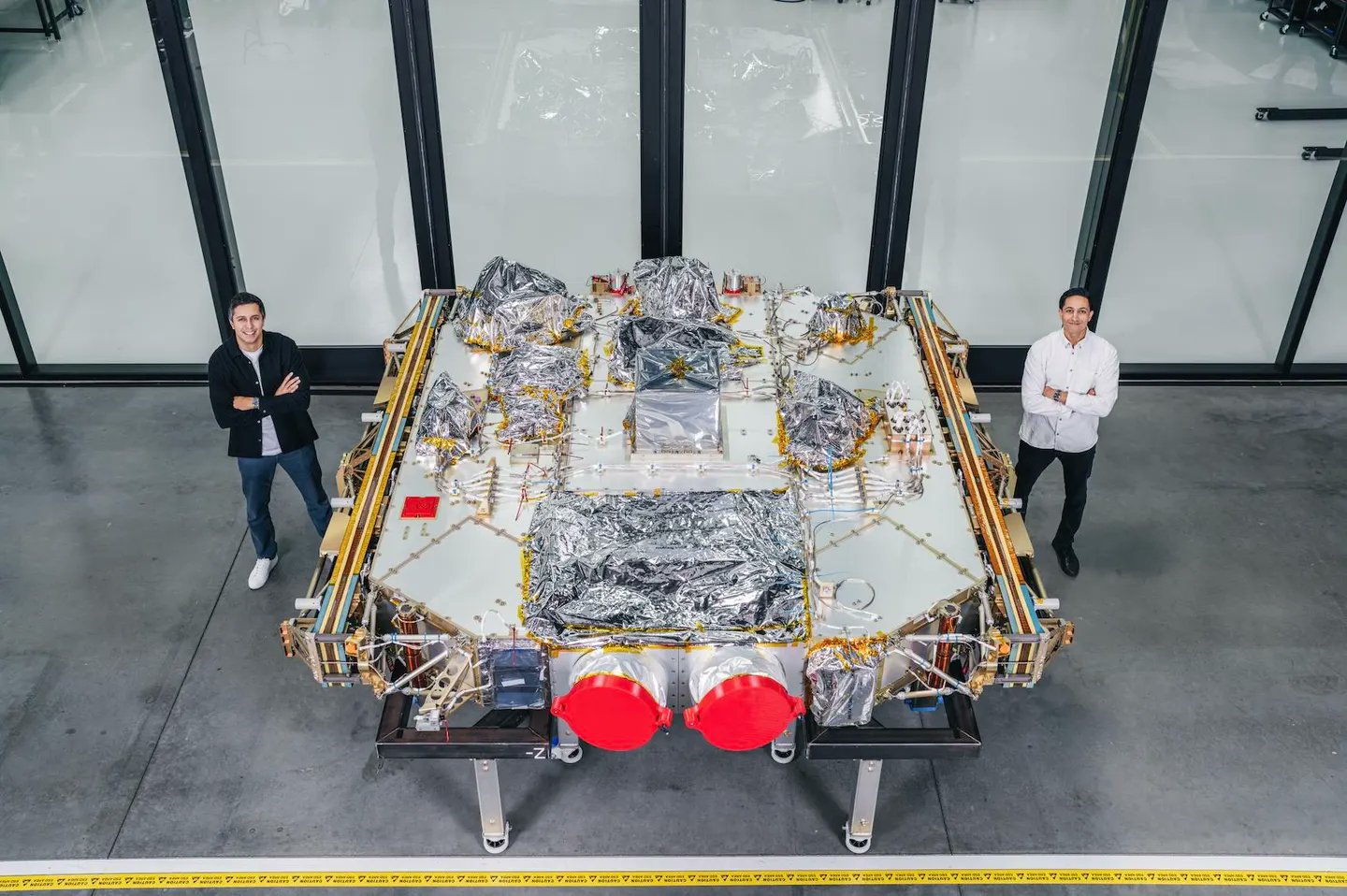
Credit: K2
The Gravitas satellite, slated for launch next month, will test K2’s Hall‑effect thruster, solar arrays, and other subsystems, illustrating the type of payload‑focused projects the Space Force now seeks to accelerate.
Putting the money in
Payloads, Purdy told Ars after his talk, are “the last frontier” for scaling space missions. “The point is to get missions out the door as fast as possible. Two to three years is too slow. We’ve got to get down to one week. I’m not talking about super‑exquisite [payloads]. That’s not most of our missions. The commercial industry, your Kuipers Amazon LEO, your Starlinks, have sort of got the comm piece down, but we’re still struggling in a lot of other stuff.”
One kind of payload Purdy identified was infrared sensors. Infrared sensors often come with cryocoolers to chill detectors to temperatures cold enough to provide sensitivity to faint targets—such as distant missile plumes, fires, explosions, or other objects in space. The technology isn’t as eye‑catching as a rocket launch, but it will be key to many Space Force programs, including the Golden Dome missile‑defense shield backed by the Trump administration.
“I remain convinced that we’re going to think about the mission that we need, and we’re going to need satellites out the door and launched and in orbit within the week, at scale,” Purdy said. “I’m very convinced that that’s the path that we’re going to move down on the commercial and government side.”
The companies that come closest to that pace of satellite manufacturing are the ones Purdy mentioned: SpaceX’s Starlink and Amazon’s LEO broadband networks. SpaceX and Amazon produce multiple satellites per day, but the spacecraft are identical. The Space Force needs plenty of rockets and communications satellites, but it also needs payloads and sensors to ride those launch vehicles and produce the data to be routed through relay stations in orbit.
Before President Trump ever uttered the words “Golden Dome,” the Space Force’s Space Development Agency was already striving to deploy a network of at least several hundred government‑owned missile‑detection, tracking, and data‑relay satellites. Those satellites have suffered delays due to supply‑chain issues, particularly long lead times and delays in satellite buses, infrared payloads, laser‑communication terminals, and radiation‑hardened processors.
Singing the Blues
The Space Force has lost access to one of the tools it used to help solve these problems. Many space‑mission components come from small businesses, and some parts come from overseas. The Space Force relied on STRATFIs, Small Business Innovation Research (SBIR), and Small Business Technology Transfer (STTR) grants to pay companies for basic research, experimentation, and scaling up manufacturing capacity. These programs provided seed funding for high‑risk, high‑reward research and development.
Congress failed to reauthorize these programs last year, even though they are also used by NASA and other federal agencies. Opponents to a clean extension wanted legislation to cap how much funding can go to each grant recipient.
“I’ve got to get SBIRs and STRATFIs reauthorized, so I need the community’s help to get that done,” Purdy said. “There are some valid concerns that need to be addressed. All that needs to be addressed, but it affects the space industrial base a lot more than the other areas, and so I need everyone to kind of pile on and help get that done.”
Recent Successes
Purdy highlighted several STRATFIs that have already yielded major results for investors:
| Company | 2024 Funding (US$) | Follow‑up Outcome |
|---|---|---|
| K2 Space – high‑power, low‑cost satellite platforms | $30 M (Space Force & Air Force) | $250 M fundraising round in 2025; valuation $3 B |
| Apex Space – satellite‑manufacturing scaling | $11 M (strategic) | Became a unicorn in 2025; valuation > $1 B |
| Impulse Space – in‑space propulsion | STRATFI commitment (2024) | Valuation $1.8 B after funding |
“Years of SBIRs and STRATFIs have set the stage … We’ve produced a nice pool of 60‑70 different companies that can help bid on all our upcoming new contracts, which is really nice,” Purdy added.
Policy Shifts Under the Trump Administration
- The Defense Department announced a $1 B “direct‑to‑supplier” investment in L3Harris to expand production capacity of U.S. solid‑rocket motors, giving the federal government an equity stake in L3Harris’s missile business.
- A Trump executive order criticized the defense industry for ballooning executive salaries, stock buybacks, and systemic lethargy, urging companies to increase their own capital expenditures (CapEx).
“You see some strong language through executive order and other mechanisms to say, ‘Hey, companies, you need to put in more CapEx yourselves. You need to kick in more yourselves.’ We’re no longer just going to provide you billions of dollars just for you to go build buildings,” Purdy explained.
“And there’s some threat language on the back end of that. You’re going to do that, or else we’re going to start cutting you off. We’re going to start looking at other providers. That’s out in the open and subject for debate. But there’s a big carrot coming along with that, and that’s multi‑year procurements. Multi‑year procurements are the carrot to allow the investing community to have some amount of confidence,” he continued.
“We’re not looking to be your R&D arm.”
Author

Stephen Clark is a space reporter at Ars Technica, covering private space companies and the world’s space agencies. He writes about the nexus of technology, science, policy, and business on and off the planet.
Comments
12 Comments
Related Image