
PCIe 8.0 spec hits 1 TB/s of bandwidth and has new connector technology — spec hits 0.5V milestone, final ratification expected in 2028
Source: Tom’s Hardware
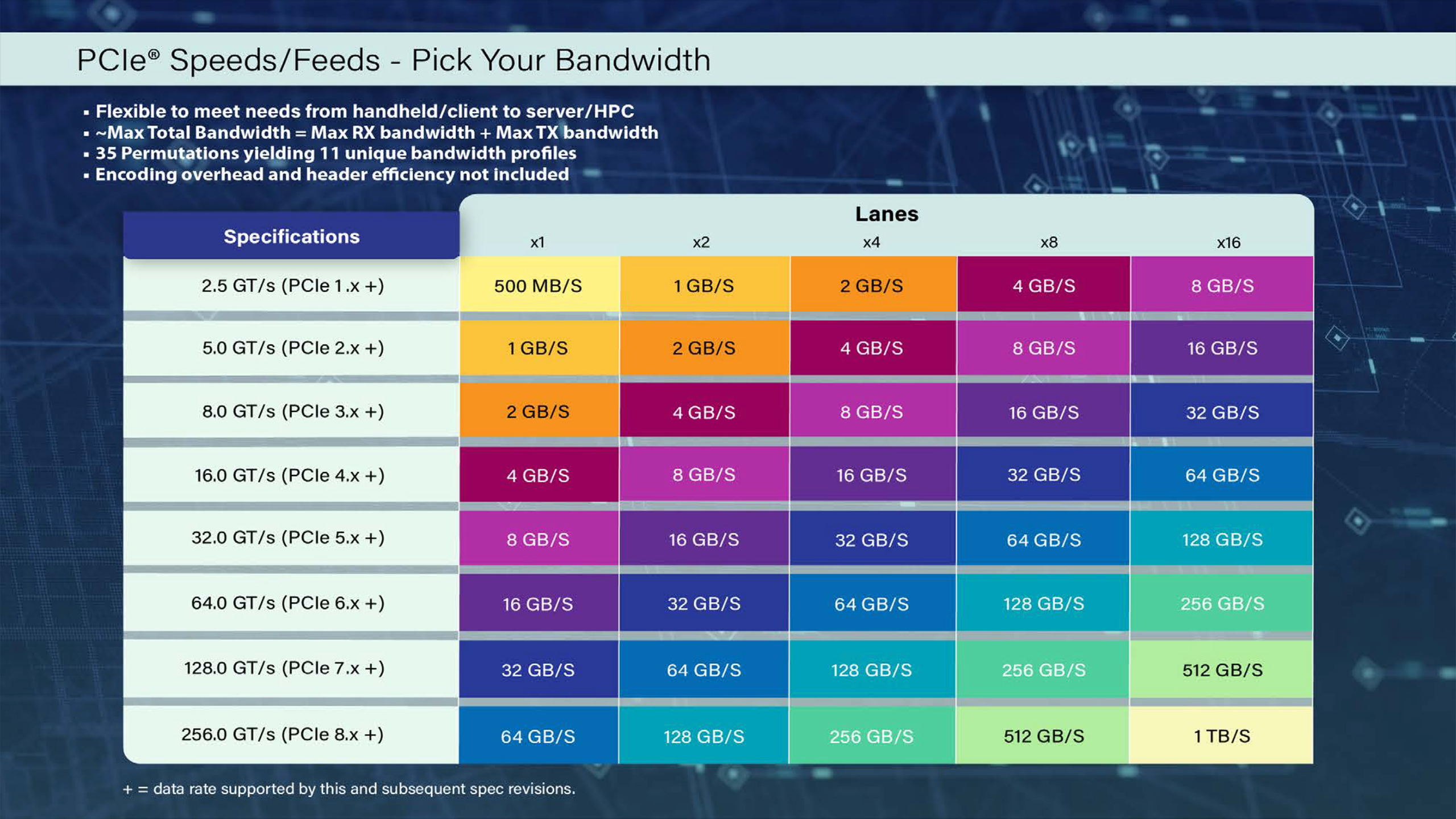
Image credit: PCI-SIG
The PCI‑SIG, the organization that oversees development of PCIe and adjacent standards, announced the availability of the PCIe 8.0 draft specification version 0.5, a major milestone. This first draft sets the architectural requirements and enables PCI‑SIG members to start prototyping and submit final proposals. Version 0.5 maintains a transfer rate of 256 GT/s, allowing up to 1 TB/s bi‑directional bandwidth via an x16 configuration.
Version 0.5 is the first full draft that locks in key conceptual targets and mechanisms, outlining all major aspects of the architecture—including electrical, logical, compliance, and software. It confirms:
- Target bit rate of 256 GT/s
- PAM4 signaling with forward error correction (FEC) and Flit Mode encoding
- Bandwidth‑improving protocol enhancements
- Backward compatibility
- Evaluation of new connector technology
Because version 0.5 is not the final draft, some electrical parameters and protocol optimizations may still be tuned.
The release is a major milestone for hardware designers—large companies such as AMD, Intel, and Nvidia, as well as IP or PHY vendors—who can now begin early prototyping and architecture work, with contingency plans for possible changes. The specification is mature enough to start development.
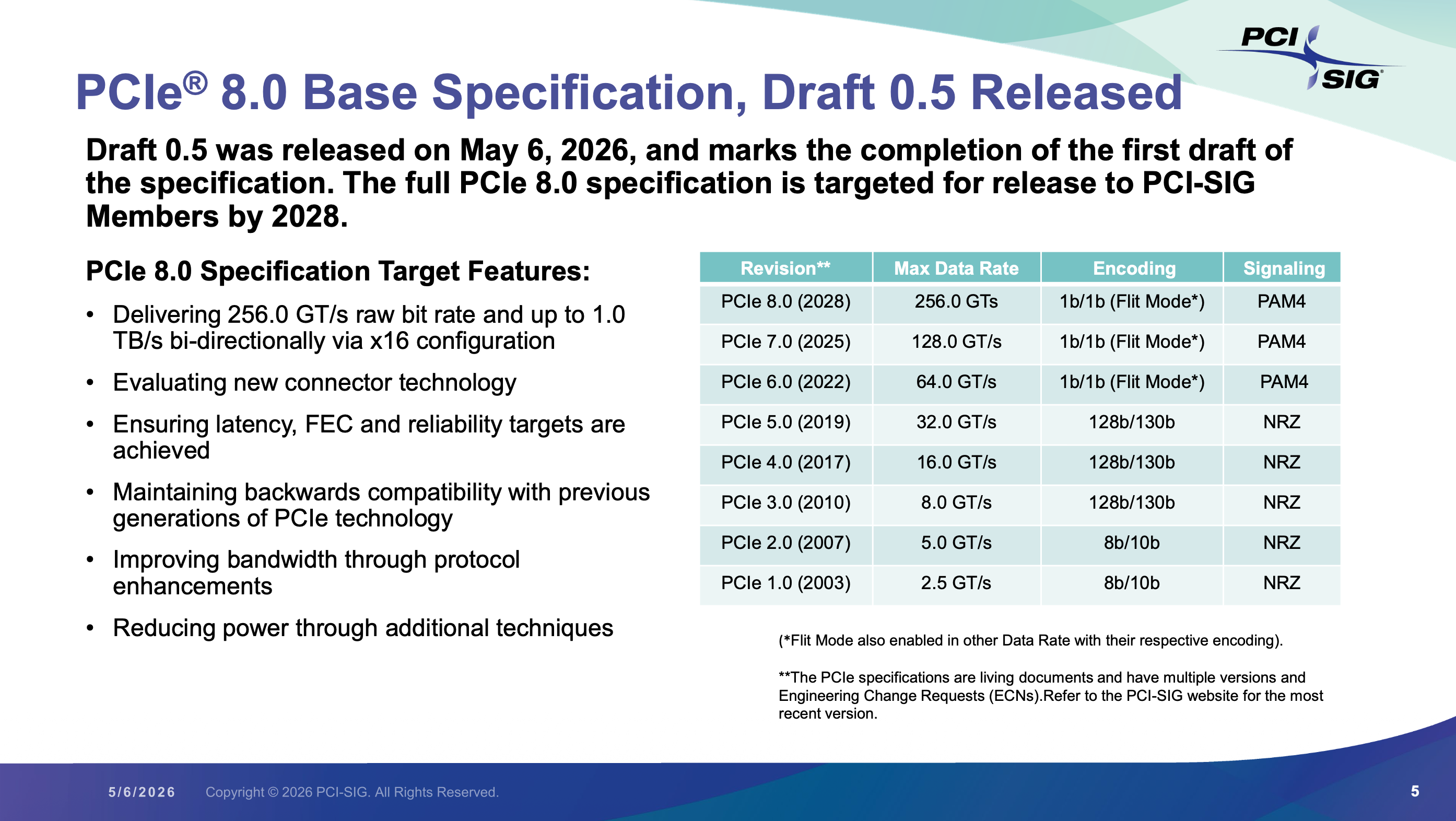
Image credit: PCI‑SIG
Connector Technology Considerations
One intriguing aspect of the announcement is PCI‑SIG’s continued evaluation of new connector technology. The current copper physical layer is approaching its limits: loss budgets, crosstalk, and reflections have become serious constraints for PCIe 5.0 and 6.0. At the 256 GT/s bit rate of PCIe 8.0— a data transfer rate no copper‑based standard has ever achieved—traditional edge connectors and motherboard routing may struggle to maintain acceptable signal integrity without excessive power (for equalization) or latency (for FEC).
Potential solutions include:
- Redesigning PCIe slots with better materials and tighter tolerances
- Shortening electrical paths while increasing the number of redrivers per link
PCI‑SIG aims to maintain backward compatibility, so drastic changes at the connector level are not expected.
With this draft available, the PCIe 8.0 standard continues to progress toward final ratification in 2028.