
Offline-First Android: Build Apps That Keep Working When the Network Doesn’t
Published: (December 27, 2025 at 04:39 AM EST)
7 min read
Source: Dev.to
Source: Dev.to
Introduction
Mobile connectivity isn’t “good” or “bad” — it’s inconsistent. Shopping malls, subway tunnels, packed airports, national‑park campsites, and long rural interstate stretches… your users live in all of it.
If your app’s main flow is “call API → render UI”, then every timeout turns into:
- spinners,
- retry buttons,
- and users losing trust.
Offline‑first changes the contract: your UI stays functional even when the network doesn’t. The network becomes a sync channel, not a dependency for basic UX.
In this post we’ll build an offline‑first shape you can ship:
- Room as UI source of truth
- Reads via stale‑while‑revalidate (SWR)
- Writes via the Outbox pattern
- Background sync via WorkManager
The mental model
Online‑first (fragile)
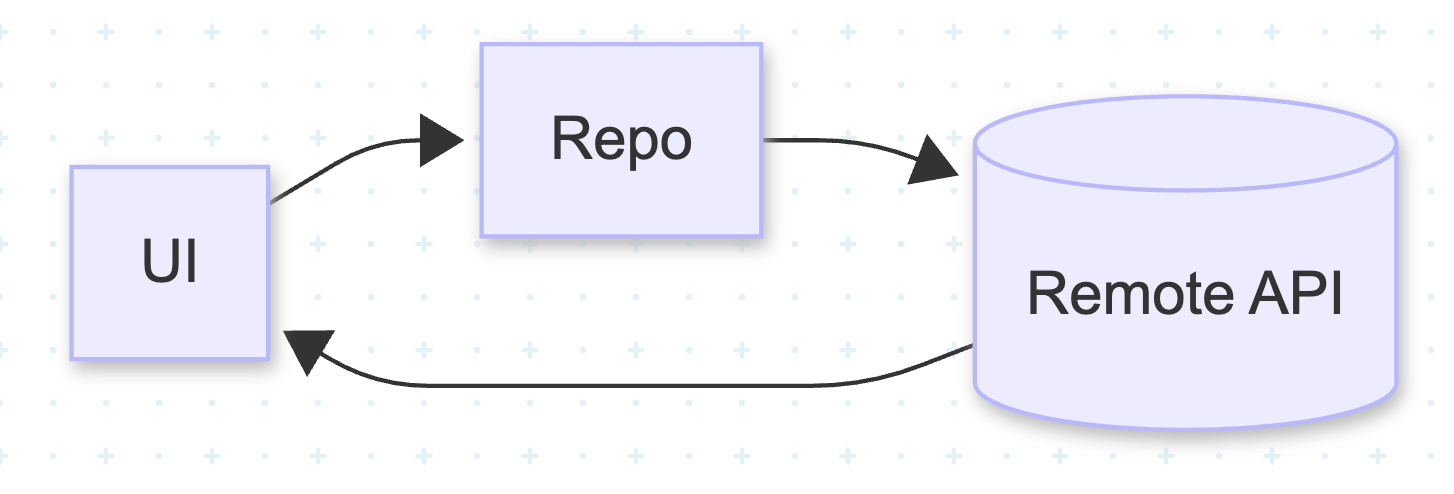
If the API fails, the screen fails.
Offline‑first (resilient)
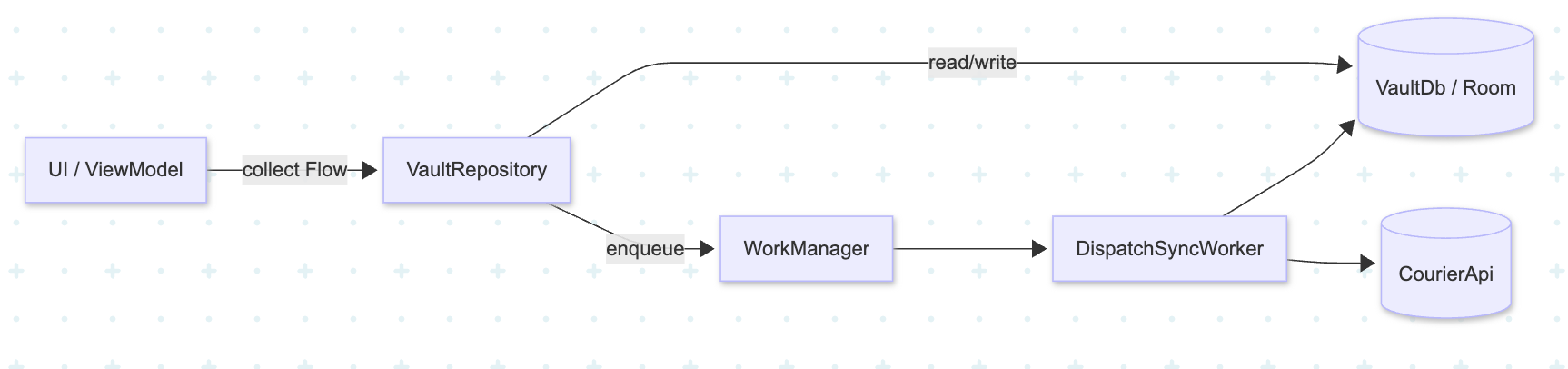
- Room is what the UI trusts.
- The network is what eventually makes your local state match the server.
Core patterns: SWR + Outbox
1️⃣ Reads – Stale‑While‑Revalidate (SWR)
- UI renders immediately from Room.
- Repository decides if data is “old enough” to refresh.
- Refresh runs in the background.
- When Room updates, the UI updates (because it’s collecting a
Flow).
2️⃣ Writes – Outbox pattern
- Save user edits to Room immediately and mark records as PENDING.
- Append an operation to an outbox table.
WorkManageruploads when connectivity allows.- On success, mark as SYNCED.
- On conflict, mark as CONFLICTED (or apply your merge rule).
Data model: domain + sync metadata
We’ll use different names throughout:
| Symbol | Meaning |
|---|---|
Clip | The thing users view/edit |
VaultDb | Room database |
CourierApi | Retrofit API |
DispatchSyncWorker | WorkManager worker |
Sync‑state enums
enum class SyncFlag { SYNCED, PENDING, SYNCING, CONFLICTED }
enum class OpKind   { UPSERT, DELETE }
Room entity – ClipEntity
import androidx.room.Entity
import androidx.room.PrimaryKey

@Entity(tableName = "clips")
data class ClipEntity(
    @PrimaryKey val clipId: String,      // client‑generated UUID
    val title: String,
    val body: String,

    // sync metadata
    val localUpdatedAt: Long,            // device time when user edited
    val serverUpdatedAt: Long?,          // server timestamp if known

    val cachedAt: Long,                  // last successful fetch time
    val lastOpenedAt: Long,              // for cleanup / LRU
    val syncFlag: SyncFlag               // SYNCED / PENDING / …
)
Outbox – OutboxOp (queued operations)
import androidx.room.Entity
import androidx.room.PrimaryKey

@Entity(tableName = "outbox_ops")
data class OutboxOp(
    @PrimaryKey val opId: String,        // UUID
    val clipId: String,
    val kind: OpKind,                    // UPSERT / DELETE
    val payloadJson: String?,            // null for delete
    val sequence: Long,                  // ordering per clip
    val attempts: Int,
    val lastAttemptAt: Long?
)
DAO – Flows for UI + queries for sync
import androidx.room.*
import kotlinx.coroutines.flow.Flow

@Dao
interface ClipDao {

    // UI reads
    @Query("SELECT * FROM clips ORDER BY lastOpenedAt DESC")
    fun observeClips(): Flow<List<ClipEntity>>

    @Query("SELECT * FROM clips WHERE clipId = :id LIMIT 1")
    fun observeClip(id: String): Flow<ClipEntity?>

    // Writes
    @Insert(onConflict = OnConflictStrategy.REPLACE)
    suspend fun upsertClip(item: ClipEntity)

    @Insert(onConflict = OnConflictStrategy.REPLACE)
    suspend fun upsertClips(items: List<ClipEntity>)

    // Outbox
    @Query("SELECT * FROM outbox_ops ORDER BY clipId ASC, sequence ASC")
    suspend fun loadOutboxOrdered(): List<OutboxOp>

    @Insert(onConflict = OnConflictStrategy.REPLACE)
    suspend fun enqueueOutbox(op: OutboxOp)

    @Query("DELETE FROM outbox_ops WHERE opId = :opId")
    suspend fun deleteOutbox(opId: String)

    // Deletions from server pull
    @Query(
        """
        DELETE FROM clips
        WHERE clipId IN (:ids)
          AND syncFlag NOT IN ('PENDING','CONFLICTED')
        """
    )
    suspend fun deleteClipsIfSafe(ids: List<String>)

    // Helpers
    @Query("SELECT MAX(cachedAt) FROM clips")
    suspend fun lastCacheTime(): Long?

    @Query("UPDATE clips SET lastOpenedAt = :now WHERE clipId = :id")
    suspend fun touchClip(id: String, now: Long)

    // Cleanup (example placeholder – adjust as needed)
    @Query(
        """
        DELETE FROM clips
        WHERE syncFlag NOT IN ('PENDING','CONFLICTED')
          AND lastOpenedAt < :threshold
        """
    )
    suspend fun cleanupOldEntries(threshold: Long)
}
Repository: SWR reads + Outbox writes
The repository is your policy brain:
- UI always reads from Room
- Refresh happens in the background based on cache age
- Writes update Room immediately and enqueue outbox ops
import kotlinx.coroutines.CoroutineScope
import kotlinx.coroutines.Dispatchers
import kotlinx.coroutines.flow.Flow
import kotlinx.coroutines.launch
import java.util.UUID

class VaultRepository(
    private val dao: ClipDao,
    private val syncScheduler: SyncScheduler,
    private val clock: () -> Long,
    private val ioScope: CoroutineScope = CoroutineScope(Dispatchers.IO)
) {
    fun observeClips(): Flow<List<ClipEntity>> {
        ioScope.launch { maybeRefresh() }
        return dao.observeClips()
    }

    fun observeClip(id: String): Flow<ClipEntity?> {
        ioScope.launch { dao.touchClip(id, clock()) }
        return dao.observeClip(id)
    }

    suspend fun saveClip(title: String, body: String, existingId: String? = null) {
        val id = existingId ?: UUID.randomUUID().toString()
        val now = clock()

        val entity = ClipEntity(
            clipId = id,
            title = title,
            body = body,
            localUpdatedAt = now,
            serverUpdatedAt = null,
            cachedAt = now,
            lastOpenedAt = now,
            syncFlag = SyncFlag.PENDING
        )
        dao.upsertClip(entity)

        val op = OutboxOp(
            opId = UUID.randomUUID().toString(),
            clipId = id,
            kind = OpKind.UPSERT,
            payloadJson = """{"clipId":"$id","title":${title.json()},"body":${body.json()},"serverUpdatedAt":0}""",
            sequence = now,
            attempts = 0,
            lastAttemptAt = null
        )
        dao.enqueueOutbox(op)

        syncScheduler.kick()
    }

    suspend fun removeClip(id: String) {
        val now = clock()
        val op = OutboxOp(
            opId = UUID.randomUUID().toString(),
            clipId = id,
            kind = OpKind.DELETE,
            payloadJson = null,
            sequence = now,
            attempts = 0,
            lastAttemptAt = null
        )
        dao.enqueueOutbox(op)
        syncScheduler.kick()
    }

    private suspend fun maybeRefresh() {
        val now = clock()
        val last = dao.lastCacheTime() ?: 0L
        val ageMs = now - last

        val shouldRefresh = when {
            last == 0L -> true
            ageMs > 15 * 60_000L -> true   // 15 minutes
            else -> false
        }

        if (shouldRefresh) syncScheduler.refreshSoon()
    }
}

/** Escape a string for JSON. */
private fun String.json(): String =
    buildString {
        append('"')
        for (ch in this@json) {
            when (ch) {
                '\\' -> append("\\\\")
                '"'  -> append("\\\"")
                '\n' -> append("\\n")
                '\r' -> append("\\r")
                '\t' -> append("\\t")
                else -> append(ch)
            }
        }
        append('"')
    }
Scheduling sync with WorkManager
SyncScheduler
import android.content.Context
import androidx.work.*

class SyncScheduler(private val context: Context) {

    fun kick() = enqueueUnique("vault_sync_now")
    fun refreshSoon() = enqueueUnique("vault_sync_refresh")

    private fun enqueueUnique(name: String) {
        val constraints = Constraints.Builder()
            .setRequiredNetworkType(NetworkType.CONNECTED)
            .build()

        val request = OneTimeWorkRequestBuilder<DispatchSyncWorker>()
            .setConstraints(constraints)
            .setBackoffCriteria(
                BackoffPolicy.EXPONENTIAL,
                30_000L,
                java.util.concurrent.TimeUnit.MILLISECONDS
            )
            .build()

        WorkManager.getInstance(context).enqueueUniqueWork(
            name,
            ExistingWorkPolicy.KEEP,
            request
        )
    }
}
Worker: push outbox → pull deltas → update Room
import android.content.Context
import androidx.work.CoroutineWorker
import androidx.work.WorkerParameters
import androidx.work.Result
import kotlinx.coroutines.delay

class DispatchSyncWorker(
    appContext: Context,
    params: WorkerParameters,
    private val db: VaultDb,
    private val api: CourierApi,
    private val syncTokenStore: SyncTokenStore,
    private val clock: () -> Long
) : CoroutineWorker(appContext, params) {

    override suspend fun doWork(): Result {
        // Helps with flappy “connected for 1 second” networks
        delay(1500)

        val dao = db.clipDao()

        return try {
            // 1) PUSH pending ops in order
            val outbox = dao.loadOutboxOrdered()
            for (op in outbox) {
                when (op.kind) {
                    OpKind.UPSERT -> {
                        val dto = op.payloadJson!!.toClipDto()
                        val saved = api.upsertClip(dto.copy(serverUpdatedAt = 0L))
                        // Update local entity as SYNCED
                        dao.upsertClip(
                            ClipEntity(
                                clipId = saved.clipId,
                                title = saved.title,
                                body = saved.body,
                                localUpdatedAt = clock(),
                                serverUpdatedAt = saved.serverUpdatedAt,
                                cachedAt = clock(),
                                lastOpenedAt = clock(),
                                syncFlag = SyncFlag.SYNCED
                            )
                        )
                    }
                    OpKind.DELETE -> {
                        api.deleteClip(op.clipId)
                        // Optionally delete locally or keep tombstone
                    }
                }
                // Mark attempt
                dao.updateOutboxAfterAttempt(op.opId, clock())
            }

            // 2) PULL deltas since last token
            val token = syncTokenStore.readToken()
            val response = api.pullChanges(token)

            // Apply incoming upserts
            response.clips.forEach { dto ->
                dao.upsertClip(
                    ClipEntity(
                        clipId = dto.clipId,
                        title = dto.title,
                        body = dto.body,
                        localUpdatedAt = clock(),
                        serverUpdatedAt = dto.serverUpdatedAt,
                        cachedAt = clock(),
                        lastOpenedAt = clock(),
                        syncFlag = SyncFlag.SYNCED
                    )
                )
            }

            // Apply deletions safely (don’t delete pending/conflicted rows)
            if (response.deletedIds.isNotEmpty()) {
                dao.deleteClipsIfSafe(response.deletedIds)
            }

            // Store new sync token
            syncTokenStore.writeToken(response.newSyncToken)

            Result.success()
        } catch (e: Exception) {
            // Backoff will be handled by WorkManager's policy
            Result.retry()
        }
    }
}

/* Helper extensions – replace with proper serialization in production */
private fun String.toClipDto(): ClipDto {
    val id = Regex(""""clipId"\s*:\s*"([^"]+)"""").find(this)?.groupValues?.get(1)
        ?: UUID.randomUUID().toString()
    val title = Regex(""""title"\s*:\s*"([^"]*)"""").find(this)?.groupValues?.get(1) ?: ""
    val body = Regex(""""body"\s*:\s*"([^"]*)"""").find(this)?.groupValues?.get(1) ?: ""
    return ClipDto(id, title, body, 0L)
}

interface SyncTokenStore {
    fun readToken(): String?
    fun writeToken(token: String)
}
UI hookup (ViewModel)
import androidx.lifecycle.ViewModel
import androidx.lifecycle.viewModelScope
import kotlinx.coroutines.flow.SharingStarted
import kotlinx.coroutines.flow.stateIn
import kotlinx.coroutines.launch

class VaultViewModel(private val repo: VaultRepository) : ViewModel() {

    val clips = repo.observeClips()
        .stateIn(viewModelScope, SharingStarted.WhileSubscribed(5_000), emptyList())

    fun onSave(title: String, body: String) = viewModelScope.launch {
        repo.saveClip(title, body)
    }

    fun onDelete(id: String) = viewModelScope.launch {
        repo.removeClip(id)
    }
}
Sync sequence (end‑to‑end)

Practical guardrails
- Don’t trigger sync only on connectivity changes; use backoff and avoid storms.
- Keep writes idempotent (client UUIDs + server‑side de‑duplication).
- Never delete PENDING or CONFLICTED data during cleanup.
- For deletions, consider tombstones if you need reliable cross‑device consistency.