
Months after the promised change, Google Home is as unreliable as it ever was
Source: Android Authority
Overview
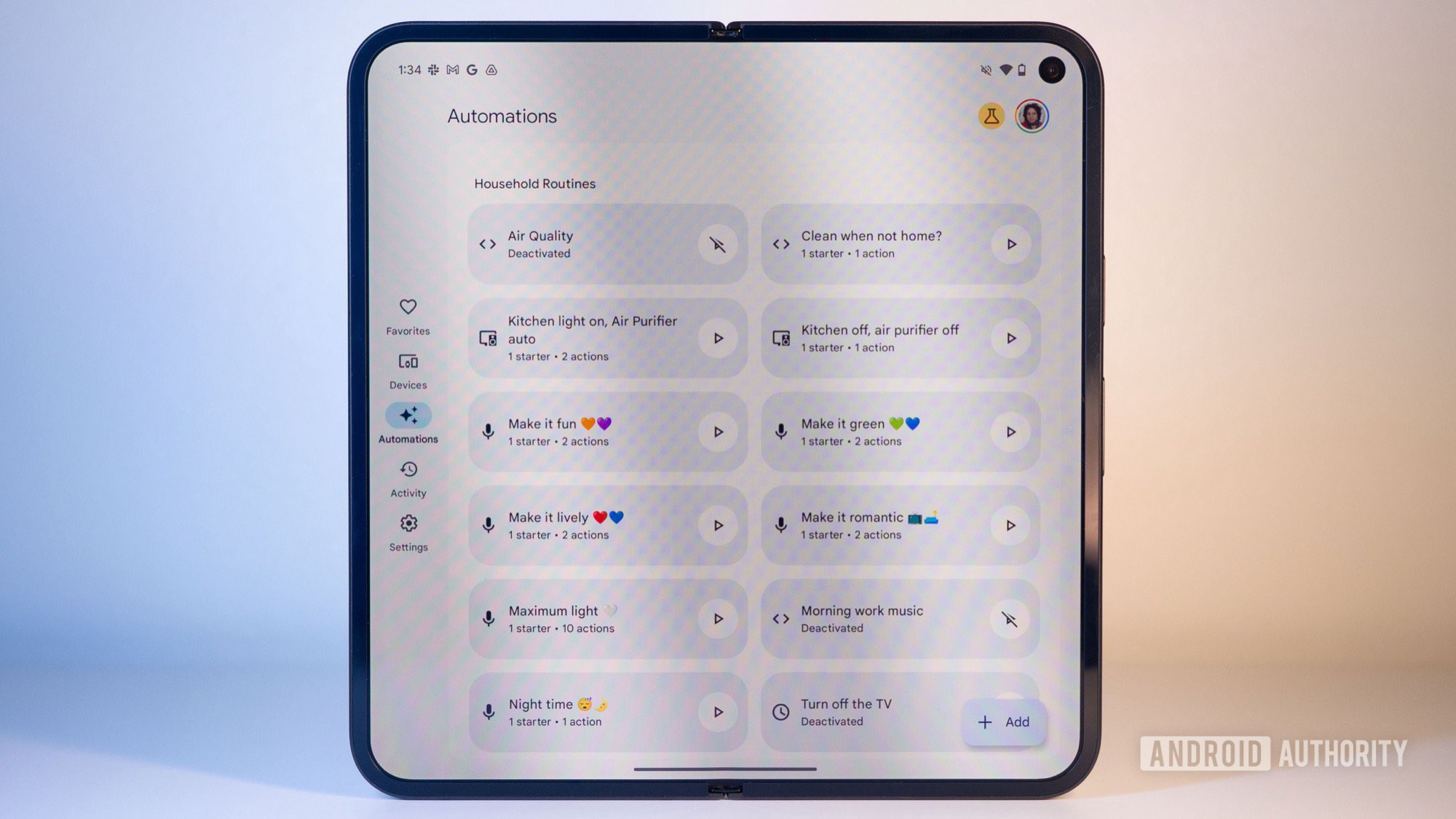
Rita El Khoury / Android Authority
At this point, my only reaction to my Google Nest Hub or Audio speakers not understanding what I asked for is to shrug. It’s a common enough occurrence that my husband and I no longer get angry or disappointed about it; we just try again, maybe it’ll work, maybe it won’t. If it still fails, we pull up our phones and do the thing that Google’s almighty assistant was supposed to help us do.
We’re not the only ones. Hundreds of users are still complaining on Reddit about Gemini, Assistant, or both:
- My Gemini Nest Hub and I shared another special…
- Ripping all my Google Homes out tomorrow
- An exponentially growing disappointment
Typical problems include:
- Commands that don’t work
- Routines that refuse to execute
- Mishearing or mis‑executing requests
- Black‑box troubleshooting when something fails
- A Gemini AI that feels like “throwing a ball at a stray dog and hoping it understands the concept of catch” – untrained and unreliable.
Rate your Google Home experience in February 2026
| Rating | Votes |
|---|---|
| 👍 10 | 0 |
Feel free to replace the placeholder vote count with actual numbers when you have them.
5 Months Since the Promise of “Better Reliability and Capability”
Nest Mini stock photo – Edgar Cervantes / Android Authority
Change doesn’t happen in a day, and undoing a decade of bad experiences takes months, but I’m still disappointed that the promise of a more reliable and capable Google Home that Anish Kattukaran, Chief Product Officer at Google Home and Nest, made last October remains largely unfulfilled.
What has improved
- Automations are now much more powerful. Triggers, conditions, and actions that were impossible a year ago are available today.
- In February 2026 Google added new capabilities such as playing chimes, playing music, and automatically deleting unused preset automations.
- Some long‑standing complaints have been addressed: I can now control my vacuums and pause my washing machine from the app.
These are welcome changes, but they barely move the needle on the buggy, restricted user experience that has plagued Google Home for years.
What still feels broken
| Issue | Details |
|---|---|
| Voice‑recognition mishaps | My upstairs office speakers still answer when I’m standing in front of the Nest Hub downstairs. Sometimes the speaker recognises my voice; other times it treats me as a guest. |
| Timer control | A timer set on one device cannot be turned off from another device or from the Pixel’s At‑a‑Glance widget; I have to shout across the house to stop it. |
| “Turn off all the lights” | The command often leaves one or two random lights on, forcing a repeat. |
| Device‑setup errors | “That device isn’t set up yet” appears frequently for controls that work one day and fail the next. |
| Lack of diagnostics | Everything feels like a black box: no logs, no explanations, no way to troubleshoot. |
| Calendar commands | “Set a calendar event for tomorrow noon” sometimes creates an event literally named “tomorrow noon.” |
| Mis‑recognised phrases | Saying “Hey Google, uh, uh, nothing” launches a long explanation about Nothing (the phone company). |
| Music playback | Playing music on grouped speakers is a lottery (see the Reddit thread). |
| Shopping‑list errors | “Babies” appear on my shopping list instead of Baileys. |
| Third‑party cameras | Non‑Nest cameras (e.g., Tapo) show an icon but never live‑stream or display events. |
| Calendar integration regression | Accessing multiple accounts/calendars now requires a convoluted setup with Gemini (see the article on fixing the limitation). |
| Gemini voice | Speakers sound more natural, but the answers are still the same “dumb” Assistant responses. |
| Matter support | My two Matter experiences on Google have been outright failures; other users report the same. |
Gemini & the Assistant transition
- Gemini on speakers: I own a Pixel 10 Pro XL, so I was forcibly switched away from Assistant. The new Gemini voice is more natural, but the underlying answers remain the same Assistant‑style “dumb” responses.
- Pixel‑tablet music automation: I cannot get a command or automation that plays music on my Pixel Tablet to work, despite the new “Play” action.
- Group actions: I still can’t create a single automation for a group of lights or blinds; each device must be added individually.
- Sensor data: I cannot use sensor states (e.g., air‑quality monitor) in automations, nor can I do anything beyond simple on/off for most devices.
Survey results
Last July we surveyed our readers on Google Home reliability. Over 10 000 votes were cast, and 7 out of 10 reported frequent issues (full results). Gemini and recent updates have not alleviated these problems.
Bottom line
Google Home is receiving love and updates in the automation department, but the core experience—voice recognition, device control, reliability, and Matter integration—remains fragile. If anyone has had a genuinely good Matter experience on Google, please raise your hand; you’re a unicorn.
Google Home Is a Hornet’s Nest of Issues on Top of a Decade of Laziness
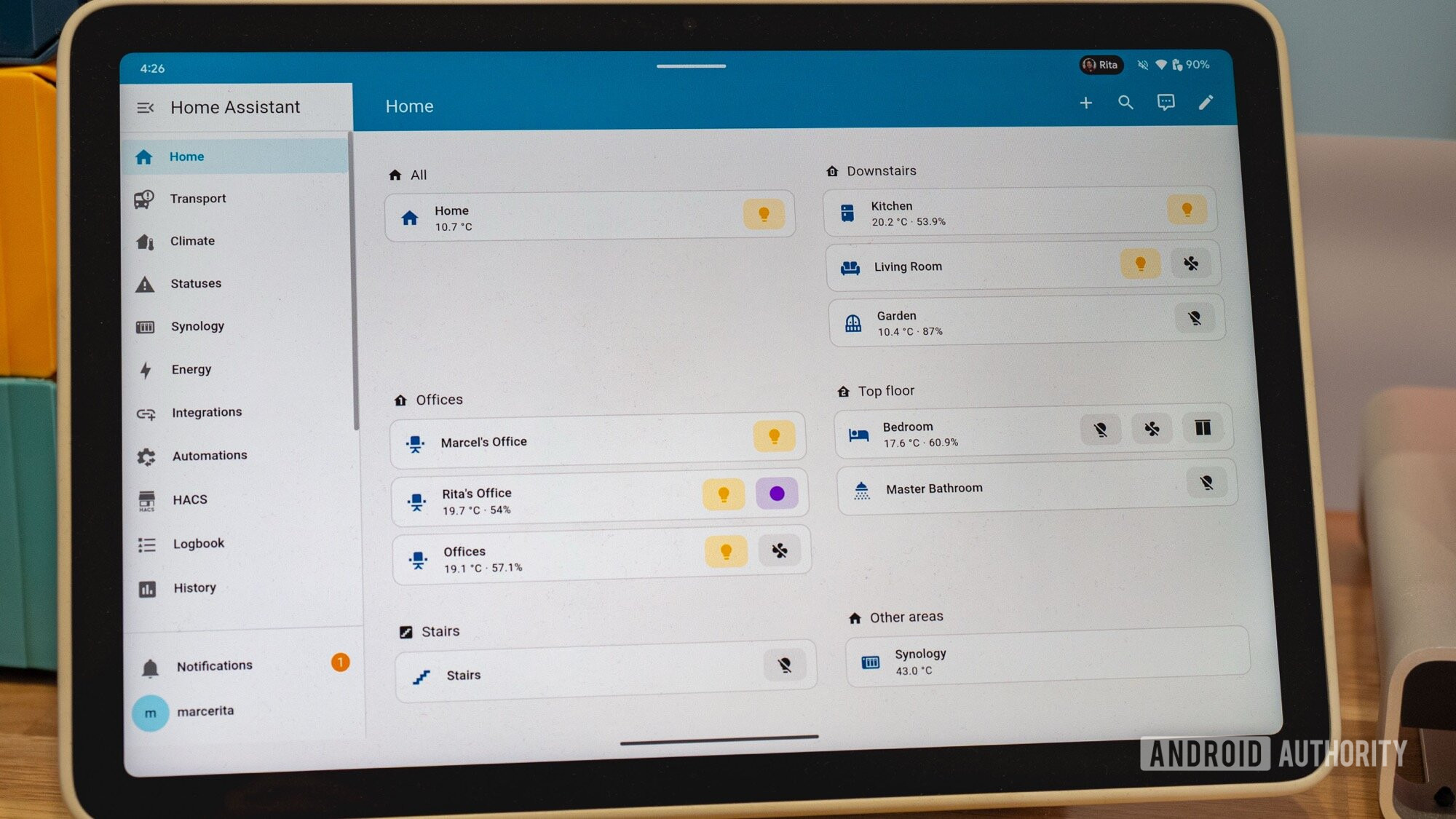
Rita El Khoury / Android Authority
Last year, after moving into my new house, I decided that Google Home wasn’t going to cut it anymore. I was planning to automate 30+ lights and plugs, a couple of dozen blinds and shutters, an entire alarm system, locks, sensors, vacuums, and appliances. I had always dreamed that Google Home would have reached a stable, powerful level capable of handling such a complex smart home—but it hasn’t.
I had built my previous smart homes with Google, but they were falling apart. This time I switched to Home Assistant and had to learn the platform from scratch: building dashboards, tinkering with code, mastering YAML, reading logs, creating complex automations, and assembling a solid Zigbee mesh. I’m not sharing this as a mere anecdote; it illustrates what it feels like to use a competent platform built by competent developers.
The Core Problem
It is mind‑boggling how lazy Google Home’s developers have been. They are among the best‑paid engineers in the world, working for one of the most powerful companies, yet they can’t ship a decent changelog.
Contrast that with Home Assistant’s February 2026 changelog—a video, a post, a table of contents, screenshots, links, and explanations for every change. The best part? They do this every month. When I started using Home Assistant last year, the default dashboard was a painful deterrent and automations were impossible to decipher; now those two areas are mostly fixed.
What Makes Home Assistant Stand Out
- Clockwork monthly updates with dozens of improvements.
- Transparent development: tickets are filed publicly, solutions are discussed, and merges are announced.
- Rapid bug fixes: When my Roborock integration broke last month, a ticket was filed, a fix was identified, and I knew exactly when it would land in the stable release.
Google Home, by contrast, feels like a black box. What works today might stop working tomorrow, and there’s no clear timeline for fixes.
A Wish List for Google Home
I don’t expect Google Home to become as powerful or as “nerdy” as Home Assistant—that would defeat its purpose for the average user. What I do wish for is:
- Faster development cycles – monthly or at least quarterly releases.
- More efficient bug handling – visible tickets and clear ETA for fixes.
- Transparent communication – detailed changelogs with screenshots and explanations.
The blueprint for a magnificent smart‑home platform exists; it’s feasible. Google just needs the will to follow it.
Thank you for being part of our community. Please read our Comment Policy before posting.